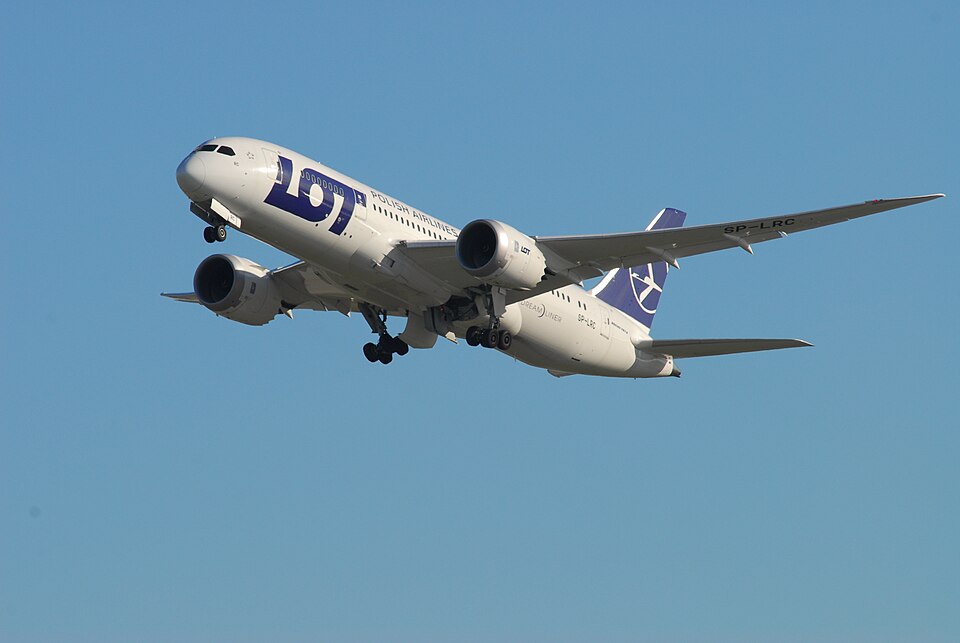
Incident Overview
On 24 September 2016, a Boeing 787-800 operated by PLL LOT S.A., registration SP-LRC, was conducting a flight from New York to Warsaw. The incident occurred in the Canada Flight Information Region (FIR) while the aircraft was at flight level 370 (FL370) during the cruise phase.
Flight Parameters and Sequence
The aircraft was being flown with the autopilot and autothrottle engaged. The Flight Mode Annunciator (FMA) displayed speed, LNAV, and VNAV PATH instead of ALT, while the Mode Control Panel (MCP) was set to VNAV, LNAV, and FL380. The crew had previously engaged ALT HOLD at FL370, which stopped the climb.
Approximately 40 nautical miles before the Oceanic Entry Point, while still in Gander Domestic airspace, the crew received an Oceanic Clearance to climb to FL380. The flying pilot attempted to program the Flight Management Computer (FMC) for an automatic climb. However, the FMC did not respond as expected, and the aircraft began an unintended slow climb of 100–200 feet per minute, deviating from FL370 toward FL380.
Upon recognizing the deviation, the pilot initiated a descent back to FL370. While crossing FL375 in descent, Gander air traffic control requested the crew to confirm their altitude.
Cause and Contributing Factor
The investigation determined the cause of the incident was inadequate monitoring of flight parameters and the flying pilot's focus on programming the flight computer while only one pilot was in the cockpit. A contributing factor was that one of the pilots had left the cockpit to use the toilet, leaving a single pilot at the controls.
Preventive Actions
The operator, PLL LOT S.A., recorded the incident in its SMS database and classified it according to its criteria. It was included in the airline's Safety Performance Indicators (SPI). The Safety Pilot of the Boeing 787 fleet was directed to publish the event in the monthly aviation safety bulletin and to use it as material during periodic winter pilot training.
Probable Cause
Inadequate monitoring of flight parameters and concentration of the flying pilot on programming the flight computer while only one pilot was in the cockpit.