History of the Flight
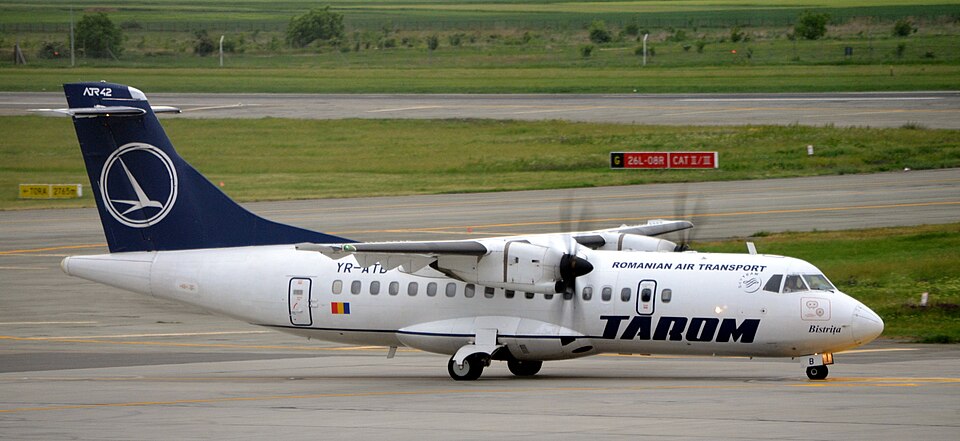
On 4 June 2017, a TAROM ATR 42-500, registration YR-ATB, operated flight ROT207B from Bucharest to Chișinău. The en-route and approach phases were normal. During an ILS approach to runway 08, the aircraft was configured with flaps at 35° and maintained an indicated speed between 114 and 120 kt. To counteract a right-hand lateral wind from 160° at 16 kt, the crew operated the control column and rudder pedals.
At 15:11:43 UTC, the aircraft crossed the runway threshold. At 15:11:47, approximately 240 m after the threshold, it touched down at 109 kt indicated. After touchdown, the aircraft initially deviated slightly to the right of the runway centerline.
Approximately 210 m after touchdown, while the engines were reduced to Ground Idle and controls were operated, the aircraft began to deviate to the left. At about 400 m after touchdown, at a ground speed of 91 kt, the rudder was moved to the right to maximum, and the deviation to the left increased. The First Officer asked the Pilot in Command if he had control, and the Pilot in Command responded.
The aircraft then rapidly turned right, crossed the centerline, and headed for the right edge of the runway. At approximately 530 m after touchdown, at a ground speed below 60 kt, the rudder was moved to maximum left with the control wheel almost fully left.
At about 720 m after touchdown, at 51 kt ground speed, the aircraft exited the runway onto the grass on the right side. After rolling about 90 m on grass, the crew re-entered the runway by using differential thrust (left engine at Ground Idle, right engine at Flight Idle) and control surfaces. Upon re-entering, the main landing gear wheels struck the concrete base of a runway edge beacon. The aircraft then sharply turned left, crossed the runway, and exited on the left side, stopping with the landing gear on the grassy edge.
Cause
The investigation determined that improper operation of the control wheel and rudder pedals after touchdown led to a partial loss of aircraft control during the landing roll, preventing the crew from maintaining the aircraft within the lateral limits of the runway.
Contributing Factors
The investigation identified the following contributing factors: failure to operate the steering control (hydraulic nose wheel control on the ground), failure to operate the brakes when ground speed decreased below 70 kt, and failure to perform the Descent Checklist during the approach.
Aircraft and Crew Information
The aircraft, an ATR 42-500, was owned and operated by TAROM. No injuries were reported. The aircraft sustained damage from striking the beacon base.
Meteorological and Airport Information
The wind at the time was from 160° at 16 kt. The landing occurred on runway 08 at Chișinău International Airport. The local time was 18:12 LT (15:12 UTC).