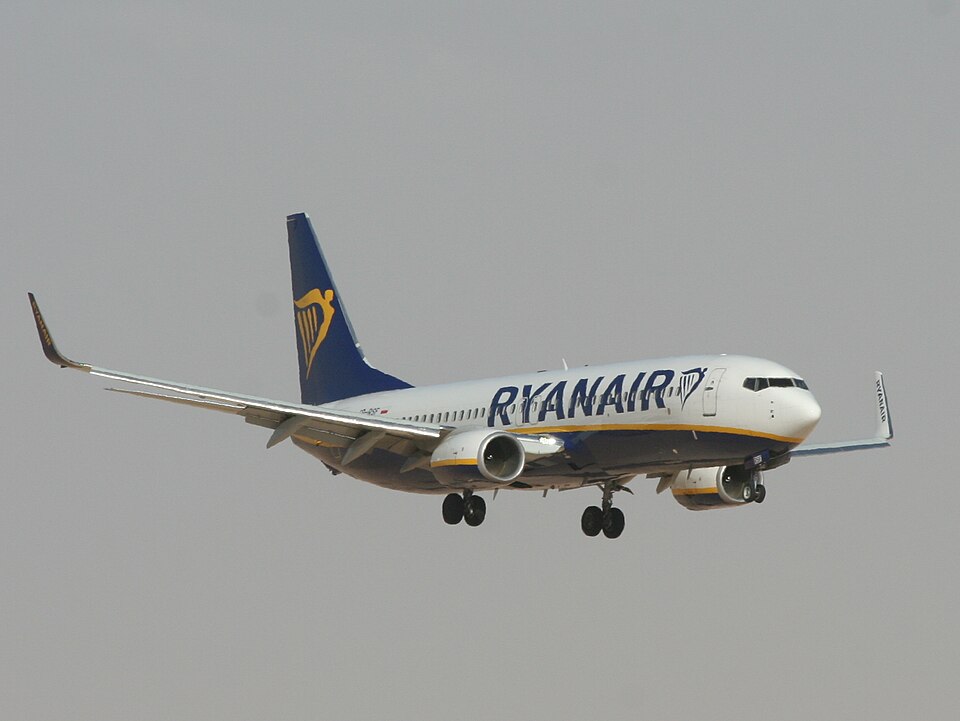
Unjustified 'Minimum Fuel' Declaration During London TMA Holding

Casualties unknown • TMA London (EGSS) / Wielka Brytania, PL

A Boeing-737-800 crew incorrectly declared a minimum fuel state while holding in the London TMA, despite having sufficient reserves.

What happened

On February 23, 2019, a Boeing-737-800, registration SP-RSF, was operating a flight from EPGD to EGSS. While operating within the London TMA, the crew was assigned an Expected Approach Time (EAT) and entered a holding pattern over the ABBOT waypoint. The crew initially considered diverting to the alternate airport, EGBB, but determined that weather conditions at the alternate were worse than those forecasted in the TAF.

As the crew monitored the weather at the destination, they noted improving visibility along the runway, with RVR increasing from 600m toward 800m. Observing that other aircraft were landing at EGSS without difficulty, the crew decided to proceed with the landing at the destination. During this period, the crew declared "MINIMUM FUEL" to Air Traffic Control (ATC). This declaration was intended to signal that their fuel levels were reaching a point where further delays could jeopardize their final reserves, though the declaration did not grant them landing priority as the situation was not an emergency.

Shortly after, ATC informed the crew that they could begin their descent in approximately 10 minutes. The approach and landing were completed without further incident.

The investigation

The investigation focused on the necessity of the fuel declaration and the communication between the crew and ATC. Investigators examined the fuel levels on board at the time of the declaration and the operational requirements for declaring minimum fuel. The investigation also looked into the communication environment within the London TMA during the period in question.

Findings

  • The crew decided to land at EGSS based on improving meteorological conditions and the successful landings of preceding aircraft.
  • The unjustified declaration of minimum fuel occurred because the aircraft still possessed over 1,000 kg of fuel above the final reserve level at the time of the report.
  • A declaration of minimum fuel is only required when a subsequent EAT would result in fuel levels dropping near the final reserve.
  • High levels of radio traffic within the London TMA hindered the crew's ability to contact ATC to request updated information regarding their expected approach time.

Probable cause

The crew issued an unjustified 'minimum fuel' declaration to ATC because the aircraft's fuel levels remained significantly above the final reserve threshold despite the declaration.

Frequently asked questions

What happened in the 2019-02-23 BOEING, 737-800 accident near TMA London (EGSS) / Wielka Brytania, PL?

A Boeing-737-800 crew incorrectly declared a minimum fuel state while holding in the London TMA, despite having sufficient reserves.

What aircraft was involved and where did it happen?

The accident on 2019-02-23 involved a BOEING, 737-800, registration SP-RSF, operated by Ryanair Sun S.A., at TMA London (EGSS) / Wielka Brytania, PL.

What was the probable cause of the accident?

The crew issued an unjustified 'minimum fuel' declaration to ATC because the aircraft's fuel levels remained significantly above the final reserve threshold despite the declaration.

Investigation report by the Polish State Commission on Aircraft Accidents Investigation (PKBWL). Original record: https://pkbwl.gov.pl/raporty/2019-0547/. This page is a structured re-presentation; facts and quotes are in the Panstwowa Komisja Badania Wypadkow Lotniczych (PKBWL), Poland.

Loading the flight search…

What you can do on Flight Finder

  • Search flights between any two airports with live fares.
  • By aircraft — pick a plane model (e.g. Boeing 787, Airbus A350) and see every route it flies from your origin.
  • Route map — click any airport worldwide to explore its destinations, or draw a radius to find nearby airports.
  • Global aviation safety — aviation accident database, 40,000+ records since 1980, with map and rankings by aircraft and operator.
  • NTSB safety feed — recent U.S. aviation accidents and incidents from the official NTSB CAROL database, updated daily.