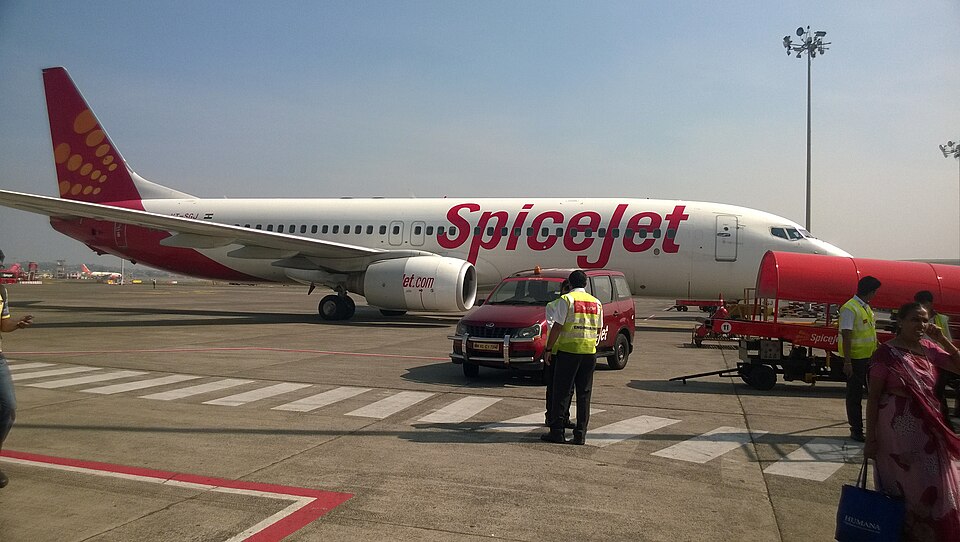
Incident Overview
On 29 April 2019, a SpiceJet Boeing 737-800 aircraft registered VT-SGJ was involved in a serious incident during landing at Shirdi Airport. The aircraft was operating a scheduled flight from Delhi to Shirdi with 194 passengers and four cabin crew members on board. The flight crew consisted of an ATPL-holder as Pilot Flying (PF) and a CPL-holder as Pilot Monitoring (PM).
Sequence of Events
The flight from Delhi was uneventful until approach to Shirdi. Air Traffic Control (ATC) initially assigned runway 27, but after an orbit, the crew requested runway 09, which was accepted. At 1048 UTC, ATC cleared the aircraft for descent under Visual Meteorological Conditions (VMC). The crew descended to circuit altitude of 3,500 feet and lined up for runway 09. Landing clearance was given at 1051 UTC with winds reported as 320°/05 knots.
The PF disengaged the autopilot and auto-throttle at approximately 1,000 feet. The aircraft was high on approach and not stabilized at 500 feet or below. It crossed the runway threshold at about 120 feet AGL and floated above the runway, making a delayed touchdown abeam the ATC tower at 1053 UTC. After touchdown, the PF manually applied maximum brake pressure, but the aircraft did not stop and overshot the runway from the runway 27 side. It continued on unpaved ground for approximately 160 meters before coming to a halt.
ATC observed dust near the runway and inquired about the aircraft's status; the crew initially reported normal operations. After realizing the aircraft was stuck, the crew shut down the engines about 10 minutes after stopping. Passengers disembarked normally via a step ladder.
Aircraft Damage
The aircraft sustained minor damage, including multiple cuts on all nose and main landing gear tires, ingress of dust into brake units, a broken roll attitude indicator glass, and minor distortion on the leading edge of blade No. 19 of the left engine. The right engine had missing material on blades No. 12 and 14, with dimensions exceeding allowable limits.
Injuries
No injuries were reported among crew, passengers, or others.