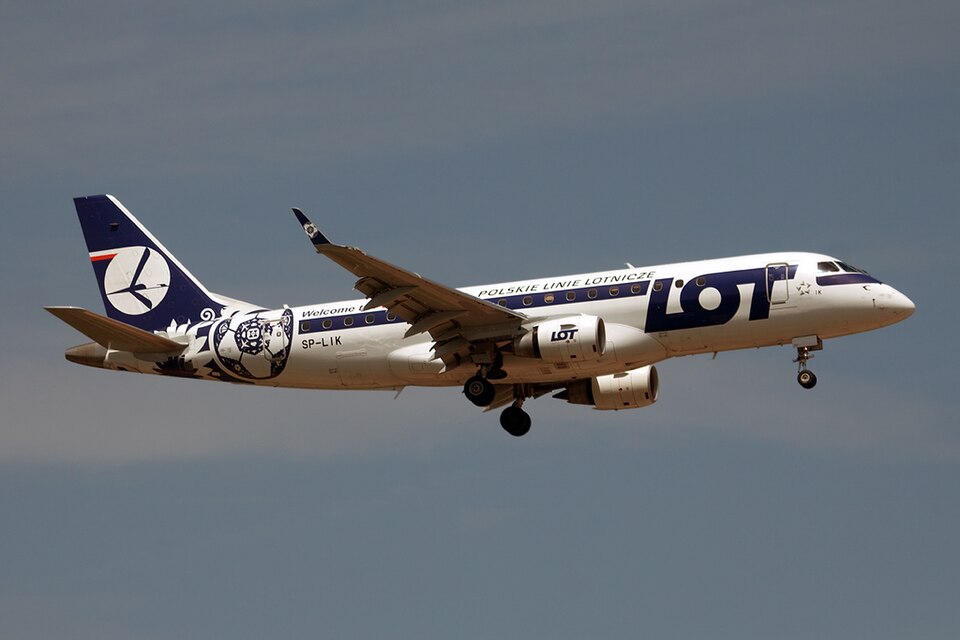
Incident Overview
On 4 February 2020, during the climb phase after departure from Munich Airport (EDDM), the crew of an Embraer ERJ 170-200-200 LR, registration SP-LIK, observed that the exhaust gas temperature (EGT) on engine number 2 had exceeded its maximum limit. Simultaneously, a "CHIP DETECTED" warning appeared in the cockpit, indicating the presence of metallic particles in the engine oil. The crew immediately reduced engine power, causing the EGT to return to normal limits. The flight continued at reduced speed to its destination at Warsaw Chopin Airport (EPWA).
Findings
Post-flight analysis of the flight data recorder (FDR) revealed that the peak EGT had reached 963°C and persisted for 19 seconds. A boroscope inspection of the combustion chamber and high-pressure turbine showed no visible damage. Examination of the magnetic plug revealed metallic chips, which laboratory analysis identified as chrome steel. The findings were reported to the engine manufacturer, General Electric, who recommended continued operation after performing an oil system flush.
Subsequent review of engine trend data by LOT Polish Airlines engineers indicated a sudden drop in EGT margin, alongside increases in EGT and fuel flow, and a decrease in oil pressure following two flights that day (EPWA–EDDM and EDDM–EPWA).
Engine Examination
On 5 February 2020, a ground engine test was conducted. During the test, high EGT, high fuel flow, and low oil pressure were recorded, leading to an abort. GE recommended a boroscope inspection of the high-pressure compressor (HPC) and a procedure to determine the cause of the oil pressure drop, as per the engine maintenance manual. The HPC boroscope inspection revealed no damage, and the manual provided no further guidance on the oil pressure drop.
A reanalysis of all test results, including boroscope images, identified wear marks on the turbine casing’s abradable coating, caused by contact with the turbine blade tips. The engine was subsequently removed from the aircraft and sent for overhaul.
Cause
The incident was attributed to engine wear during normal operation, which led to an excessive rise in exhaust gas temperature.