Incident Summary
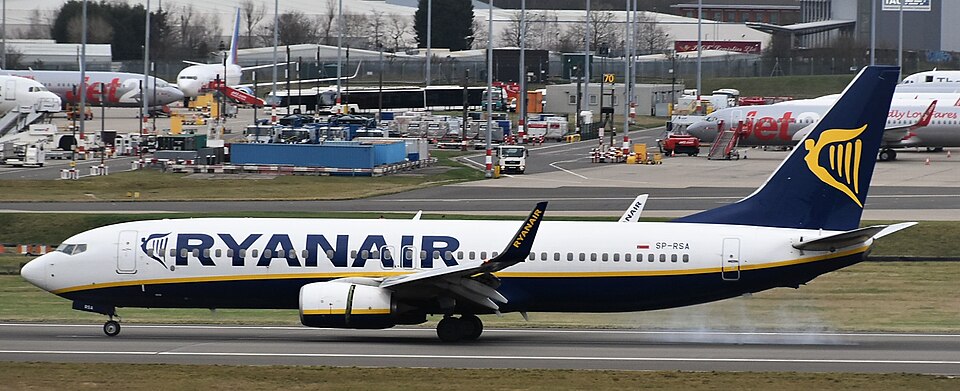
On 9 February 2020, a Boeing 737-800-8AS, registration SP-RSA, operating a scheduled passenger flight from Warsaw-Modlin (EPMO) to Beauvais-Tillé (LFOB), experienced a sequence of events leading to a fuel emergency. The flight had planned alternates including Lille (LFQQ), Brussels (EBBR), and Liège (EBLG), among others. After departure, the crew received updates that Beauvais-Tillé was not accepting landings due to weather, and the aircraft was placed in a holding pattern over the MTD VOR at FL 80.
Weather and Traffic Constraints
While holding, air traffic control informed the crew that the primary alternate Lille was unavailable due to wind (190/36G49), and Brussels-Charleroi (EBCI) and Brussels (EBBR) were unavailable due to capacity. Only Tours Val de Loire (LFOT), Nantes Atlantique (LFRS), and Liège (EBLG) remained as options. Tours was already requested by another aircraft, and Liège's wind (290G49) exceeded aircraft limitations. The crew selected Nantes Atlantique as the diversion airport.
Approach and Go-Around
The aircraft departed holding at 15:45 with 4,200 kg of fuel. During approach to Nantes Atlantique Runway 21, visibility dropped to 2,500 m (below minima) and the crew executed a go-around. After holding, visibility improved to 3,600 m with overcast at 700 ft, and a second approach was initiated. At 6 nautical miles on final, fuel was 2,200 kg. The landing was destabilized by a gust at the threshold, resulting in a soft touchdown without spoilers, prompting a go-around from about 10 ft.
Fuel Emergency and Final Diversion
Preparing for a third approach, the crew checked the alternate of Rennes (LFRN) with ILS Runway 28 (wind 210/20G33, overcast 900 ft). ATC vectored the aircraft for a shortened approach to Runway 21, but at 7 NM the crew heard a preceding aircraft go around due to lack of visual contact. The crew abandoned the approach at 17:00, declaring minimum fuel and proceeding to Rennes. At 17:10, about 35 NM from Rennes, with 1,150 kg fuel (below final reserve), the crew declared MAYDAY FUEL. ATC provided a shortened path, and the aircraft landed normally on Runway 28 with 910 kg fuel remaining. Emergency services were on standby but stood down after landing. The aircraft taxied to the stand with 810 kg fuel, and normal shutdown procedures were followed.
Causes and Contributing Factors
The investigation identified three causes: (1) rapid deterioration of weather over a large area in a short time, (2) high traffic density in the area of the intended destination and alternates, and (3) an unsuccessful landing at the first alternate airport.
Actions Taken
The operator used the event for training purposes and senior pilots held a debriefing with the cockpit crew to reinforce their confidence.