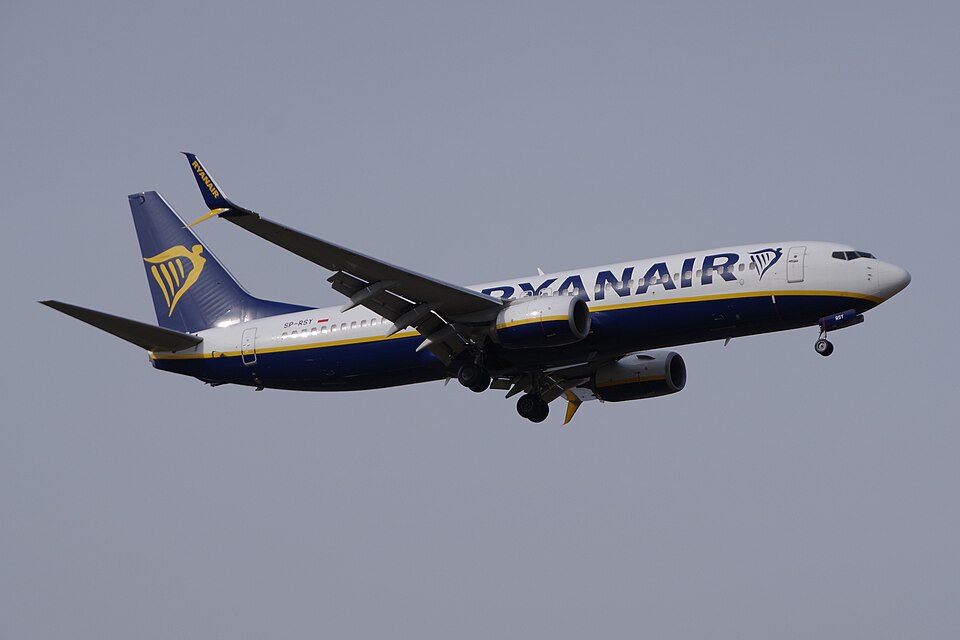
Incident Overview
On February 9, 2021, a Boeing 737-800-8AS, registration SP-RSY, operated a flight from Gdańsk (EPGD). The aircraft had been parked at stand 24 for four days under snowy conditions. Before departure, the captain performed an external inspection and found the wings, tail, engines, and fuselage covered with thick snow. Engine inlets were cleared with hot air. After pushback, the aircraft taxied to a remote de-icing stand, where the engines were shut down for de-icing of lower wing surfaces. Following de-icing, engines were restarted, and standard procedures were completed.
Takeoff and Initial Climb
The aircraft taxied to holding point H before runway 11, configured flaps to 5, performed a takeoff configuration test, and then entered the runway. An engine run-up test showed normal parameters and no vibrations. Takeoff was normal. After gear retraction, the crew perceived fuselage vibrations that persisted until flaps were fully retracted. No engine vibrations were noted, and aircraft performance remained normal. Flap retraction proceeded without issue.
In-Flight Events
During the noise abatement climb at approximately 4,000 feet, air traffic control cleared the crew for a direct turn to waypoint SABAK, requiring a left turn of about 160°. According to objective flight data monitoring (OFDM), the autopilot B was engaged in lateral navigation (LNAV) during the turn. As the aircraft reached a bank angle of 29° and a vertical speed exceeding 5,000 feet per minute, it entered a temperature inversion; the temperature rose from -13°C to -6°C. Simultaneously, an exceedance of the maximum bank angle warning triggered. Flap retraction from position 1 to 0 was in progress. The spoiler system operated correctly. The autopilot began correcting, but after about one second, the flying pilot disengaged the autopilot and completed the turn manually. The minimum recorded speed was 182 knots, 9 knots below the minimum clean configuration speed (flaps 0) of 191 knots.
The crew stopped the climb at FL100, re-engaged the autopilot, and observed no further vibrations. After discussing the situation, they decided to continue to the destination. Subsequent climb, cruise, and descent were normal. Suspecting a flap system issue due to the earlier vibrations, the crew extended flaps earlier during the approach; no vibrations, control issues, or autopilot anomalies occurred. Landing was uneventful.
Post-Flight Inspection and Findings
After parking and engine shutdown, passengers deplaned. An inspection of the aircraft revealed pieces of ice in the engine inlets. Maintenance personnel checked the flap extension system and found no abnormalities. OFDM analysis showed errors recorded in the Flight Control Computer B (FCCB), indicating a temporary asymmetry of flap deflection due to a sensor fault causing delayed actuation. Flaps moved in the correct direction but with momentary asymmetry. Cockpit indications did not show any errors or asymmetry. No evidence was found that the bank angle exceedance was caused by the temporary flap asymmetry or improper flap system operation.
Cause
The incident was attributed to entry into a temperature inversion in icing conditions, during which a turn was executed with a high rate of climb, with simultaneous flap retraction. The Automatic Terminal Information Service (ATIS) did not provide a warning of icing and temperature inversion, which may have affected crew actions.