Accident Details
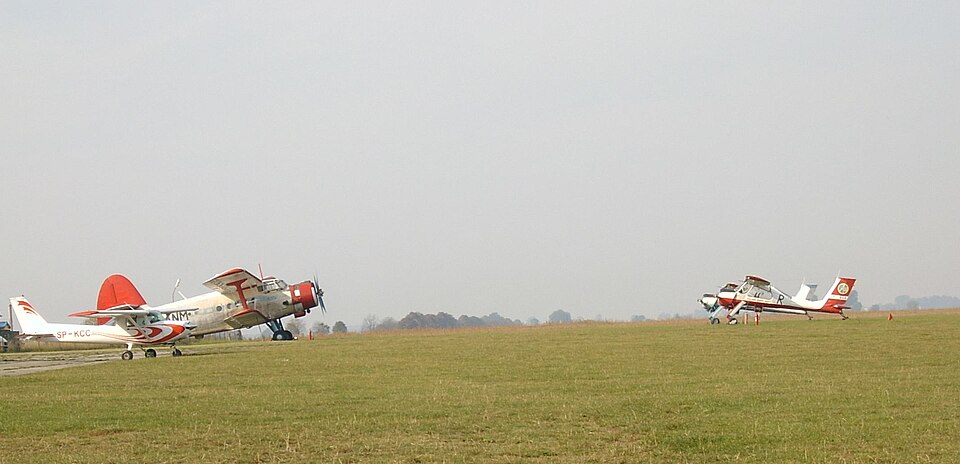
On 27 August 2024, a student pilot under the supervision of an instructor was conducting solo circuits at Żerniki airfield (EPZE) in a Cessna 152, registration SP-KCC. The aircraft had been refueled with 60 liters of Avgas 100LL. After two supervised check circuits, the instructor disembarked and the student continued solo. During the takeoff roll for the fifth solo circuit, the student noticed a power loss, uneven engine operation, and an unusual sound. The aircraft reached 400-450 ft AGL but failed to climb, and the engine ceased operating after approximately 5 seconds. The student observed a decrease in airspeed, the nose dropping, and the propeller windmilling. The instructor, hearing the abnormal engine noise, radioed instructions to enrich the mixture, turn off carburetor heat, and set full throttle. The student confirmed these actions later. The instructor then directed a left turn and, determining the aircraft could not reach the airfield, ordered an emergency landing in unprepared terrain. The student selected a field with low vegetation. During the landing, to avoid a small rise, the student touched down with a left sideslip while simultaneously turning left and braking hard. The aircraft traveled about 80 meters before nosing over.
Aircraft Information
The aircraft was a Cessna 152 (manufacturer serial number 15285773) with a valid Certificate of Airworthiness and Airworthiness Review Certificate valid until 10 April 2025. The Lycoming engine (serial L 22894-15) had accumulated 11,443 hours total time since new and 1,648 hours since a major overhaul performed on 6 January 2021. The Sensenich propeller (72CKS6-0-54/K1140) had 11,643 hours total time. The last 50-hour inspection occurred on 8 August 2024, and the last 100-hour inspection on 22 July 2024. The engine had operated 95 hours since the 100-hour inspection, leaving 5 hours until the next scheduled inspection.
Pilot Information
The student pilot began training for a PPL(A) license on 10 July 2021 and was first authorized for solo circuits on 10 October 2021 with 32 hours of flight time. Total flight time at the time of the accident was 106 hours, with training marked by multi-month gaps and five different instructors. The supervising instructor held a valid CPL(A) license with current ratings and medical certification.
Engine Examination
On 21 November 2024, the engine was disassembled and examined at Franklin sp. z o.o. in Grudziądz. The spark plugs (UREM40E) were functional but showed deposits indicating elevated combustion temperatures. Cylinder leakage tests revealed all four cylinders had pressure differentials below the minimum 70 psi specified in the maintenance manual: cylinder 1 at 30/80 psi, cylinder 2 at 23/80, cylinder 3 at 15/80, and cylinder 4 at 0/80. Ignition timing measured 23° left magneto and 21° right magneto (specification 20°), which was considered not significant. Valve clearances were found below the minimum 0.006 inches for five of eight valves, with reduced clearance on all intake valves. The intake system was sealed with no damaged gaskets or hoses, but carbon deposits were visible in the intake pipes.