Introduction
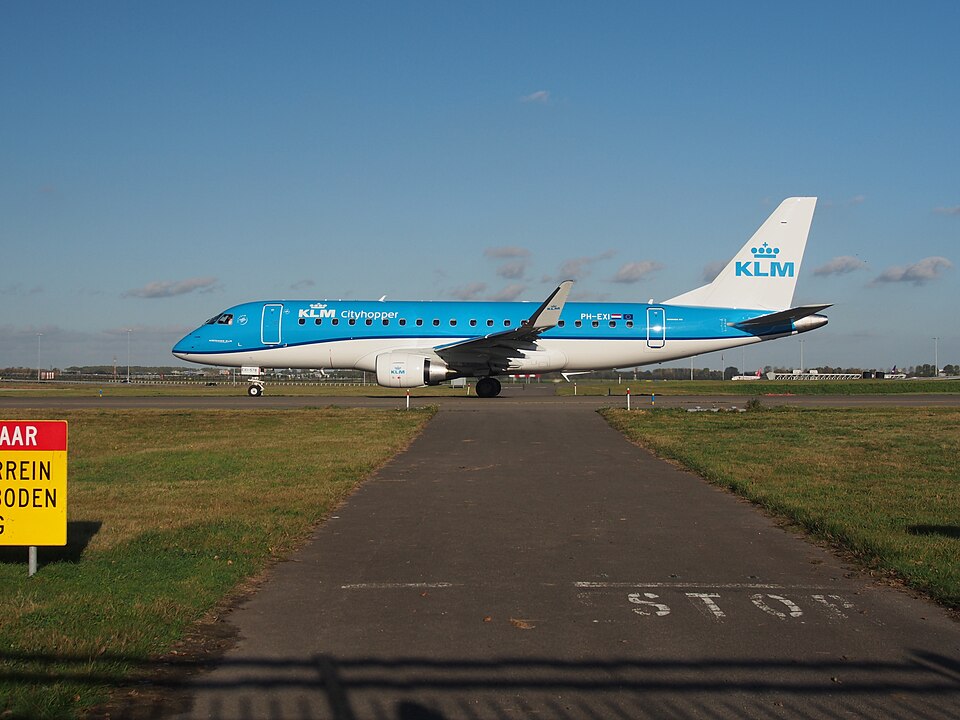
The Air Accident Investigation Unit (AAIU) of Ireland investigated a serious incident involving an Embraer E175-200 STD, registration PH-EXI, which occurred on 19 October 2022. The aircraft was on departure from Dublin Airport (EIDW) on a scheduled passenger flight to Amsterdam Airport Schiphol.
History of the Flight
The aircraft departed Runway 10R at 08:22 UTC. Approximately three minutes after takeoff, while at Flight Level 100 and in Instrument Meteorological Conditions, the First Officer (FO), who was the Pilot Flying, indicated he was not feeling well and then collapsed in his seat. The autopilot was engaged. The Commander immediately requested assistance from Cabin Attendants via the emergency call button and by knocking on the cockpit door. The Cabin Attendants secured the FO to his seat with the harness, moved his seat rearward, and assisted him in donning his oxygen mask with 100% oxygen and the emergency setting.
The Commander transmitted a MAYDAY call to Dublin Air Traffic Control, stating the FO was incapacitated and requesting return to Dublin with medical assistance on arrival. ATC facilitated an expeditious return. The Commander briefed himself for the approach and completed checklists. On the Commander's instruction, a Cabin Attendant informed passengers via PA that the aircraft would return to Dublin. During the approach, at approximately 100 feet, the aircraft encountered a flock of birds and sustained a bird strike to the left side of the nose section. The weather deteriorated but remained sufficient for a CAT I approach. The aircraft landed on Runway 10R at 08:40 UTC and taxied to its parking stand behind a 'Follow Me' vehicle, where a waiting ambulance crew assessed the FO. All passengers disembarked normally.
Aircraft and Crew Information
The aircraft was an 88-seat Embraer E175-200 STD, manufactured in 2016, with two General Electric CF34-8E5 engines. It had a valid Certificate of Airworthiness and Airworthiness Review Certificate. The crew consisted of a Commander (32 years, 6,300 total hours, 3,200 on type) and a First Officer (35 years, 6,169 total hours, 3,430 on type), both holding ATPLs and valid first-class medical certificates. There were two Cabin Attendants. The flight was the Commander's first duty day after three rest days, and the FO's first duty day after his annual medical examination the previous day.
Injuries and Damage
No injuries were reported to the Investigation. There was no reported damage to the aircraft.
Meteorological Information
Met Éireann issued a METAR at 08:30 UTC: wind 100 degrees at 11 kt, visibility 3,000 metres, rain, broken cloud at 100 ft, temperature/dew point 12°C, QNH 1019 hPa, with cloud becoming broken at 500 ft.