Synopsis
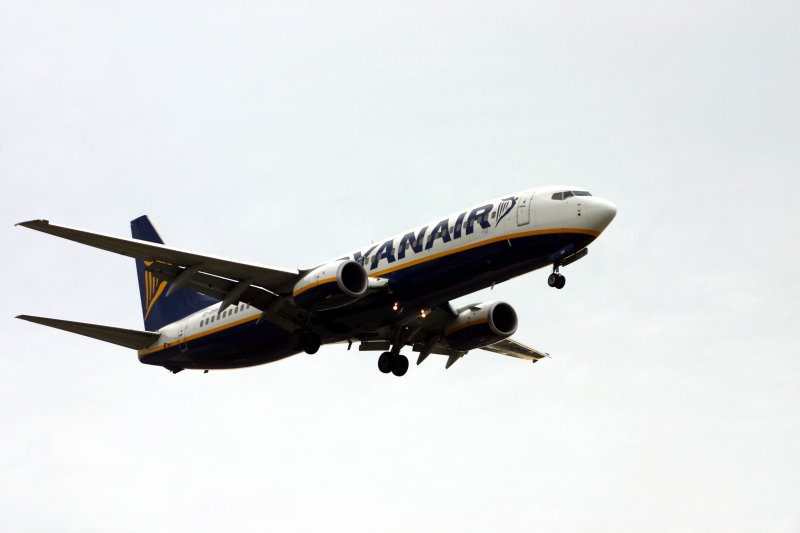
On 9 April 2023 at 16:30 UTC, a Boeing 737-8AS registered EI-DHH, operating a scheduled passenger flight from Liverpool Airport to Dublin Airport, experienced damage to its nose landing gear during the landing roll on Runway 28L. The aircraft had 6 crew and 172 passengers on board. No injuries were reported, and there was no fire. The aircraft came to a stop at a runway exit on the right side of the runway. The investigation found that the probable cause was the use of the tiller to steer the nosewheel assembly at a speed higher than that prescribed by the aircraft manufacturer.
History of the Flight
The flight crew consisted of a Commander (age 60, with 22,969 total flight hours, 16,771 on type) and a First Officer who had started his type rating in June 2022 and first operational flight in September 2022. The First Officer was the pilot flying for the sector, with the Commander as pilot monitoring. During pre-flight planning, the crew discussed crosswind conditions; the forecast crosswind of 12 to 14 knots was within the First Officer's 15-knot company restriction. The approach to Runway 28L was described as well flown, with the autopilot disconnected below 1,000 feet. The aircraft touched down with a left crab angle of about three degrees relative to the runway magnetic heading of 277 degrees. After touchdown, the aircraft tracked left toward the runway edge. The Commander took control, using pedals and minimal braking to return to the centerline, then used the tiller to steer. He did not recall the exact speed but noted the tiller should not be used above 60 knots. The thrust reversers were not deployed due to concerns about debris ingestion. As speed reduced, noise increased, and the aircraft came to a stop. The First Officer selected Flap 40 and the Commander set the parking brake. Air traffic control reported sparks earlier in the landing roll. The aerodrome fire service inspected the aircraft and found damage to the nose landing gear. The passengers and crew disembarked via mobile stairs from the left rear door and were bussed to the terminal.
Damage and Aftermath
During the ground roll, the nosewheels were severely damaged: one wheel and tyre departed the aircraft completely, and the other wheel was ground down to its axle with significant tyre abrasion and loss of material. The airframe sustained damage from debris. The aircraft did not catch fire. The commander decided against evacuation, and the crew made a passenger address before disembarkation.
Investigation Findings
The Air Accident Investigation Unit determined that the probable cause of the occurrence was the use of the tiller to steer the nosewheel assembly at a speed higher than that prescribed by the aircraft manufacturer.