Synopsis
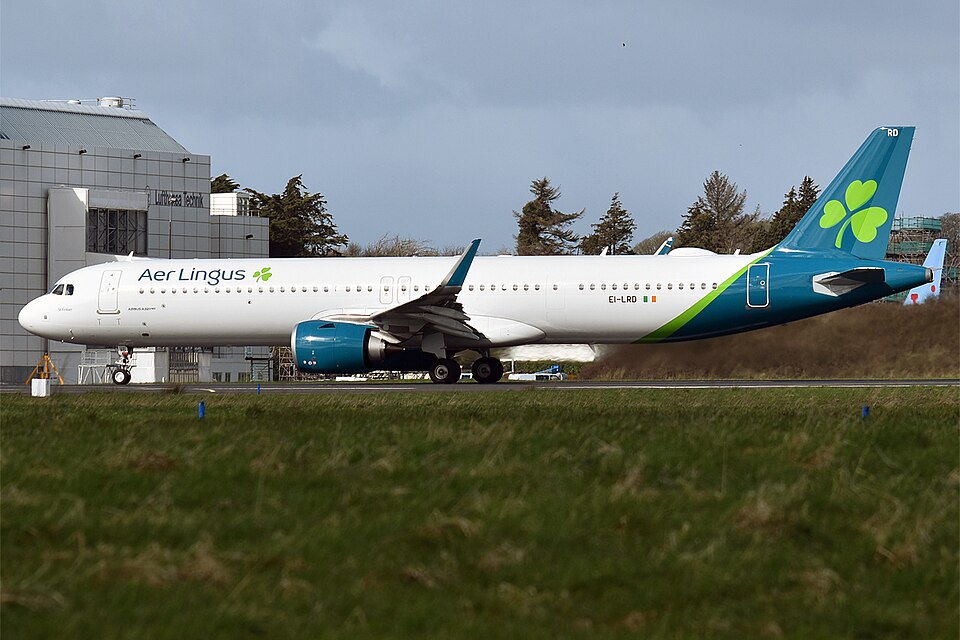
On 30 August 2023, an Airbus A321 neo LR, registration EI-LRD, departed Dublin Airport for a scheduled transatlantic service to Washington Dulles Airport (KIAD). During final approach in gusty conditions, the aircraft deviated above the glideslope. The First Officer, who was the Pilot Flying, made a nose-down control input. Combined with a loss of headwind, this resulted in an increased rate of descent near the ground. A rapid aft side stick input during the landing caused the aircraft to bounce. During the bounce, an aft side stick input led to a pitch attitude exceeding the tailstrike limit. As the aircraft touched down a second time, the Commander took control and initiated a go-around. After a second approach, the aircraft landed safely on Runway 01R. A post-flight inspection revealed tailstrike damage.
History of Flight
The crew reported for duty more than one hour before the scheduled departure. The Commander and First Officer discussed weather and fuel, with extra contingency fuel added due to the busy nature of KIAD. The Commander designated the First Officer as Pilot Flying because of his recent familiarity with the airport and conditions. The First Officer gave a structured briefing that included the risk of tailstrike given the A321's stretched fuselage. After a descent along the US eastern seaboard, the aircraft received radar vectors and was cleared for a visual approach to Runway 01R. At about 940 ft above ground level, the First Officer disconnected the autopilots and continued manually with autothrust engaged. He described the approach as thermally active, pushing the aircraft upward. At 300 ft radio altimeter, the aircraft was above the glideslope; the Commander noted the runway length. A nose-down input at 120 ft resulted in a 976 fpm descent rate, prompting the Commander to advise watching pitch attitude. At 40 ft, the flare began with a rapid aft side stick input, reducing descent to 150 fpm. Thrust levers were retarded to idle at 15 ft. The first touchdown occurred at 7.5° pitch and +1.6 g vertical acceleration. The aircraft bounced to 3 ft with pitch increasing to 10.1°. An aft side stick command during the bounce triggered a 'pitch pitch' aural warning. The second touchdown, less than three seconds after the first, caused a tailstrike. The Commander pressed the priority button, advanced thrust to TOGA, lowered then raised the nose, and the aircraft became airborne. The First Officer transmitted a 'balked landing' message. The aircraft was vectored for a downwind leg and second approach, which the Commander flew, touching down about 15 minutes later. The aircraft taxied to stand and passengers disembarked. An engineer informed the crew of damage, and the aircraft was grounded.
Injuries to Persons
Two cabin crew members seated in the rear sustained minor injuries. One reported lower back ache and strain/sprain; the other reported similar injuries. No follow-up medical assessments were submitted, and both crew members operated the return flight the following evening.
Cockpit Voice Recorder and Flight Data Recorder
Not applicable – the investigation relied on crew reports and recorded data from the aircraft's systems.
Probable Cause
The investigation did not state a probable cause in the provided excerpt.