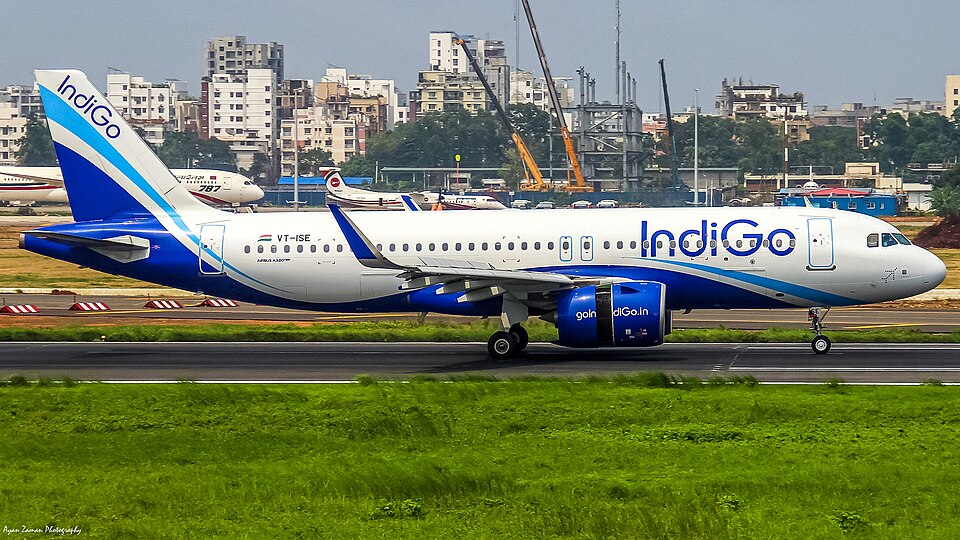
History of Flight
On 5 February 2023, IndiGo flight 6E-5926, operated by an Airbus A320-271N (registration VT-ISE), was scheduled to depart from Amritsar Airport (VIAR) to Kolkata Airport (VECC). The aircraft had arrived from Kolkata earlier that day without any reported issues. The flight crew, consisting of two ATPL holders, remained the same for the return leg. The aircraft carried 125 passengers and 6 crew members.
At 1642 UTC, the crew requested one-engine startup at idle power at the bay, which was approved by ATC. Pushback occurred at 1645 UTC, and taxi clearance was received at 1649 UTC. The aircraft took off from Runway 34 at 1654 UTC using flex thrust.
Engine Failure and Crew Response
While climbing past 3000 ft QNH on heading 090, the crew heard a loud bang. Engine No. 1 parameters dropped and displayed amber XX. ECAM messages triggered sequentially: "ENG 1 STALL", "ENG 1 HIGH VIBRATION", "ENG 1 FAIL", "ENG 1 START FAULT", and "ENG 1 OIL CHIP DETECTED". The crew moved Engine No. 2 throttle to MCT (Maximum Continuous Thrust), leveled off at 4000 ft, and maintained heading 090 at 220 knots.
Following ECAM and QRH procedures, the crew secured Engine No. 1 by moving its throttle lever to idle. They informed ATC Amritsar of the failure and declared PAN-PAN-PAN at 1657 UTC. ATC provided necessary clearances for the return.
Landing and Post-Flight Inspection
The aircraft landed safely on a single engine at Amritsar Airport. After arriving, maintenance personnel observed substantial damage to Engine No. 1. The damaged engine was subsequently replaced with a serviceable one.
Investigation
The event was classified as a Serious Incident under the category System/Component Failure or Malfunction (Powerplant). The Aircraft Accident Investigation Bureau (AAIB) of India ordered an investigation to determine the probable cause. No injuries were reported among the 131 persons on board.