Synopsis
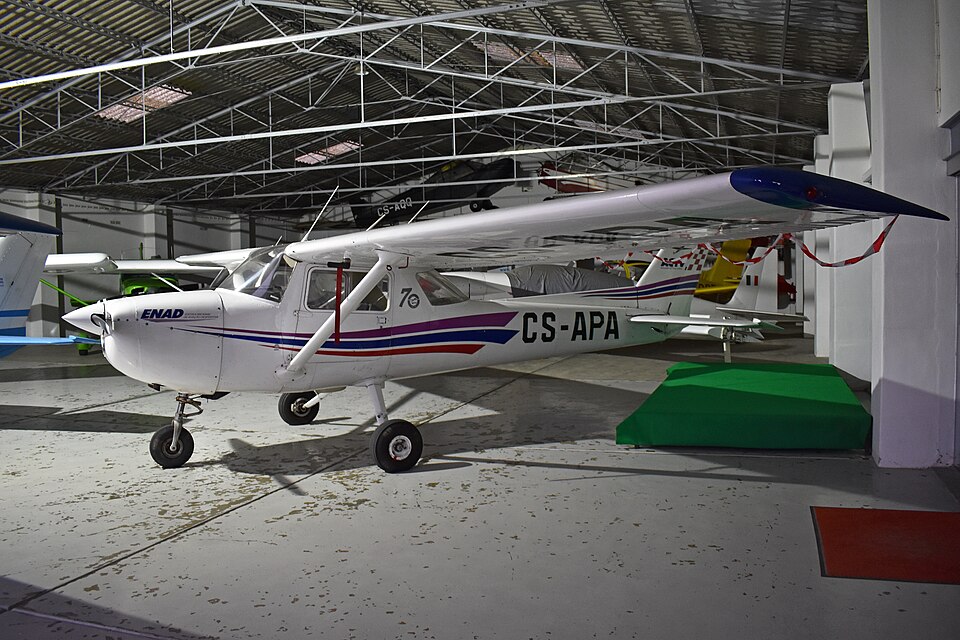
On 9 December 1994, a Cessna 150L, registration CS-APA, operated by Aero Clube de Torres Vedras, suffered a propeller strike during the takeoff roll at Santa Cruz Aerodrome. After conducting an engine run-up at the runway 36 threshold, the pilot taxied to align with the runway. The nose wheel entered a water-covered hole, causing the propeller tips to contact the ground and severely damaging the aircraft.
Flight History
The pilot performed an engine run-up on the ramp at the threshold of runway 36 at Santa Cruz Aerodrome. He then taxied to align with the runway. While attempting to align with the runway identification mark—a concrete square embedded in the runway surface—the pilot did not notice a hole that had been filled with water from recent rainfall. The nose wheel sank into the hole up to its axle, reducing the ground clearance of the propeller blades, which then struck the ground.
Aircraft Information
The aircraft was a Cessna 150L, serial number 1068, built in 1974. It was owned by Aero Clube de Torres Vedras and used for instruction and recreation. The airframe had a total time of 5836:05 hours at the time of the accident. The engine was a Continental O-200-A48B, and the propeller was a McCauley C220. Both were inspected and in compliance with applicable directives.
Pilot Information
The pilot was a 63-year-old male holding a Commercial Pilot License issued by the DGAC, valid until 18 October 1995. He had a total flight experience of 17,274:54 hours as of 18 October 1994. His qualifications included single-engine land, instrument flight, and international radiotelephony. He passed a medical examination on 19 October 1994 and was found fit.
Aerodrome Information
Santa Cruz Aerodrome is owned by the Câmara Municipal de Torres Vedras and operated by them. According to the Civil Pilot Manual dated 18 May 1993, the aerodrome has two runways, 18 and 36, laid on firm, sandy terrain. The description of the runways includes the note: "When it rains, the runway may become waterlogged." The gradient of the maneuvering area is +1.6%.
Analysis
The pilot intended to align with the runway centerline for takeoff and moved toward the runway mark. He did not perceive the hole, which at the time was covered with water from recent rain. The nature of the soil and inadequate drainage contributed to rapid deterioration of the runway surface after heavy rain. The pilot was not warned of this condition and thus did not take the decision to align away from the runway centerline in an area where the ground posed less risk.
Conclusions
The accident was due to the poor condition of the runway.
Recommendations
The DGAC recommended that the entity responsible for the aerodrome, the Câmara Municipal de Torres Vedras, take measures to maintain the runway of Santa Cruz Aerodrome so as not to endanger aircraft during landing and takeoff operations.