What happened
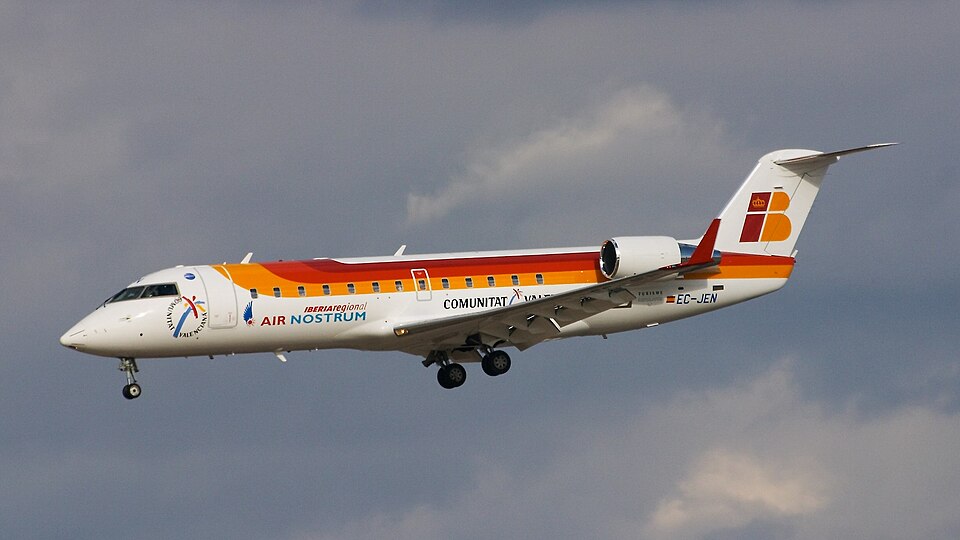
On January 11, 2006, at 05:49 UTC, a runway inspection vehicle collided with a stationary Bombardier CL-600-2B19, registration EC-JEN, at Valencia Airport. The aircraft, operated by Air Nostrum, was positioned at holding point H1 of runway 30.
Prior to the collision, an Alitalia aircraft had departed and reported a potential foreign object debris (FOD) issue on the runway, prompting the air traffic controller to order an extraordinary runway inspection. The inspection vehicle, a Peugeot Partner van, was traveling along taxiway A toward holding point H1. During the maneuver, the vehicle struck the right wingtip of the aircraft. The impact caused damage to the wingtip and the vehicle's roof and windshield, but no fuel leaks occurred. The single occupant of the vehicle sustained head and eye injuries, while the aircraft crew and seven passengers were unharmed.
The investigation
The CIAIAC investigation examined the sequence of events, the lighting conditions, and the communications between the controller and the vehicle operator. The investigation included a reconstruction of the accident under similar lighting conditions.
Investigators found that the controller had authorized the vehicle to access the runway via the same path used by the aircraft, without explicitly informing the driver of the presence of EC-JEN. Furthermore, the investigation noted that the controller and the vehicle operator were both completing a 12-hour night shift immediately following a 12-hour day shift. The study also evaluated the impact of ambient light from nearby roads and the visibility of the aircraft's lights from the vehicle's perspective.
Findings
- The primary cause of the collision was that the vehicle operator was unaware of the presence of the aircraft.
- The air traffic controller authorized the vehicle to proceed to the runway without notifying the driver of the stationary EC-600-2B19.
- The controller used non-standard phraseology during communications with the vehicle operator.
- The vehicle was traveling at an excessive speed (approximately 40-50 km/h) for the conditions.
- The aircraft's logo light was turned off, which limited the visibility of the wingtip from the rear.
- Light pollution and glare from a nearby highway caused visual confusion for the driver.
- Trees near holding point H1 obstructed the controller's view of the taxiway area.
- Fatigue was a contributing factor, as both the controller and the driver were working consecutive 12-hour day and night shifts.
Safety action
Following the accident, AENA (the airport authority) implemented several changes, including relocating holding point H1 to improve visibility from the control tower and to minimize the glare from the adjacent highway.