Factual Information
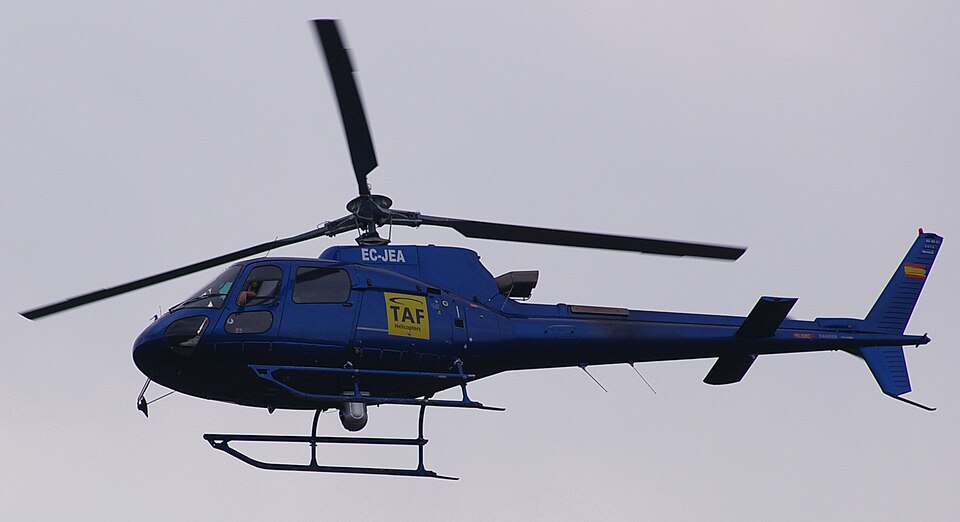
On 9 January 2018, at 11:40 h, an Airbus Helicopters AS 350 B3, registration EC-JEA, operated by Habock Aviation, sustained damage during a landing at Vall de Ruda, in the municipality of Naut Aran, Lleida, Spain. The helicopter was conducting a commercial air transport positioning flight in support of a heliski operation.
The flight had departed from Vielha Heliport (LEVH) at 08:55 h carrying the pilot, four passengers, and a mountain guide. After dropping the skiers at a peak near Estanho d'Escunhau, the helicopter proceeded down the valley to a designated landing point. During the final phase of the landing, the main rotor blades struck tree branches. The resulting vibrations did not prevent the pilot from completing the landing safely. The pilot, the only person on board, was unharmed and evacuated the aircraft unaided.
The aircraft sustained significant damage to the main rotor system.
Analysis
The investigation analyzed the operation, the landing area, and the measures taken by the operator. The landing area was confined and its dimensions were smaller than the minimum required by the operator's procedures. The approach was performed with a high rate of descent.
Conclusions
Findings
- The helicopter struck a tree during the final landing phase.
- The pilot was the sole occupant and was uninjured.
- The aircraft sustained damage to the main rotor.
Cause/Contributing Factors
The investigation determined that the accident was caused by the loss of visual references during landing. This loss may have resulted from the pilot's excessive focus on the tree that was ultimately struck, preventing the acquisition of other visual references to adjust the aircraft's position within the landing area. When the tree left the pilot's field of view, the sole reference for estimating separation was lost. Contributing factors included the selection of a confined landing area with dimensions below the operator's minimum requirements and the high rate of descent during the approach.
Safety Recommendation
As a result of the investigation, a safety recommendation was issued to the aircraft operator.