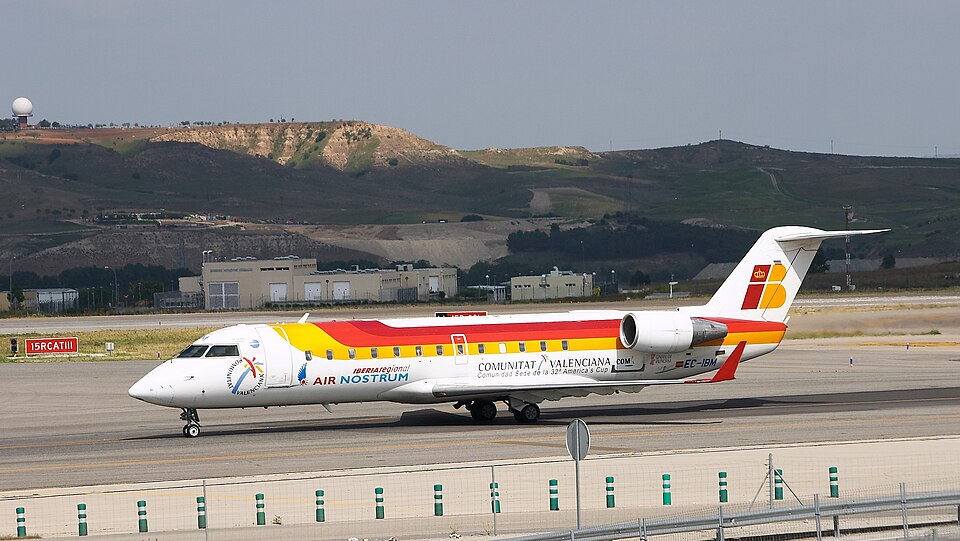
History of the Flight
On 24 January 2007, a Bombardier CL 600-2B19, registration EC-IBM, operated by Air Nostrum, was conducting a flight to Barcelona Airport. During the approach, the flight crew experienced a flap failure warning. The crew performed the non-normal checklist and configured the aircraft for landing with flaps up. The aircraft touched down on runway 25R with the landing gear retracted. The landing gear was not extended prior to touchdown.
Aircraft Information
The aircraft was a Bombardier CL 600-2B19, serial number [not specified in source], powered by two General Electric CF34-3B1 engines. It held a valid airworthiness certificate. The flaps system had experienced previous malfunctions, documented in the maintenance log.
Crew Information
The captain held an Airline Transport Pilot License (ATPL(A)) and the copilot held a Commercial Pilot License (CPL(A)). Both were qualified on the type. The flight crew had no known medical issues.
Injuries and Damage
No injuries to persons were reported. The aircraft sustained damage to the lower fuselage, engine nacelles, and flap surfaces. The landing gear doors were also damaged. There was no fire.
Investigation
The investigation was conducted by the Spanish Civil Aviation Accident and Incident Investigation Commission (CIAIAC). Analysis of the cockpit voice recorder and digital flight data recorder provided information on the flight parameters and crew actions. The flaps electronic control unit and associated components were inspected. The investigation found that the flight crew did not ensure the landing gear was extended prior to landing due to inadequate management of the non-normal situation caused by the flap failure condition.
Probable Cause
The landing of the aircraft with the landing gear retracted was the result of the flight crew’s failure to ensure that the landing gear was extended prior to landing, due to the inadequate management of the non-normal situation resulting from a flap failure condition that increased the crew’s workload and diverted their attention from the landing gear extension procedures.