Light Aircraft Capsizes Due to Jet Blast from Antonov at Valencia Airport

Casualties unknown • Aeropuerto de Valencia (Valencia / València), ES

A Bücker BU 131 biplane overturned during taxiing at Manises Airport after being struck by the engine exhaust of an Antonov AN-124-100.

What happened

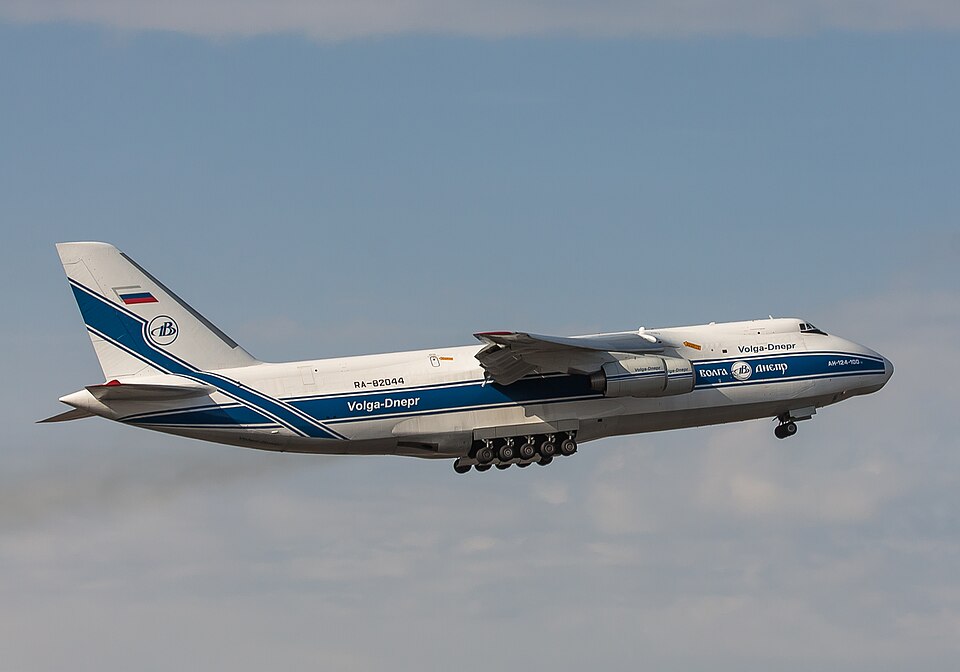
On February 11, 2007, at approximately 11:43 UTC, a CASA 1131E (Bücker BU 131), registration EC-GCE, was taxiing on taxiway J at Manises Airport (Valencia) toward the holding point for runway 30. The aircraft, operated privately, was carrying a pilot and one passenger. As the biplane passed parking stand 26, it encountered the jet blast from the engines of an Antonov AN-1t4-100, registration RA 82044, which was parked at the stand and undergoing engine start-up.

The sudden force of the exhaust caused the right wing of the EC-GCE to lift abruptly, followed by the left wing striking the ground. The aircraft began to pivot, causing the tail to rise and the propeller to impact the terrain, which ultimately resulted in the aircraft capsizing and coming to rest inverted. The pilot and passenger were uninjured and able to exit the aircraft on their own. The Antonov AN-124-100 sustained no damage, though its departure was delayed as ATC instructed the crew to shut down their engines following the incident.

The investigation

The CIAIAC investigation examined the sequence of communications, the airport's infrastructure, and the meteorological conditions. The investigation established that the air traffic controller (ATC) had authorized the engine start-up for the Antonov AN-124-100 and had also authorized the EC-GCE to taxi, instructing the light aircraft to expedite its movement to clear the large aircraft.

Investigators found that the pilot of the EC-GCE could not see the Antonov's anti-collision lights due to their position on the large aircraft's fuselage and nose. Furthermore, the area where the accident occurred was a "blind spot" for the control tower, as the intersection of taxiway J and the general aviation apron was not visible from the tower at that time. The investigation also noted that the airport was undergoing construction, and the current AIP did not specifically address the conflict between taxiing on taxiway J and engine start-up at stand 26.

Findings

  • The primary cause of the accident was the direct exposure of the Bücker BU 131 to the jet blast from the Antonov's engines at close range.
  • The use of simultaneous Spanish and English communications led to a lack of mutual awareness between the aircraft and ATC; the controller misinterpreted the Antonov crew's report that engines were already running.
  • The wind conditions, with gusts up to 23 knots, acted as a contributing factor by channeling the engine exhaust toward the taxiway.
  • The parking stand 26 lacked jet blast protection barriers across its entire wingspan, and the existing barriers did not cover the taxiway area.
  • The incident occurred in a visibility shadow zone where the tower had no direct line of sight and no surveillance cameras were installed to compensate for the lack of visibility.

Probable cause

The accident was caused by the light aircraft being subjected to the high-velocity exhaust from the Antonov's engines during start-up, compounded by a communication breakdown between ATC and the crews due to the use of different languages.

Frequently asked questions

What happened in the 2007-02-11 Antonov AN-124 accident near Aeropuerto de Valencia (Valencia / València), ES?

A Bücker BU 131 biplane overturned during taxiing at Manises Airport after being struck by the engine exhaust of an Antonov AN-124-100.

What aircraft was involved and where did it happen?

The accident on 2007-02-11 involved a Antonov AN-124, registration RA-82044, at Aeropuerto de Valencia (Valencia / València), ES.

What was the probable cause of the accident?

The accident was caused by the light aircraft being subjected to the high-velocity exhaust from the Antonov's engines during start-up, compounded by a communication breakdown between ATC and the crews due to the use of different languages.

Investigation report by the Spanish Civil Aviation Accident and Incident Investigation Commission (CIAIAC). Original record: https://www.transportes.gob.es/recursos_mfom/2007_006_a_0.pdf. This page is a structured re-presentation; facts and quotes are in the Comision de Investigacion de Accidentes e Incidentes de Aviacion Civil (CIAIAC), Spain - Ministerio de Transportes y Movilidad Sostenible.
Loading the flight search…