Ultralight Crash in Chonburi Kills Pilot Due to Wing Fabric Failure
An X-AIR HAWK ultralight crashed in Chonburi, Thailand, killing the pilot and injuring a passenger. The accident was caused by deteriorated wing fabric and…
On March 22, 2015, an ATR 72-212A (registration EC-KGJ) was involved in an aviation accident near En crucero entre Tenerife Norte y Gran Canaria (Santa Cruz de Tenerife), ES. Investigators recorded the probable cause as: The investigation determined that the turbulence was of convective origin and light in nature. Contributing factors included the operator's use of a significant weather map that did not include turbulence and icing forecasts for the accident area, the stable… This summary draws on records from the Spanish Civil Aviation Accident and Incident Investigation Commission (CIAIAC).
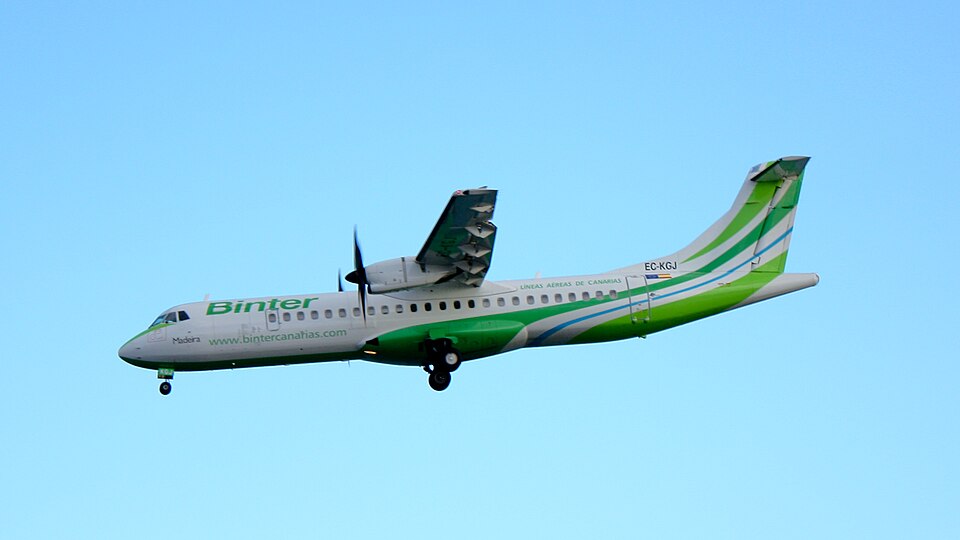
On March 22, 2015, NAYSA ATR 72-212A EC-KGJ encountered turbulence at FL130 between Tenerife and Gran Canaria, causing a 2.54 g vertical acceleration. One passenger was seriously injured and three crew members sustained minor injuries.
The investigation determined that the turbulence was of convective origin and light in nature. Contributing factors included the operator's use of a significant weather map that did not include turbulence and icing forecasts for the accident area, the stable atmospheric conditions experienced during the previous three flights and the seven minutes prior to the event, and the limitations of meteorological radars in detecting certain atmospheric phenomena such as turbulence.
An X-AIR HAWK ultralight crashed in Chonburi, Thailand, killing the pilot and injuring a passenger. The accident was caused by deteriorated wing fabric and…
A Challenger II Special ultralight aircraft (U-B23) landed off-runway at Pai Airport, Mae Hong Son, on September 17, 2024, due to a gust of wind. No injuries…
The Polish aviation safety authority is investigating a serious incident involving an AT-3R100 aircraft that occurred on September 2, 2024. The investigation…
A SZD-48-3 glider suffered damage when its left wing struck a ground obstacle during a low final approach at EPWK on June 20, 2025. The pilot was uninjured.
A 39-year-old skydiver died after a hard landing near Leszno on May 1, 2026. The PKBWL preliminary report indicates the fatal impact resulted from a late,…
A student pilot crashed an SZD-50-3 Puchacz glider into the airfield fence during a solo training flight on June 6, 2026. The pilot was uninjured, but the…