What happened
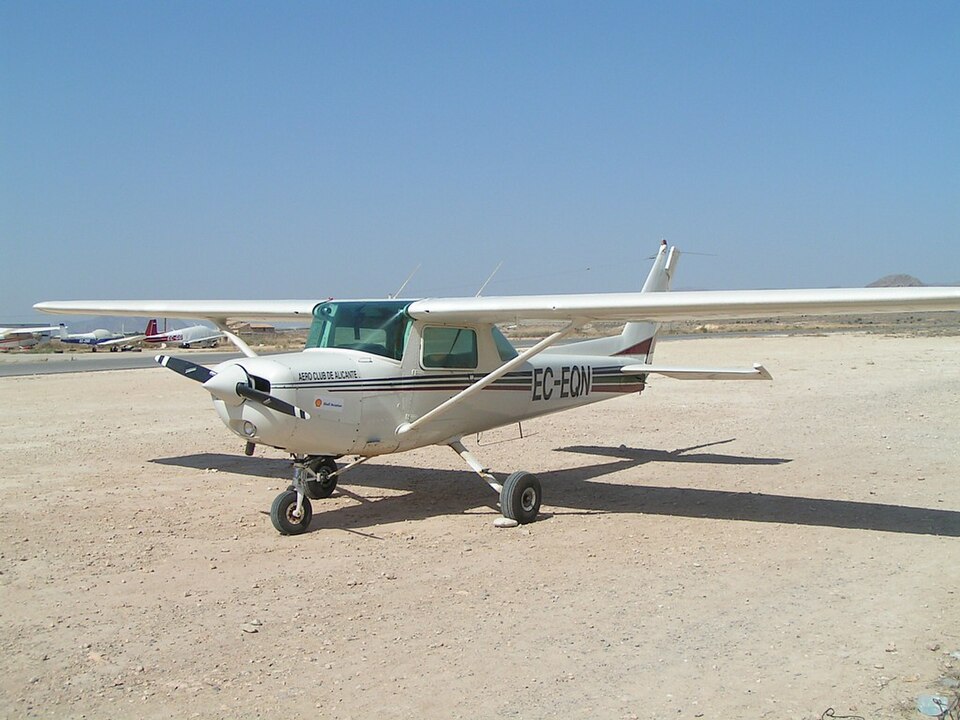
On August 4, 2011, at approximately 19:15 local time, a private Cessna 152, registration EC-EQN, performed an emergency landing in the sea near Alfás del Pi, Alicante. The flight had departed from Mutxamel airfield at 18:40 local time for a local VFR flight with the pilot and one passenger on board.
Prior to the flight, the pilot had completed a familiarization flight in the aircraft with an instructor. Before departing for the mission, the pilot noted that the fuel gauge was near zero. Based on this observation, the pilot calculated the remaining endurance and estimated a maximum flight time of 45 minutes. The flight proceeded at an altitude of 1,500 ft under optimal meteorological conditions. Approximately 20 minutes into the flight, the pilot decided to return to the airfield. Five minutes later, the engine began to sputter and subsequently failed.
During the descent, the pilot attempted several restarts without success. Unable to find a suitable landing field on land, the pilot directed the aircraft toward the coast, eventually performing an emergency water landing on the beach area of Alfás del Pi. Both occupants managed to exit the aircraft before it sank, though the pilot had to return to assist the passenger with their seatbelt as the cabin became submerged. The occupants were rescued from the water by local lifeguards and sustained no injuries.
The investigation
Following the accident, the aircraft was recovered from the sea. An inspection of the recovered fuel revealed approximately 15 liters of liquid, consisting of 14 liters of water and only 1 liter of fuel. The fuel filter contained only water.
Technical examinations of the Cessna 152 showed that the flight controls, engine controls, fuel system, and ignition system were all functional and showed no signs of mechanical malfunction. The fuel gauges were also found to be operational. The investigation also noted that the aircraft had been flying for 4 hours and 5 minutes since its last refueling, based on an estimated hourly consumption of 21 liters.
Findings
- The primary cause of the accident was fuel exhaustion.
- The pilot made an erroneous calculation regarding the remaining fuel, assuming the tanks were full at the time of the last refueling.
- The cockpit fuel gauge, while imprecise, was already indicating a critically low fuel level prior to the engine failure.
- The passenger's survival was briefly compromised because the pilot, under significant stress, was unable to immediately release the passenger's seatbelt as the aircraft was sinking.