What happened
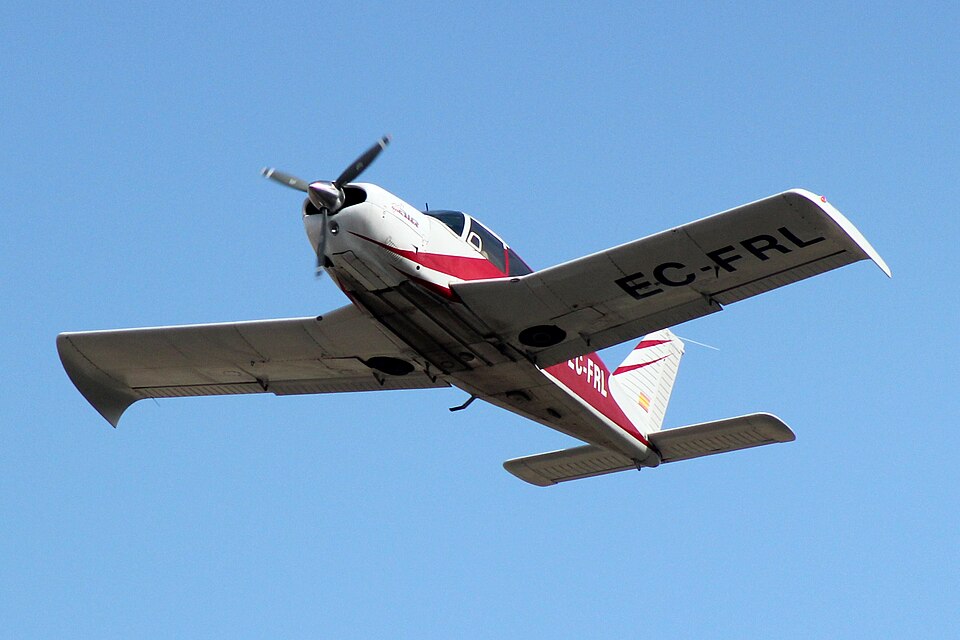
On October 26, 2014, a Piper PA-28R-180, registration EC-FRL, departed from Vigo Airport (LEVX) for a local flight over the Vigo and Pontevedra estuaries. Approximately 36 minutes into the flight, while cruising at an altitude of roughly 1,200 feet, the engine suddenly lost power and stopped.
The pilot attempted to restart the engine by switching the fuel selector between tanks, but was unsuccessful. While attempting an emergency landing in an industrial area under construction, the aircraft struck a mound of earth, which caused it to bounce and plunge down a steep embankment. The aircraft eventually came to rest in a ravine after striking trees and a fence. The impact resulted in four serious injuries (the pilot and three passengers) and significant structural damage to the aircraft.
The investigation
The investigation focused on the fuel system and the pilot's actions following the engine failure. Investigators examined the fuel levels in both wing tanks and found that the left tank contained approximately 53 liters, while the right tank contained less than the unusable fuel volume. The fuel selector was found in the right-tank position.
Analysis of the fuel consumption indicated that the pilot had likely miscalculated the fuel levels during the pre-flight inspection. The investigation also noted that the pilot's emergency procedures were incomplete, as the engine was functioning correctly prior to the failure, suggesting the issue was related to fuel supply rather than mechanical malfunction. Additionally, the flight plan contained errors, incorrectly stating only one person was on board.
Findings
- The primary cause of the accident was incorrect fuel management, which led to the exhaustion of usable fuel in the tank supplying the engine.
- The pilot performed an inaccurate pre-flight inspection regarding the remaining fuel volume in the tanks.
- The aircraft was operating from the right fuel tank, which had been depleted below the usable limit.
- The pilot did not correctly execute the full "Engine Power Loss" emergency procedure during the attempt to restart the engine.