Incident Overview
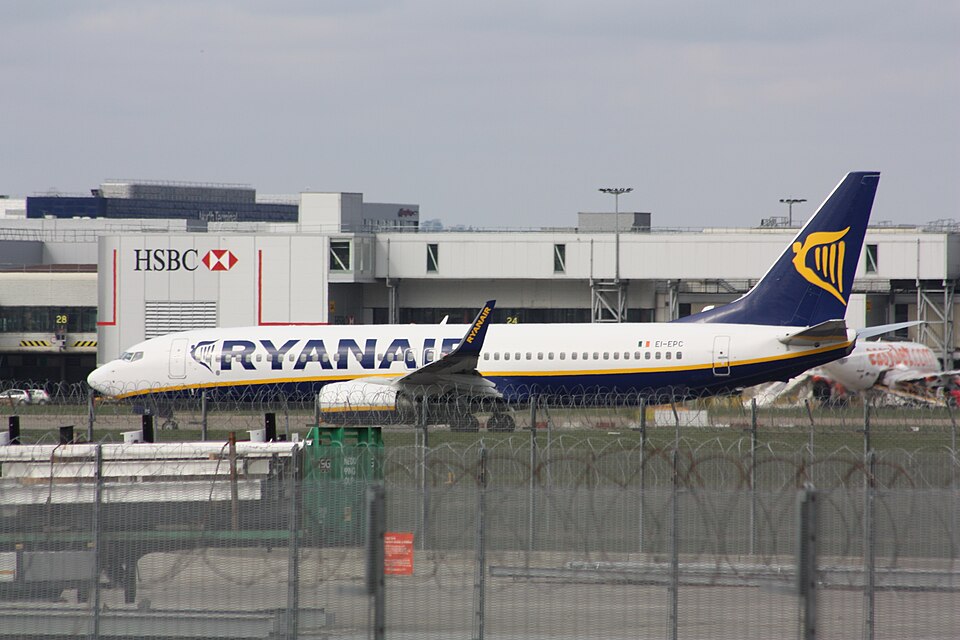
On 31 July 2021, a Boeing 737-8AS aircraft, registration EI-EPC, operated by Ryanair Designated Activity Company, was on a scheduled flight from Fez Airport (GMFF) in Morocco to Josep Tarradellas Barcelona-El Prat Airport (LEBL). There were 178 people on board: two pilots, four cabin crew, and 172 passengers. The flight crew, after reviewing meteorological information provided by the flight dispatcher, anticipated possible turbulence during the descent into Barcelona and informed the cabin crew accordingly.
Events During Descent
The aircraft began its descent toward Barcelona Airport at 13:53:09 local time after 59 minutes in the air, with the autopilot and autothrottle engaged. During the descent, the flight crew observed cumulonimbus clouds on the weather radar and requested air traffic control to adjust the flight’s intended track to avoid the clouds. The captain then informed the cabin crew of the possibility of turbulence during the approach and asked them to proceed with securing the cabin.
While continuing its descent, the aircraft entered an area of undetected turbulence that lasted approximately two minutes. During this period, the aircraft’s speed increased until it approached the maximum operating speed (VMO). To reduce speed, the pilot flying (PF) disengaged the autopilot and pitched the nose up. This maneuver resulted in a recorded vertical acceleration of +3.09 g. One second later, the PF moved the control column in the opposite direction, lowering the aircraft’s nose and recording a vertical acceleration of -0.18 g.
At the time of these events, the cabin crew members were on their feet and beginning to secure the cabin. They did not have enough time to sit down or secure themselves, and were thrown against various parts of the cabin and fell to the floor. After the aircraft passed through the area of turbulence, one of the cabin crew members asked the flight crew to request an ambulance upon arrival at the airport, as two of the cabin crew members had been incapacitated.
Injuries
Upon landing at Barcelona Airport, the injured cabin crew members were attended by the airport’s medical service. In addition to the two cabin crew members, one passenger also suffered head wounds. All injured parties were taken to hospital.
Investigation and Probable Cause
The investigation concluded that the probable cause of the accident was the series of actions taken by the pilot flying to prevent the aircraft from exceeding the maximum operating speed while flying through an area of turbulence. These actions resulted in vertical acceleration that injured a passenger and two cabin crew members. The operator had already conducted an internal safety investigation into the accident and reinforced flight crew training on turbulence and overspeed, among other measures. The investigation considered these measures appropriate and did not propose any safety recommendations.