No fatalities

2002 Cessna Reims 337G accident at Cabo Negrete (EC-EDB)

Cartagena (Murcia), ES

On August 8, 2002, a Cessna 337 (registration EC-EDB) was involved in an aviation accident near Cartagena (Murcia), ES. No fatalities were reported. Investigators recorded the probable cause as: Loss of control of the aircraft, which impacted and sank in the water while flying near the cliff, possibly due to the effect of a leeward wind or vortex combined with a reduction in altitude and speed while attempting to verify what the camera operator had… This summary draws on records from the Spanish Civil Aviation Accident and Incident Investigation Commission (CIAIAC).
Sourcesthe Spanish Civil Aviation Accident and Incident Investigation Commission (CIAIAC)Primary reportUpdated 2026-10-18Data APIEditorial standards
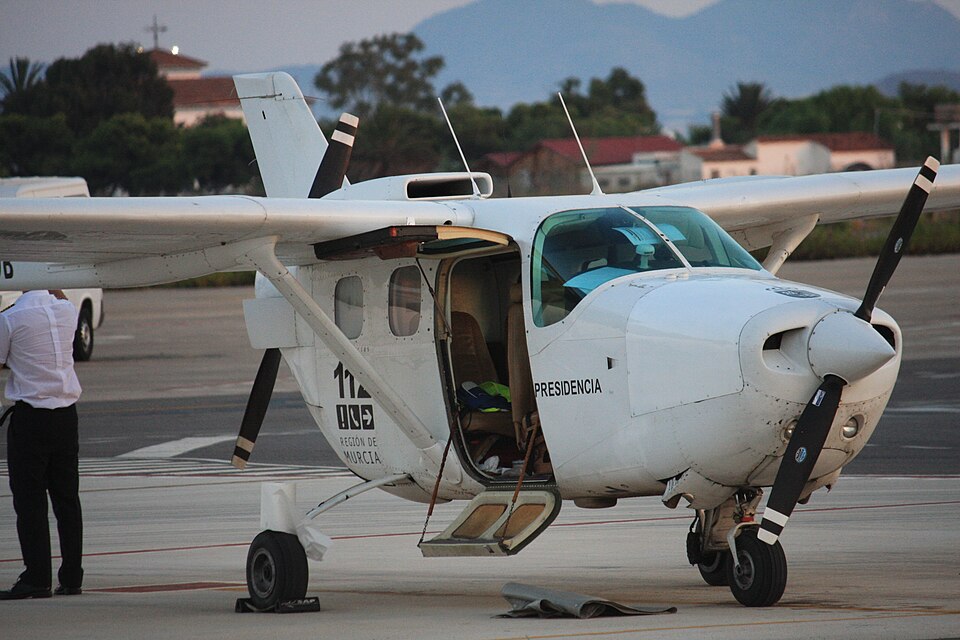
Aircraft registered EC-EDB
Aircraft registered EC-EDB. Photo: Andrew Thomas from Shrewsbury, UK / CC BY-SA 2.0, via Wikimedia Commons

On 8 August 2002, Cessna Reims 337G EC-EDB crashed into the sea near Cabo Negrete, Murcia, during a search-and-rescue flight. Both crew members escaped unharmed.

Incident overview and flight details On 8 August 2002 at 13:30 local time, a Cessna Reims 337G with registration EC-EDB was conducting a commercial aerial search for a diver who had disappeared the previous day along the coast of Murcia. The aircraft had departed from Murcia-San Javier Airport at 09:50 local time and had been operating for 3 hours and 30 minutes, having searched the area between Cabo de Palos and Cabo Tiñoso. The incident occurred near Cabo Negrete during what was planned to be the final pass along the coast before returning to the airport. ## Sequence of events While making the final pass, the camera operator observed something in a cliff area. As the pilot turned to investigate, an air current pushed the aircraft downward. Despite the pilot increasing engine power in an attempt to climb, the aircraft impacted the water and sank at a depth of 10 to 15 meters, approximately 100 meters from the coast. ## Occupants and rescue The two occupants were able to abandon the aircraft by diving out and then swam to the coast. A helicopter participating in the search operations recovered both crew members, who sustained no injuries. ## Aircraft and damage The aircraft was a two-engine Cessna Reims 337G (manufactured in 1974) with a maximum takeoff weight of 2,102 kg, owned by Sociedad Aeronáutica Peninsular. It was powered by two Continental engines: a Continental IO-360-G (210 HP) and a Continental IO-360-HCG (210 HP). The aircraft sustained significant damage from the water impact and from being submerged in salt water for one day. Impact damage included the lower cowling of the front engine, engine cooling flaps, the front propeller and spinner, the lower fuselage, landing gear doors, the right wing, right aileron, right strut fairing, right rudder fairing, and front exhausts. Submersion damaged the avionics, electronic systems, seats, upholstery, and cabin plastic covering. ## Crew information The pilot in command was a 27-year-old commercial pilot with 800 total flight hours, 300 hours on type, and IFR and multi-engine ratings. The pilot's license was issued on 16 March 1999, with the next renewal due on 30 May 2006, and the last medical certificate was dated 18 April 2002. The second crew member was a camera operator tasked with inspecting the area for the missing person. ## Meteorological conditions Meteorological information from Murcia-San Javier Airport indicated winds of 90° at 7 knots (varying 60° to 140°) with 10 km visibility at 11:00 UTC, and winds of 100° at 8 knots (varying 70° to 140°) at 11:41 UTC. The maximum wind recorded at the aerodrome that day was 90° at 15 knots at 18:32 UTC. At the Cartagena station, winds were recorded from 192° to 196° at 4 knots average speed, with a maximum of 187° at 11 knots at 14:20 UTC. Both the pilot and the rescue helicopter pilot reported winds from the northeast at 10 to 15 knots. ## Investigation findings The investigation noted that the pilot had refueled the aircraft to full tanks before the flight, and the flight plan indicated a 4-hour endurance. The pilot reported that the engines increased revolutions after power was demanded, indicating the engines functioned correctly. The pilot stated they were at 500 feet when the incident occurred, but it was possible the aircraft had descended below this altitude to get a closer look at what the camera operator had seen. The area was characterized by abrupt orography. The probable cause was determined to be loss of control of the aircraft, which impacted and sank in the water while flying near the cliff, possibly due to the effect of a leeward wind or vortex combined with a reduction in altitude and speed while attempting to verify what the camera operator had observed.

Frequently asked questions

What happened in the 8 Aug 2002 Cessna 337 accident near Cartagena (Murcia), ES?

On 8 August 2002, Cessna Reims 337G EC-EDB crashed into the sea near Cabo Negrete, Murcia, during a search-and-rescue flight. Both crew members escaped unharmed.

Were there any fatalities in the 8 Aug 2002 Cessna 337 accident?

No fatalities were recorded in this accident.

What aircraft was involved and where did it happen?

The accident on 8 Aug 2002 involved a Cessna 337, registration EC-EDB, at Cartagena (Murcia), ES.

What was the probable cause of the accident?

Loss of control of the aircraft, which impacted and sank in the water while flying near the cliff, possibly due to the effect of a leeward wind or vortex combined with a reduction in altitude and speed while attempting to verify what the camera operator had observed.

Investigation report by the Spanish Civil Aviation Accident and Incident Investigation Commission (CIAIAC). Original record: https://www.transportes.gob.es/recursos_mfom/2002_051_a_0.pdf. This page is a structured re-presentation; facts and quotes are in the Comision de Investigacion de Accidentes e Incidentes de Aviacion Civil (CIAIAC), Spain - Ministerio de Transportes y Movilidad Sostenible.