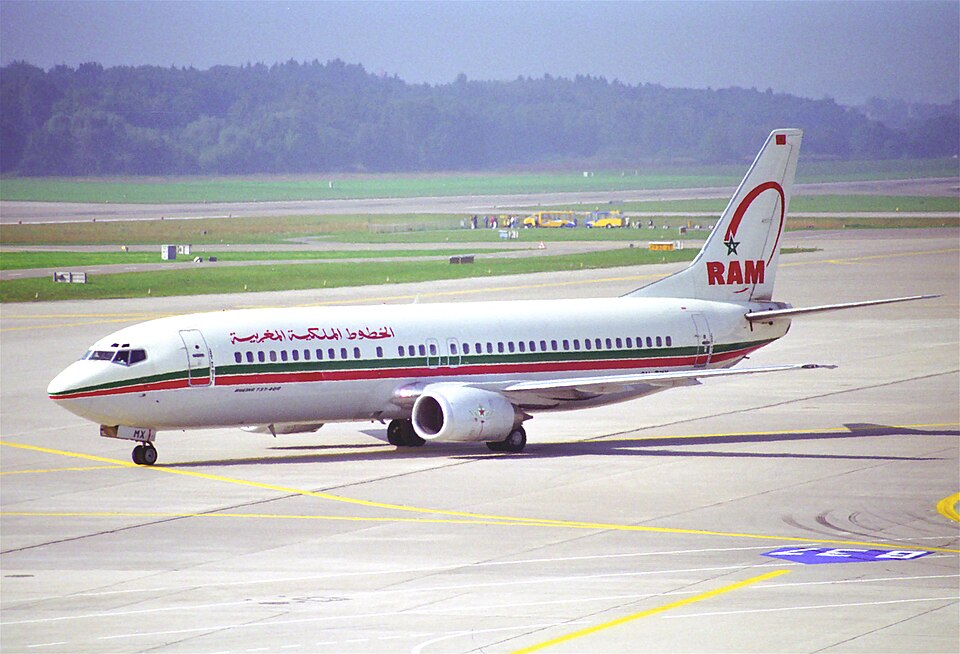
What happened
On May 22, 2006, a Boeing 737-4B6, registration CN-RMX, was operating a scheduled international charter flight from Marrakech to Metz Nancy Lorraine. During the arrival phase, the crew received ATIS information indicating runway 22 was in service and noted ongoing works south of the aerodrome. While the controller mentioned that only 2,100 meters were available, the crew did not correctly process this specific limitation, interpreting the figure as a visibility measurement.
During the subsequent departure for Marrakech, the crew performed takeoff performance calculations based on standard runway lengths (TORA of 2,500 meters) rather than the restricted distance caused by ongoing construction. As the aircraft accelerated, it struck temporary, unsecured runway lights positioned at the temporary threshold of runway 04. The aircraft continued its climb, but the crew was later notified by air traffic control that they had overflown the authorized 2,100-meter limit and had struck runway markers. Upon being alerted to the damage during their descent, the crew performed a precautionary landing.
The investigation
The BEA investigation focused on the dissemination of aeronautical information regarding the ongoing construction at the aerodrome. The investigation established that while a supplement to the AIP (SUP AIP) had been issued to detail the works and runway restrictions, the timing of its publication prevented it from being included in the current AIRAC cycle. Furthermore, the relevant NOTAMs did not explicitly state the specific runway length restrictions associated with the construction phase. The crew's navigation charts (Jeppesen) also lacked the temporary updates.
Findings
- The primary cause was the underestimation of risks by authorities responsible for aeronautical information regarding the delayed publication of the SUP AIP, which led to deficient information regarding runway limitations.
- The crew failed to recognize the reduced runway length because the ATIS and NOTAMs did not clearly highlight the operational changes.
- The crew did not correctly interpret the controller's verbal notification of the 2,100-meter limit, treating it as a visibility report.
- Contributing factors included a lower-than-ideal rotation rate and the use of partial thrust during the initial brake release.