Incident Sequence
At 18:38 UTC on 29 March 2010, the crew of EC-HHV, a CRJ 200, received clearance to taxi via taxiways Delta and Tango to holding point A1 for runway 04L. At 18:41, the crew of M-FROG, a Raytheon 390 Premier 1A, was instructed to taxi via Alpha to the same holding point. At 18:41:37, EC-HHV was cleared to cross runway 04L. At 18:42:15, EC-HHV was cleared to line up on runway 04R via taxiway W. At 18:42:56, M-FROG was cleared to cross runway 04L and taxi via taxiway W; the crew correctly read back the instruction. At 18:43:48, EC-HHV was cleared for takeoff on runway 04R.
At 18:44:09, the EC-HHV crew reported an aircraft on the runway and aborted the takeoff after rolling approximately 150 meters at a speed similar to normal taxi. The tower controller asked M-FROG: “Confirm you are not on the Whiskey taxiway?” The crew replied that they thought they were on the runway. The controller then instructed M-FROG to vacate the runway by taking the first right and returning to taxiway W. The crew, already on the runway, interpreted “first right” as exit at A33 and taxied along the runway to that point, while the controller expected them to use taxiway W. M-FROG ended up facing EC-HHV, which had to move slightly to allow it to vacate via A33. EC-HHV was subsequently cleared again for takeoff, followed by M-FROG.
Aircraft and Crew Information
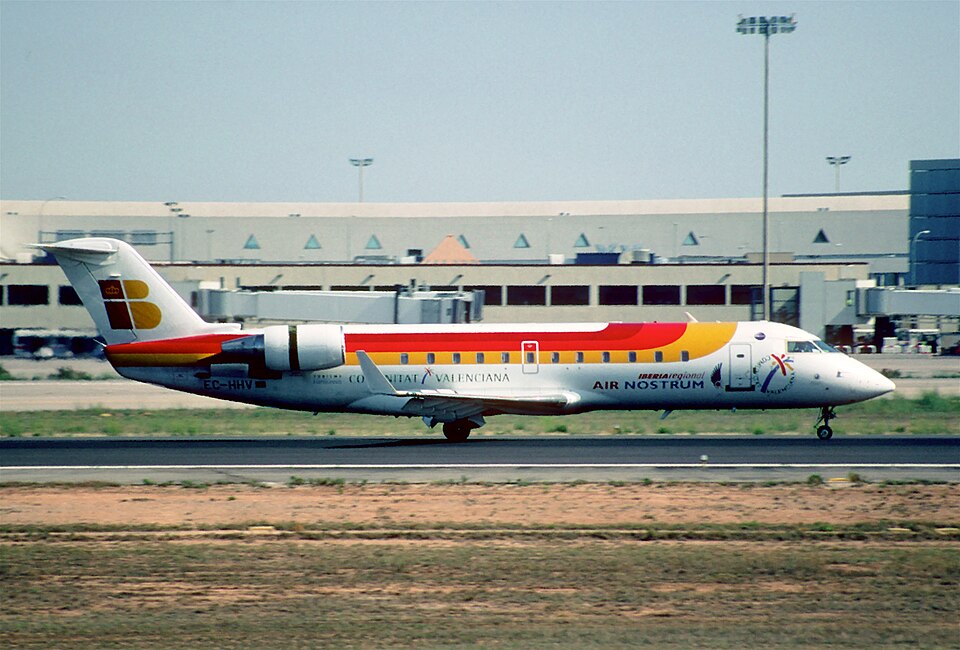
M-FROG (Raytheon 390 Premier 1A) was operated by The world is yours, ltd and carried two pilots and two passengers. EC-HHV (CRJ 200) was operated by Air Nostrum for regular international passenger service, with two pilots and passengers (number unspecified).
Aerodrome Information
Nice aerodrome had reinforced lighting at certain holding points, including A3, consisting of alternating yellow wig-wag lights and orange flush lights. These were operational during the incident. Holding point A3 was not designated as a Hot Spot on the chart at the time, though it has since been added. The branching of taxiways V and W on the aerodrome chart appeared after holding point A2, but actual geometry placed the branch before A2. A sign indicating taxiway W was difficult to see from the branch. Centerline lighting between runway 04L and 04R consisted of green lights: taxiway V lights were off, taxiway W lights were on, and the path between A2 and A3 was illuminated. The intensity of other taxiway lights was set to level 2 (out of 4). Nice aerodrome lacked surface movement radar and a Runway Incursion Management and Collision Avoidance System (RIMCAS).
Crew Statements
The EC-HHV crew reported seeing an aircraft enter the runway at holding point A3 during their takeoff roll and immediately aborted. The M-FROG crew stated they had difficulty navigating after crossing runway 04L. The copilot was taxiing while the captain used an electronic aerodrome chart. They had trouble seeing taxiway edge markings and found the centerline lights faint. They followed a yellow centerline that curved right, believing it led to taxiway W, but it led onto runway 04R. They realized their error upon seeing runway edge white lights and lights from another aircraft. The crew was not familiar with Nice aerodrome at night. The tower controller noted that at night it was very difficult, even impossible, to precisely determine the position of an aircraft the size of M-FROG from the tower.
Conclusion
No injuries or damage resulted from the incident. The EC-HHV and M-FROG both departed afterwards.