Incident Overview
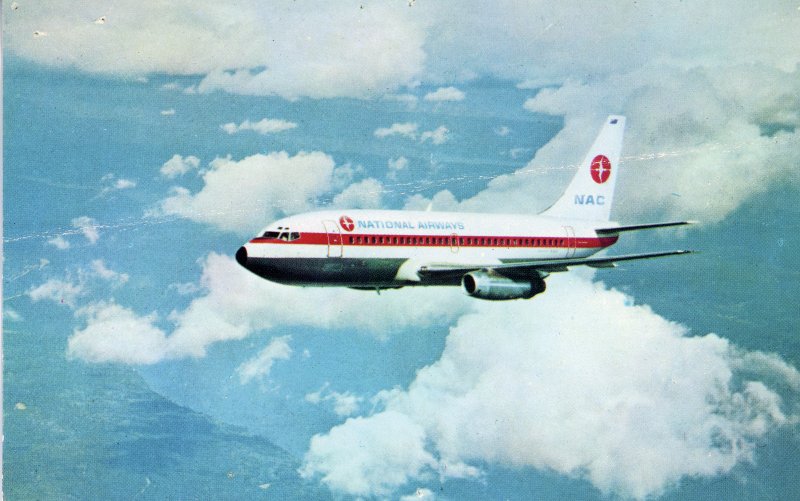
On March 11, 2003, a WestJet Airlines Boeing 737-200, registration C-FTWJ, departed Kelowna Airport, British Columbia, at 0840 Pacific standard time for Vancouver International Airport. The aircraft carried 6 crew and 50 passengers. Shortly after passing through 3300 feet above sea level, the pilots heard a loud bang similar to an engine compressor stall. The number 1 engine rotor rpm decreased rapidly, and the exhaust gas temperature exceeded the highest indicator value. The pilots shut down the number 1 engine (Pratt & Whitney JT8D-17A, serial number 688489) and leveled the aircraft at about 6000 feet. They declared an emergency and returned to Kelowna, landing on Runway 15 at 0912 with one engine inoperative. The aircraft taxied to the terminal without further incident. Airport rescue and firefighting services were called but not required. There was no injury or fire.
Engine History and Preceding Events
During the previous day, the number 1 engine had surged during start and acceleration from idle. While taxiing to the runway, at least three separate surging events occurred, and two more occurred while taxiing back to the gate for maintenance. The pilots described the surges as minor to moderate. Maintenance personnel replaced a pressure ratio bleed control (PRBC) valve per the Pratt & Whitney JT8D-17 Maintenance Manual. They did not perform a boroscopic inspection for compressor damage, as the troubleshooting instructions did not require it. A subsequent idle-power engine run indicated the surging problem was resolved, and the aircraft was returned to service. The engine then operated normally for approximately 3.5 hours until the incident.
Engine Condition Monitoring
WestJet had adopted Pratt & Whitney's engine condition monitoring (ECM) program. ECM data from the occurrence aircraft were recorded by the flight crew about three hours before the engine failure but had not yet been entered into the monitoring system. Post-occurrence analysis of that data showed an exhaust gas temperature shift upward by 20°C and an increase in engine core speed (N2) of about 2.5%, though these were within expected ranges and considered outliers requiring further data points for statistical significance. Data from the previous 30 days showed no adverse trends.
Post-Incident Examination
The number 1 engine was removed and shipped to Aerothrust Corporation in Miami, Florida. TSB, Transport Canada, WestJet, Pratt & Whitney, and NTSB representatives attended the tear-down. The low-pressure compressor (LPC) and high-pressure compressor (HPC) stages were examined. All LPC and HPC stages except the 1st and 2nd stages suffered mechanical distress or failure. Fatigue cracks were found on 13 airfoils of the 3rd stage rotor, with 14 others exhibiting advanced fatigue cracking. The HPC stages 7 through 13 also showed damage, including a missing airfoil from stage 8 that was discolored and splattered with aluminum particles. The TSB Engineering Laboratory concluded that it was likely the HPC failure preceded the LPC failure. Pratt & Whitney's report concluded that an unidentified piece of broken hardware in the stator stage just before or after rotor 3 provided an excitation source that liberated rotor 3 airfoils, leading to the engine failure.
Two Scenarios
Two scenarios were proposed for the failure origin. The first, from the TSB Engineering Laboratory, suggested that the failure was initiated when an 8th stage rotor airfoil dislodged, possibly due to a failed retainer pin, causing downstream damage and compressor surging. The second scenario, supported by Pratt & Whitney, focused on the 3rd stage rotor, with a liberated piece of material causing vibratory excitement and widespread fatigue. Due to extensive damage, the exact origin could not be determined with certainty.