Background
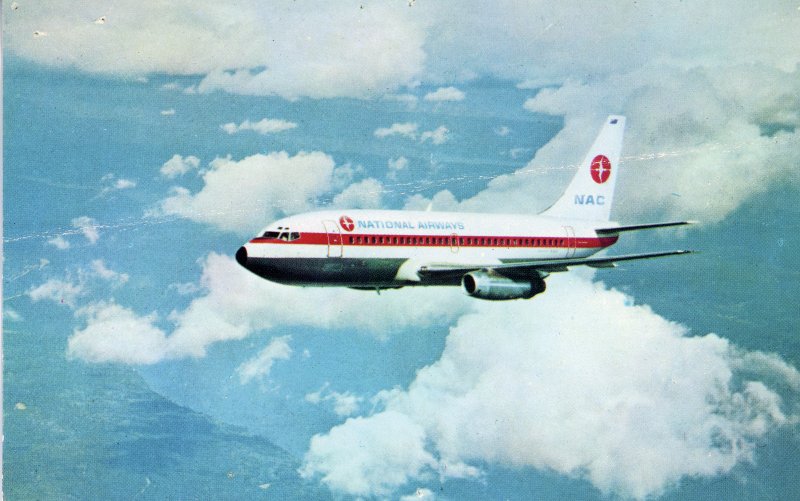
A Boeing 737-248C (registration C-FNVT), operated by First Air as flight FAB866, and a de Havilland DHC-8-102 (registration C-GYWX), operated by Air Creebec as flight CRQ502, were both approaching Kuujjuaq Airport (CYVP) in uncontrolled airspace. At the time, Runway 07/25 was closed daily due to a construction project, with only scheduled First Air and medevac flights permitted to use it. Other aircraft, including CRQ502, were required to use Runway 13/31, a gravel surface. FAB866 planned an RNAV approach to Runway 25, while CRQ502 initially planned an RNAV approach to Runway 25 but switched to Runway 31 after being informed of the closure.
Sequence of Events
FAB866 departed Montréal at 1004 EDT with 4 crew and 31 passengers, and CRQ502 departed Kangirsuk with 3 crew and 24 passengers. Both flew under instrument flight rules. At approximately 1220 EDT, as FAB866 was on final for Runway 25 and CRQ502 was approaching the Runway 31 approach path, the two aircraft came into conflict. The Kuujjuaq Flight Service Station (FSS) specialist provided traffic information, but frequency congestion and language switching (English and French) hampered coordination. FAB866 initiated a missed approach at 1220:13 after receiving an ACAS traffic advisory. At the closest point, the aircraft were separated by 2.0 nm laterally and 200 ft vertically. CRQ502 turned northeast away from the approach area. FAB866 later landed on Runway 25 at 1235, and CRQ502 landed on Runway 31 at 1252. Other aircraft in the area – Air Inuit Flight AIE820 and Pascan Flight PSC102 – also landed without incident.
Weather
At the time of the occurrence, weather at Kuujjuaq included wind 250°T at 12 knots gusting to 22 knots, visibility greater than 6 statute miles, and broken cloud at 4000 ft agl. Actual weather at 1200 reported scattered cloud at 3000 ft agl and an overcast ceiling at 7000 ft agl. By 1223, light snow reduced visibility to 8 statute miles.
Flight Service Operations
Two flight service specialists were on duty: one handling communications and traffic advisories, the other taking weather observations. The FSS provided airport advisory services on the mandatory frequency. Communication was bilingual, with aircraft switching between English and French, increasing workload and reducing available time for aircrew coordination. The FSS used the NAV CANADA auxiliary radar display system to monitor traffic but could not provide separation services; responsibility for collision avoidance rested with pilots under the see-and-avoid principle.
Aftermath
Both aircraft landed safely with no reported injuries or damage. The loss of separation occurred due to a combination of factors including the runway closure, communication difficulties, and the proximity of multiple aircraft approaching the same airport in uncontrolled airspace.