Accident Overview
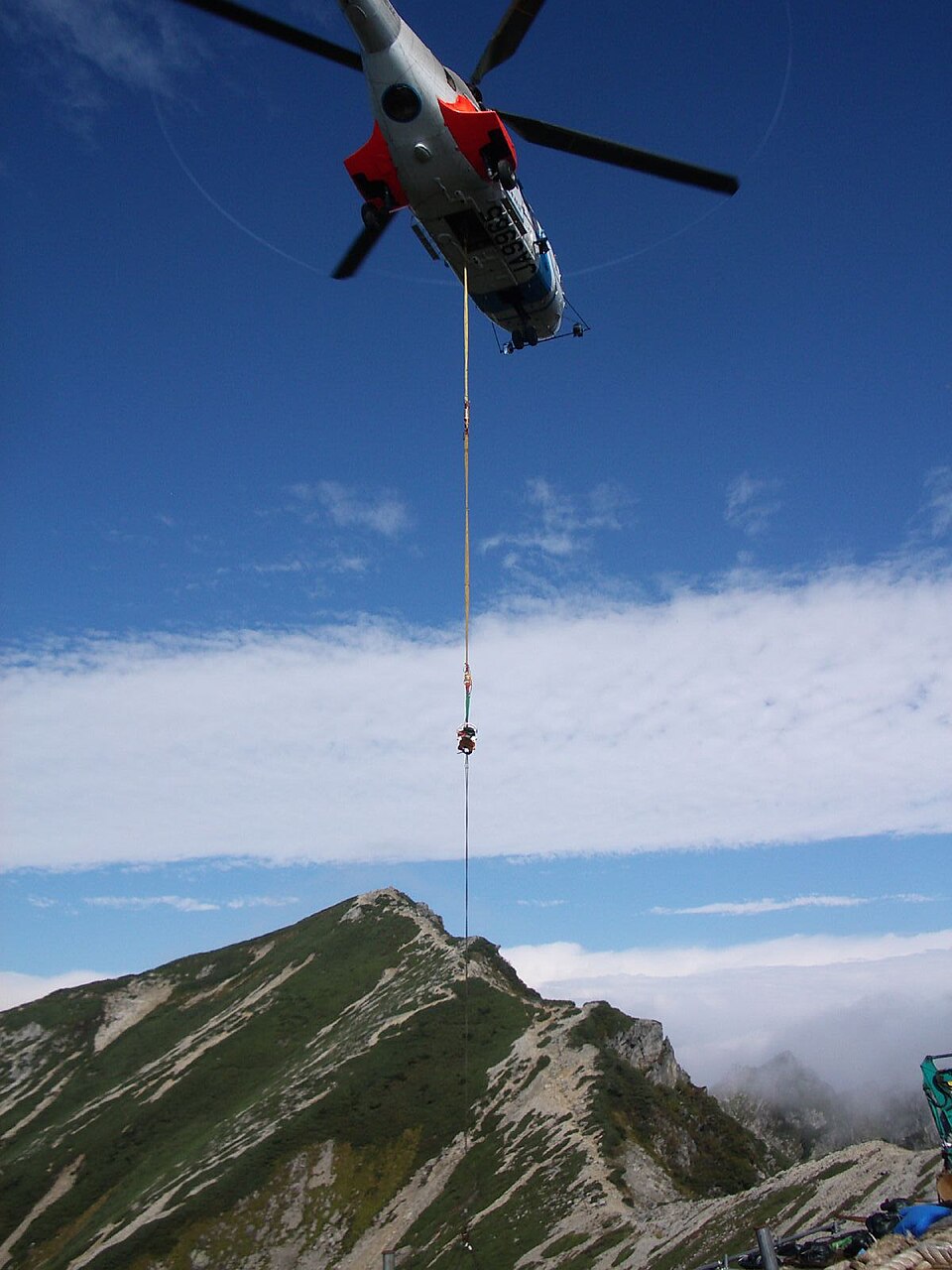
On November 19, 2012, at approximately 13:50 local time, a handler employed by Industrial Service Sales Inc. was injured during a cargo sling operation at the Mt. Shaka Loading and Unloading Site in Kitahira, Otsu City, Shiga Prefecture. The helicopter involved was an Aérospatiale AS332L1, registration JA9965, operated by Nakanihon Air Service Co., Ltd. The operation involved lifting a box-shaped work shed as part of training activities.
Flight and Ground Personnel
The helicopter crew consisted of a Trainee Pilot (TP) in the right cockpit seat, a Captain serving as flight instructor in the left cockpit seat, and an On Board Mechanic in the left cabin seat. Ground operators included a supervisor responsible for overseeing ground work, a signalman providing hand signals to the helicopter, a safety manager monitoring work conditions, and the handler who was to place sling legs on the sling hook. Prior to the operation, the supervisor provided safety and work procedure education to all ground operators using materials prepared by the aviation company.
Sequence of Events
The TP, under guidance from the signalman and On Board Mechanic, positioned the sling hook near the shed. The handler bundled four sling legs attached to the shed's roof corners and placed them on the hook, then moved to the west of the shed. The On Board Mechanic, observing the site visually, received an "OK" and "Wind up" signal from the signalman and began instructing the TP to slowly lift the sling legs. During lifting, a southwest sling leg was about to catch on a ventilation fan hood on the shed's south side. The On Board Mechanic gave successive instructions to shift the helicopter's position to avoid entanglement.
Simultaneously, a sling leg was about to be caught by the west eaves. The supervisor signaled "No" to the helicopter and manually moved the sling leg away. After confirming this, the signalman and safety manager moved to the east side via the north (uphill) and removed a sling leg from the east eaves. Another sling leg neared the south fan hood. After confirming the shed was grounded and the leg was not taut, the handler dashed to the south side (valley side) to prevent catching.
The On Board Mechanic continued guiding the helicopter. The southwest sling leg cleared the hood, but the southeast sling leg became caught by the eaves. The mechanic instructed to "Hold" (maintain position), but the shed's southeast portion lifted slightly from the ground and shifted toward the valley. The Captain and On Board Mechanic saw the lifted shed contact the handler, who fell about three meters down a vertical wall and slid a short distance down a slope before stopping. The handler waited until work was completed, then walked down the mountain with other ground operators and was transported to a hospital by ambulance.
Injuries and Damage
The handler was diagnosed with a right wrist fracture and a bruised chest, classified as a serious injury. The helicopter sustained no damage.
Safety Procedures
The aviation company had established "Cargo Transportation Implementation Procedures" emphasizing that after cargo is hooked, workers must move away without strain and secure safety before signaling. Neither signalman nor cargo sling worker should enter under the cargo or between cargoes. The company also had safety education materials instructing that if sling cargo is caught, the helicopter should descend and release the cargo before resuming. The ground work company had regulations requiring pre-work safety education, prohibiting supervisors from performing work, allowing the safety manager to suspend unsafe work, and requiring workers to follow supervisor instructions. Safety education for the supervisor and safety manager was conducted by the aviation company on September 3, 2012.