Accident Details
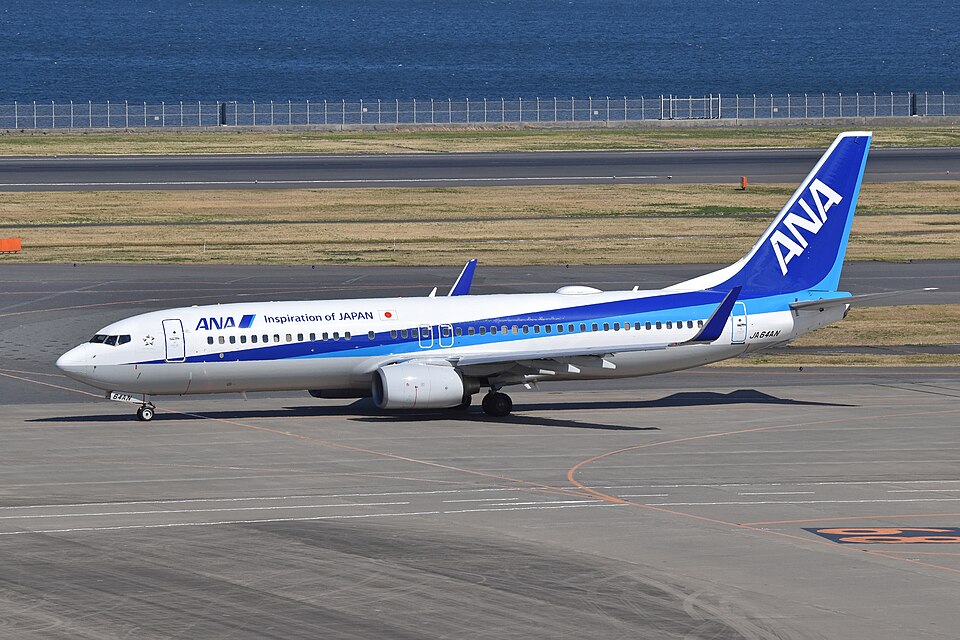
On April 12, 2020, at approximately 19:30 JST, a Boeing 737-800, registered JA64AN and operated by ANA Wings Co., Ltd. as All Nippon Airways flight 430, experienced sudden severe turbulence while cruising at an altitude of about FL270 (8,200 m) over Ozu City, Ehime Prefecture, Japan. The aircraft was en route from Fukuoka Airport to Osaka International Airport with 26 persons on board: the pilot in command (PIC), a first officer (FO), five cabin crew members, and 20 passengers.
Flight History
The flight departed Fukuoka at 19:12. The PIC planned to cruise at FL270 based on meteorological forecasts and reports from a preceding aircraft indicating stable conditions at 27,000 ft. After takeoff, the aircraft climbed and reached FL270 at about 19:22. The PIC turned off the seat belt sign as no clouds were present at cruising altitude and no turbulence was encountered. At 19:26, the PIC announced to passengers that seat belt sign would be illuminated approximately 10 minutes later due to possible turbulence during descent.
At 19:28, while the PIC was communicating with ATC, the aircraft briefly skimmed thin clouds. The PIC activated the engine anti-icing system but kept the seat belt sign off as the air remained stable and weather radar showed no strong echoes. At 19:29:40, the aircraft suddenly experienced two fierce shaking events. The PIC immediately illuminated the seat belt sign and took over control. The PIC requested and received clearance to climb to FL290 to avoid clouds, but the aircraft re-entered clouds and shaking continued until descending to FL190 at about 19:41.
Injuries and Damage
All passengers remained seated with fastened seat belts and sustained no injuries. Three cabin crew members in the forward galley avoided injury by sitting or holding the galley handle. However, a cabin crew member (designated Cabin crew member A) stationed in the aft of the aircraft near the L2 cabin crew member seat was standing at the time. She squatted after the first shaking but was caught by the second shaking before she could sit. Her body floated, her head struck the ceiling, and she fell onto the floor, severely hitting her left lower back, left leg, and forehead. She immediately took her seat and fastened her belt. She reported severe pain to the senior cabin crew member. After landing at Osaka International Airport at 20:09, she was transported to a hospital and diagnosed with a partial fracture of the pelvis. The aircraft sustained no damage.
Meteorological Information
Prior to departure, meteorological forecasts indicated clouds developing with the approach of a low-pressure system. A preceding aircraft reported slight shaking near the cloud top at 25,000 ft but stable air at 27,000 ft. Satellite imagery at the time of the accident showed deep cloudy areas near the location of the event.