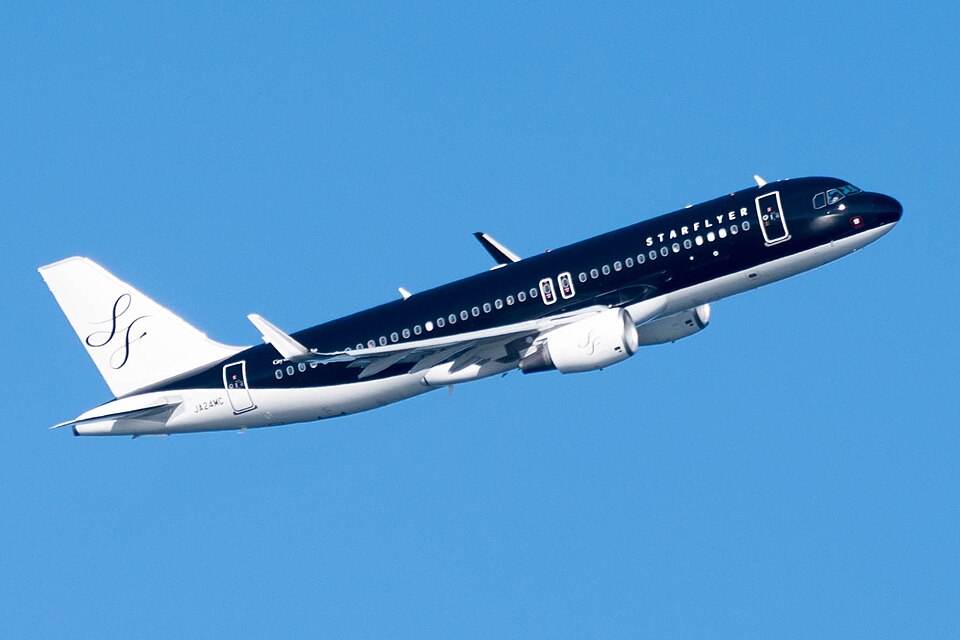
Flight Overview
On January 16, 2022, Star Flyer Inc. flight 87, an Airbus A320-214 (registration JA24MC), departed Tokyo International Airport at 18:48 JST bound for Kitakyushu Airport. The aircraft carried 56 occupants: a pilot in command, a first officer, three cabin crew, and 51 passengers.
Pre-Flight and Initial Cruise
Before departure, the flight crew briefed cabin crew that the seat belt sign would be turned off 10 minutes after takeoff, followed by 30 minutes of smooth air and then 42 minutes of light-minus to light turbulence. The cabin crew chief made an announcement urging passengers to keep their seat belts fastened low.
After takeoff, the aircraft climbed to FL280, encountered light turbulence, then climbed to FL300 where conditions were calm and the seat belt sign was turned off. Over Shiga Prefecture, light-minus turbulence prompted a descent to FL280, which was smooth.
The Incident
While cruising over Okayama Prefecture, the first officer left the cockpit to use the lavatory, handing control to the captain. The cabin crew chief entered the cockpit and occupied the observer seat. As the first officer exited the lavatory, the aircraft experienced a sudden clattering turbulence. The captain, who was flying, perceived the turbulence as light but braced for stronger shaking. He turned on the seat belt sign at 19:47:44, requested a descent to FL260, and received ATC clearance.
The shaking continued but was lateral in nature, not vertical. A passenger seated in 23A, who had kept their seat belt fastened, was thrown against the armrest, striking their right side at about 19:47:50. They described the shaking as the most severe they had ever experienced.
Crew Actions
The cabin crew chief near the forward lavatory grabbed the window assist handle to steady themselves. They noted that the shaking was not severe enough to cause passengers to cry out. The aft cabin crew member, who was in the aisle, walked to their attendant seat and sat down, describing the shaking as lateral and not requiring them to crouch. The first officer returned to the cockpit without staggering.
Aftermath
After descending to FL260, the flight crew turned off the seat belt sign and radioed the company that the turbulence was light. The cabin crew chief made a standard announcement. The passenger in seat 23A sustained a serious injury.