History of the Flight
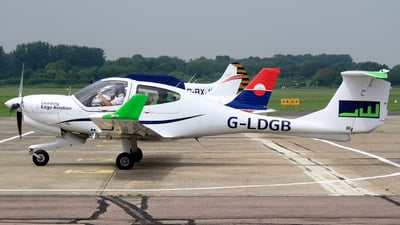
On 16 May 2023 at 1445 UTC, a Diamond DA 40 NG (registration G-LDGB) was conducting an instrument flight training lesson with two students (one pilot and one observer) and an instructor. The flight departed from Oxford Airport. During climb out, after a routine altitude warning, the instructor discussed visual and audio warnings on the Primary Flying Display (PFD). To demonstrate how to secure the door in response to a possible door warning, the instructor reached back and pushed on the rear door handle. The handle unexpectedly opened fully, and shortly afterward the rear door detached from the airframe. The instructor took control, notified ATC, and landed safely. No injuries were reported.
Door Description and Operation
The rear passenger door is a carbon fibre reinforced plastic molding with a handle that operates two locking bolts. A red safety latch is designed to hold the door in a near-closed position when parked and to help prevent separation if the primary lock is inadvertently opened in flight. The door hinge design includes a predetermined breaking point to allow a door that is closed but improperly locked to separate cleanly, preventing controllability issues.
Operator's Investigation
The operator's investigation concluded that the instructor intentionally manipulated the handle to show a door warning, but the instructor refuted this, stating he intended to demonstrate how to secure the door. The investigation found the red safety latch was likely not fully engaged or failed to retain the door. A check of the airframe and recovered door by the Continuing Airworthiness Management Organisation found no fault with the locking mechanisms; hinge damage was consistent with the door being torn away. Witness marks on the retaining block were assessed as normal wear.
Tests and Research
Research by the Design Organisation indicated that since 2004, approximately 80 DA 40 and DA 42 series aircraft experienced in-flight door separations. No technical cause was established; most were attributed to doors not being properly closed. The design of locking components and hinges has been improved over time, including a 2010 Service Bulletin that introduced an improved retaining block. G-LDGB, built in 2015, benefited from these improvements. A 2011 Dutch Safety Board investigation found that excessive free play in the forward hinge combined with an unlocked door could deactivate the red safety latch; the hinges on G-LDGB were inspected recently and found satisfactory.
Analysis and Conclusion
The investigation could not determine the instructor's intent but concluded that his action inadvertently disengaged the primary locking mechanism. The door then opened in the airflow and tore off its hinges. No technical fault with the primary lock was found, and it could not be determined why the red safety latch did not retain the door. The hinge free play was unlikely a factor.
The passenger door detached from the aircraft because the primary locking mechanism was inadvertently disengaged by the instructor while demonstrating how to respond to potential door warnings. The reason the secondary mechanism did not retain the door could not be positively determined.
Safety Actions
The operator implemented several safety actions: providing clear guidance on rear door and latch use, amending the pre-flight checklist to include additional testing of the secondary latch, and reminding crews to report faulty secondary latches.