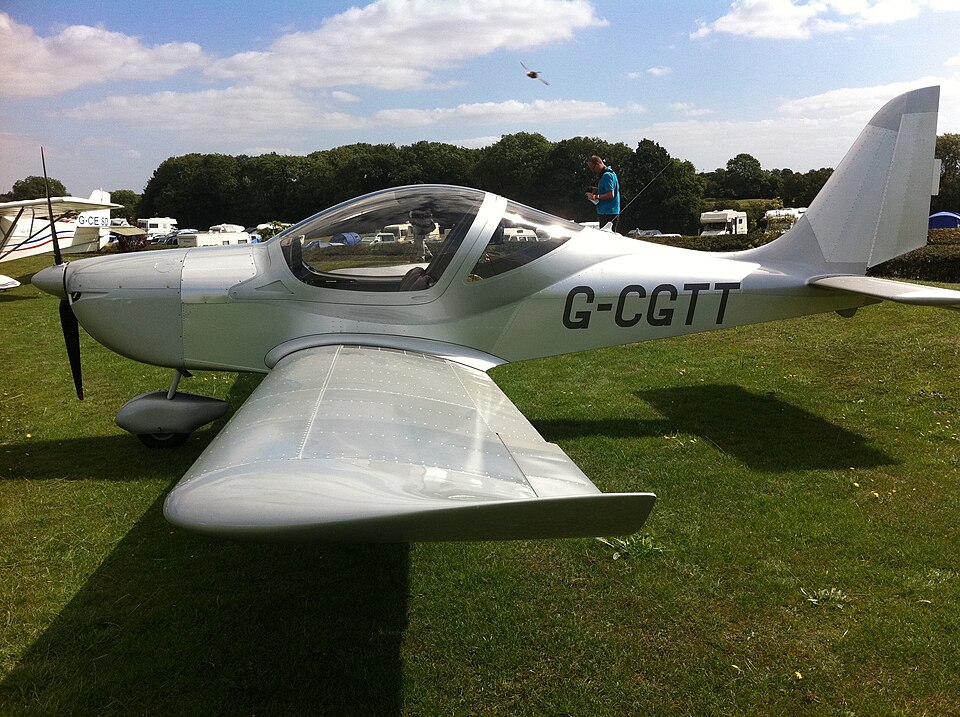
Accident Overview
On 8 May 2016 at 1154 UTC, a privately operated Aerotechnik EV-97 Eurostar SL (registration G-CGTT) was substantially damaged during a landing accident at Deanland Airfield, East Sussex. The aircraft had one Rotax 912-UL piston engine and was manufactured in 2011. The pilot, aged 71, held a Light Aircraft Pilot’s Licence and had accumulated 963 flying hours, with 252 hours on type. His recent flying experience included 13 hours in the last 90 days and 13 hours in the last 28 days. There was one passenger on board; neither occupant was injured.
Landing Details
Deanland Airfield has a single grass runway oriented 06/24 with a landing distance available of 457 m. The runway surface was dry at the time. The pilot chose to land on Runway 24 after observing the airfield’s windsocks and, a few minutes earlier, hearing a radio transmission from a departing aircraft. The decision was also influenced by the runway profile, which slopes upward towards its end.
The pilot reported that touchdown occurred at a higher speed and further down the runway than expected. However, with approximately 80 m of stopping distance remaining, he considered that the aircraft had slowed sufficiently under braking to safely exit the runway. While applying back pressure on the control stick, the pilot turned the aircraft to the right using the steerable nosewheel, intending to then make a 180° left turn.
Loss of Control and Damage
Directional control was lost at this point. The right wingtip struck a fence post bordering the runway, causing the aircraft to yaw into a wire fence, where it came to a stop. The aircraft sustained substantial damage to the wing skins and leading edges, right aileron, rear spar attachment, and propeller.
Post-Accident Conditions
A review of the airfield’s recorded weather station data indicated that, at the time of landing, the wind was from 112° at 4 kt, equating to a tailwind of about 3 kt.
Probable Cause
The pilot assessed the cause of the accident to be the choice of Runway 24, with a faster and deeper landing than expected, followed by degraded effectiveness of the steerable nosewheel when back pressure was applied on the control stick.