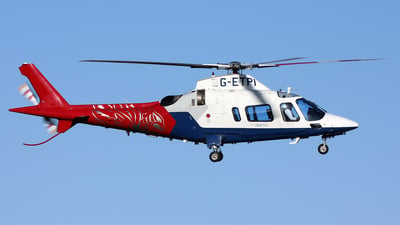
Incident
On 27 June 2019, an Agusta A109E helicopter, registration G-ETPI, experienced a serious incident during a post-maintenance flight north of Seaton, Cornwall. The helicopter had just departed from Liskeard Heliport for a track-and-balance check of the main rotor, with the commander in the right seat and an engineer in the left seat. As the helicopter accelerated towards 140 knots, a loud bang was heard and wind noise increased substantially. The commander observed that the left cockpit door window had separated from the aircraft. No increase in vibration or adverse effect on tail rotor control was noted. The flight was terminated and the helicopter returned to Liskeard, landing without further incident.
Maintenance History
The helicopter had recently undergone a full external repaint, requiring removal and disassembly of all cockpit and cabin doors and windows. This task was documented as a single item on a maintenance worksheet, signed off on 21 March 2019. The doors and windows were reassembled and refitted by an engineer, with the worksheet indicating inspection and certification on 9 April 2019. The left cockpit door window had been removed and reinstalled during this maintenance.
Investigation
Post-incident inspection of the left cockpit door revealed no evidence of adhesive residue on the door structure. A greasy residue was noted around the window aperture. The window and retaining seal were not recovered, so the presence of adhesive on the seal's window groove could not be confirmed. In contrast, the right cockpit door window, removed for inspection, showed correct adhesive application. Cabin and cabin door windows were also inspected; although adhesive was present, minimal squeeze-out was noted, leading to additional adhesive application.
The maintenance organisation conducted an internal safety investigation. It identified that the engineer who installed the left cockpit door window had difficulty fitting the seal filler strip. The engineer used a soapy solution liberally, with a stronger concentration than normal. The A109E maintenance manual specifies applying a thin layer of adhesive into the seal channel grooves and using a small brush with a soapy solution for the seal filler groove. The investigation determined that little or no adhesive had been applied to the door side of the left cockpit door seal. The excessive soap solution likely acted as a lubricant, reducing the seal's ability to retain the window by friction alone. The certifying engineer did not perform staged inspections during the task, based on a perception of simplicity and engineer competence. The maintenance paperwork lacked detail, recording only the certification date.
Findings
The investigation concluded that the steps taken during reinstallation differed from the maintenance manual. The absence of adhesive on the door side of the seal, combined with the lubricating effect of a soapy residue from the overly concentrated solution, allowed the window to separate. The certifying engineer's lack of staged inspection prevented early detection of the issue. The maintenance organisation has taken four safety actions as a result of these findings.