History of the Flight
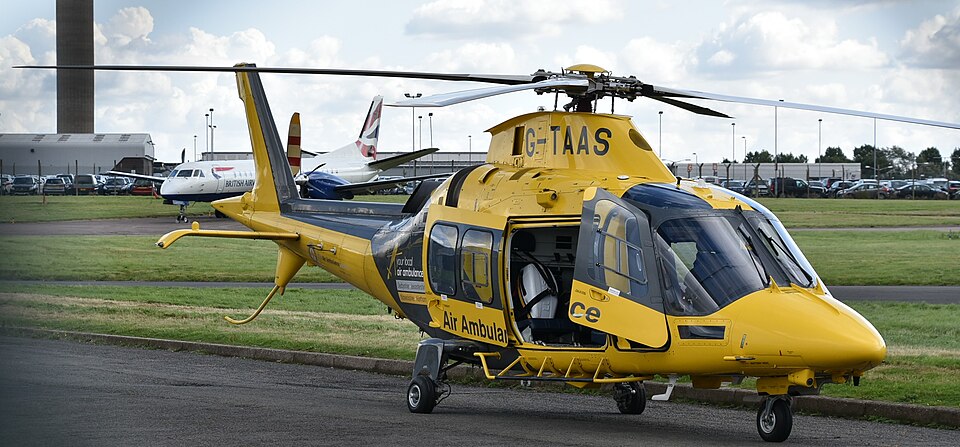
On 22 April 2021, the helicopter was returning from a HEMS mission to East Midlands Airport. At approximately 1,000 ft agl and 140 kt, the technical crew member (TCM) spotted a bird and shouted a warning. The pilot initiated a pitch and roll to the right, but a crow weighing 1.32 kg struck and penetrated the left windshield. The bird struck the TCM's helmet and continued into the cockpit door before becoming wedged behind the pilot's seat. The crew reported a noticeable vibration in the airframe. The pilot informed East Midlands ATC of the bird strike and executed a precautionary landing. The helicopter landed without incident and was shut down. The TCM was examined by the crew doctor and found to have sustained no injuries.
Damage
The acrylic left windshield shattered into multiple pieces that were found throughout the cockpit and passenger area. Debris from the windshield entered the main rotor disk, creating a hole in the trailing edge of one rotor blade.
Certification Background
The AW109SP was certified to EASA CS-27 (Small Rotorcraft) in 2007. CS-27 requires windshields to be made of material that does not break into dangerous fragments but has no bird strike resistance requirements. In contrast, CS-29 (Large Rotorcraft) requires design capability for continued safe flight after impact with a 1 kg bird at certain velocities. EASA has initiated rulemaking task RMT.0726 to improve rotorcraft occupant safety in bird strikes, proposing amendments to CS-27 for new designs (NPA 2021-02) and considering retroactive application to existing fleets. A decision on amendments is planned for 2022.
Previous Incidents
The AAIB has previously reported similar events on helicopters certified to CS-27: N109TK (2012), G-ODAZ (2014), G-BZBO (2016), and M-MYCM (2019).
Conclusion
The helicopter suffered a bird strike that penetrated a windshield. The pilot made an immediate uneventful precautionary landing. No injuries were sustained by the crew. The helicopter was not required to demonstrate bird strike resistance under its certification category.