History
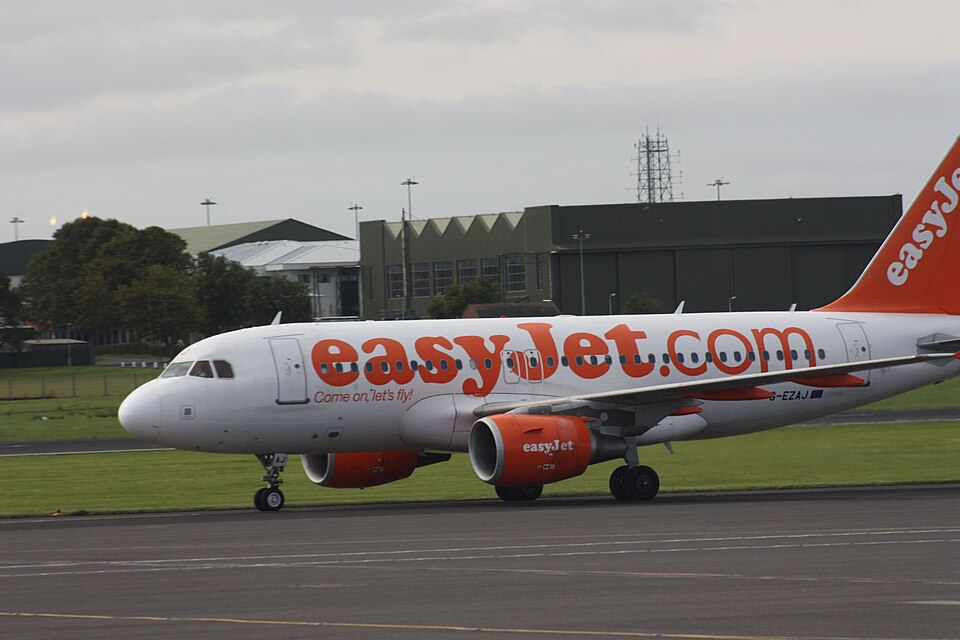
On 25 May 2021, the operator of Airbus A319 G-EZAJ sent a pre-allocation report to the maintenance organization (MRO) at Lasham Airfield, indicating a scheduled arrival from Gatwick at 0900 hrs the next day. This information was passed to the gliding club via email. A final allocation report later confirmed these timings. At 2235 hrs, the MRO received the flight plan with an estimated off-blocks time of 0800 hrs and a scheduled arrival of 0817 hrs, 43 minutes earlier than previously indicated. The flight plan was emailed to various parties, including the duty instructor (DI) of the gliding club, but not to any member of the winch team.
At 0730 hrs on 26 May, gliding club staff began preparations. The DI noted the updated arrival time but was unaware that the winch team planned to carry out maintenance on the winch cables; consequently, the DI did not update the winch team on the change. The commander of G-EZAJ called the duty Air-Ground Operator (AGO) at 0753 hrs to inform him of a 25-minute delay. Meanwhile, the winch team went onto the airfield, set up the winch along the south side of Runway 27, and towed out the winch cables. G-EZAJ taxied at Gatwick at 0800 hrs, and the AGO sounded the siren to deploy the airfield fire service at 0801 hrs.
At 0807 hrs, the Farnborough Radar controller (FRC) contacted the AGO, who advised that the runway was not yet available. G-EZAJ departed Gatwick at 0809 hrs. At 0811 hrs, the AGO told the FRC the runway was still unavailable. A minute later, the AGO determined from the Senior Fire Officer (SFO) that the runway would be available in 4 minutes and passed this to the FRC. The FRC and AGO agreed to position G-EZAJ onto final approach to fly a visual circuit if the runway remained unavailable.
At 0813 hrs, the winch team advised the SFO that the cables could not be retrieved immediately because they had been cut from the winch as part of maintenance and needed re-splicing. At 0817 hrs, the SFO advised the AGO that a further 5 minutes were needed due to the winch cables. The AGO informed the FRC, who stated he would advise the crew to expect a visual circuit. At 0819 hrs, the crew of G-EZAJ contacted Lasham Radio and were advised of a delay due to winch cables on the ground. At 0820 hrs, the SFO considered there was insufficient time to recover the cables while the aircraft flew a circuit, abandoned the attempt, and declared the runway available without mentioning the cable position. At 0827 hrs, G-EZAJ landed within the touchdown zone on Runway 27 with winch cables still on the grass aside the southern edge of the runway.
Aerodrome Information
Lasham Airfield is 32 nm west of Gatwick, within the Odiham Military Air Traffic Zone. It is a major gliding centre, owned by a gliding society, which leases part of the land to an MRO for large commercial aircraft. Responsibilities for airfield operations are shared. The MRO provides Air-Ground communication, airfield fire service, and ground handling. The asphalt main runway, Runway 09/27, is unlicensed. The Jeppesen airfield information plate warns of intensive glider operations with launch cables both on the ground and in the air up to 3,000 ft AAL, and occasional movements by large jets. The MRO seeks to maintain a protected runway strip equivalent to a non-instrument code 3 runway, extending 75 m either side of the centreline and 60 m beyond thresholds.
Winch-launch cables were 6 mm thick synthetic plastic with a parachute at the end for controlled descent. The cables were undergoing a cable reversal maintenance procedure, which required reeling out to full extent, cutting the end attached to the winch, and re-splicing to the opposite end. This procedure typically takes 10 minutes and uses the longest part of the airfield adjacent to Runway 09/27.
Investigation and Conclusion
The MRO investigation found an absence of coordination between airfield users, resulting in the winch team being unaware of the earlier arrival and flying staff unaware of planned cable maintenance. The AGO was unaware of the continued presence of cables when he advised the crew the runway was available. The SFO declared the runway available without updating the cable position, attributed to no written guidance on what constituted a secure runway strip; the SFO had discretion to determine safety. The investigation also found it likely that the SFO felt pressure to declare the runway available due to the aircraft's arrival in the circuit. The winch team was likely less current in maintenance tasks due to reduced winch launching during public health restrictions.
The location of the winch cables along the southern edge posed a potential hazard because the parachute might become inflated by jet wash if the aircraft landed near the threshold, though the commander considered this unlikely due to a treeline in the undershoot. The commander had been alerted to the cables when first speaking with Lasham Radio, but the subsequent declaration that the runway was available without an update may have given the impression the cables no longer posed a hazard. The commander had an incomplete picture.
Safety actions taken include: the airfield owner now requires individuals to contact the DI for a brief on airfield information and movements before entering the operational area; planned winch maintenance will be notified the day before; winch maintenance should be conducted as far from the main runway as possible. The MRO issued an information bulletin on the importance of securing the runway during heavy aircraft movements and what constitutes a secure runway strip.