History of the Flight
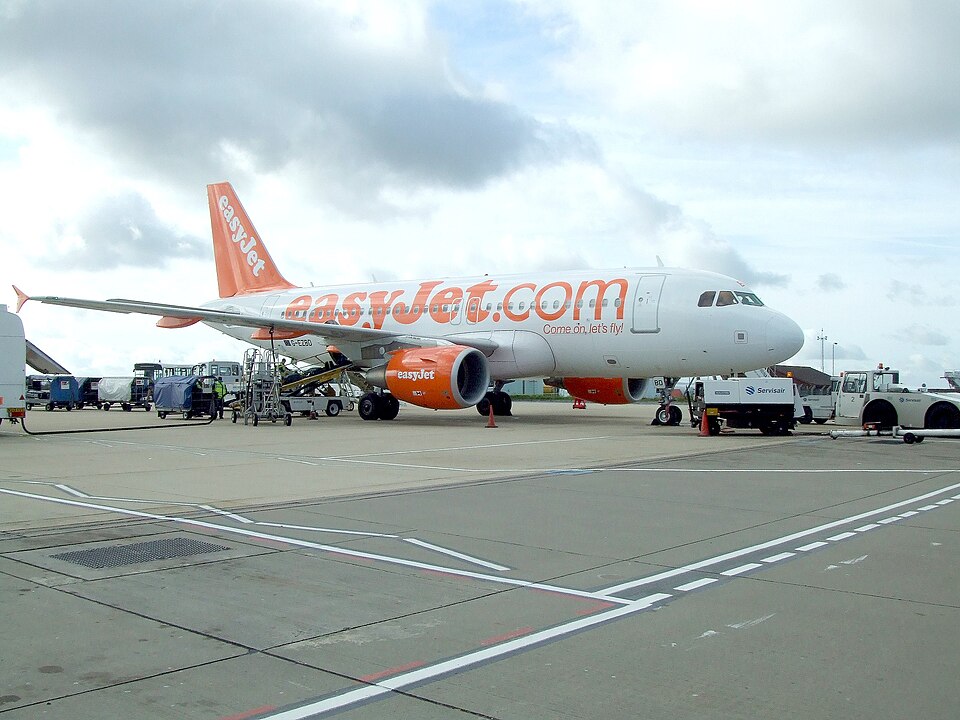
The aircraft, an Airbus A319-111 registered G-EZBD, had last operated a commercial flight on 14 June 2021, flying from Edinburgh Airport to London Luton Airport. It was then parked at Luton until 13 July 2021, when it was scheduled for a non-revenue flight after a period of long-term parking. The pilots were aware of the prolonged parking and had heard of similar incidents involving blocked pitot tubes. During their briefing, they discussed crosschecking airspeed indications at 80 kt and emphasized communicating any discrepancy exceeding 20 kt.
Pushback, engine start, and taxi were uneventful with no instrument malfunctions. The aircraft positioned for departure from intersection H on Runway 07 at Luton.
Crew Actions
After lining up, the commander set 50% thrust and noted the engines spooled up slower than normal, especially engine No 1. Once takeoff thrust was set, the commander read out the Flight Mode Annunciators. The aircraft was already at about 55 kt before the co-pilot confirmed thrust was set. The co-pilot crosschecked his airspeed indications with the Integrated Standby Instrument System (ISIS) as briefed. When first checked, the ISIS showed about 60 kt, but the Primary Flight Display (PFD) indicated 40 kt. He rechecked the ISIS, which had increased to about 80 kt. At 80 to 90 kt, the co-pilot informed the commander that his airspeed still read 40 kt. The commander confirmed the co-pilot's PFD showed 40 kt, not increasing.
The commander glanced outside to check runway alignment and remaining distance, then checked his own PFD, which exceeded 100 kt and accelerating rapidly. V1 had been calculated at 109 kt, so the commander made a quick decision to reject, calling "STOP" and initiating the rejected takeoff procedure moments later. The rejected takeoff was performed per standard operating procedures, except the co-pilot could not make a call at 70 kt due to his inoperative airspeed indication. The aircraft stopped abeam the A taxiway, approximately 350 m from the runway end. After confirming no evacuation was needed, the aircraft taxied off the runway and returned to stand.
Examination of Aircraft
Post-event examination of the pitot systems appeared satisfactory. All three pitot systems were flushed per Aircraft Maintenance Manual (AMM) procedures. During flushing, some debris was removed from the co-pilot's pitot system. The debris was not recovered, so its quantity and composition could not be determined. Leak checks after flushing were satisfactory.
The operator had maintenance procedures for long-term parking and recovery, varying by parking duration, all requiring pitot covers. The aircraft was parked on 14 June 2021 and 'Parking Less Than One Month' checks were carried out, recording pitot cover fitting. Subsequent '7 Day Checks' on 21 June, 27 June, 3 July, and 10 July required removal of pitot covers for ground runs and reinstallation afterward.
Analysis and Conclusion
The aircraft experienced an airspeed discrepancy due to a blocked pitot probe. The crew identified the fault through routine crosschecks and rejected the takeoff. Although the rejection occurred 11 kt above V1 (initiated at 120 kt), the aircraft's light weight (41,000 kg vs max 66,000 kg) allowed it to stop within the runway length. The source of the debris blocking the co-pilot's pitot probe could not be determined, but recorded data indicated the co-pilot's airspeed remained at 0 kt throughout the event, suggesting significant blockage. It was not possible to determine when the blockage occurred.