Introduction
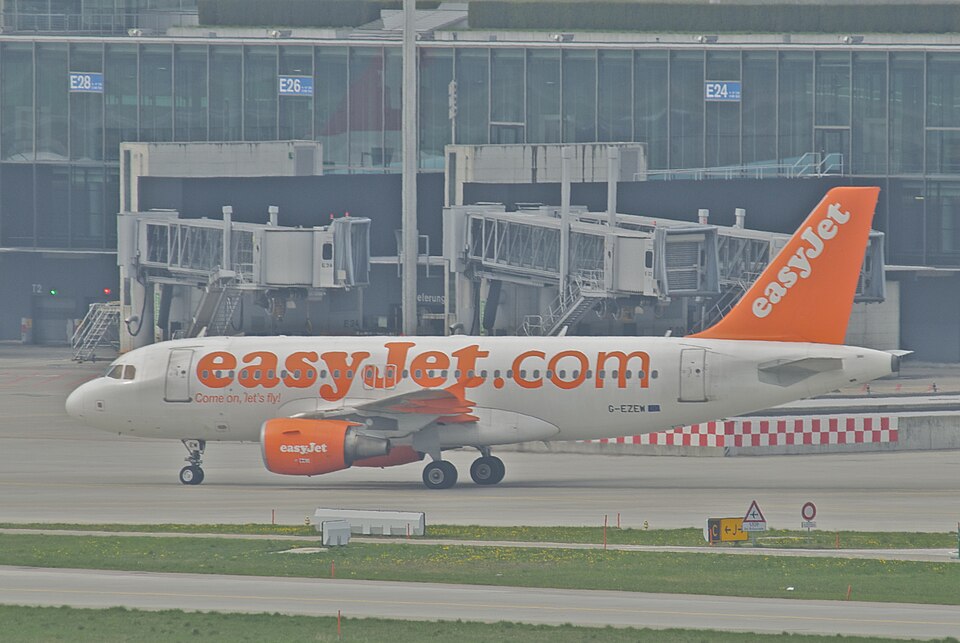
On 30 June 2016, an Airbus A319-111 (registration G-EZEW) operated a commercial passenger flight from Bristol Airport to Lisbon Airport. The aircraft, manufactured in 2004, was powered by two CFM CFM56-5B5/P turbofan engines. The crew consisted of six members with 144 passengers on board. The co-pilot was the pilot flying (PF), and the commander was the pilot monitoring (PM). No injuries were reported, and the aircraft sustained no damage.
History of the Flight
Takeoff from Runway 27 occurred at 1007 hrs with the flap lever set to position 1, configuring the slats and flaps to 1+f (leading edge slats extended to 18° and trailing edge flaps extended to 10°). The PF rotated the aircraft at 140 kt CAS, and lift-off occurred at 147 kt CAS. After the PM called 'positive climb', the PF instructed 'gear up'. The landing gear was selected up four seconds after lift-off.
Three seconds later, at approximately 190 ft radio altitude and 157 kt CAS, the PM moved the flap lever to position 0, causing the slats and flaps to begin retracting. The aircraft pitch attitude increased, and airspeed decreased. At 370 ft RA, the PF applied a nose-down corrective input, preventing the CAS from dropping below 153 kt. At 550 ft RA, the flaps were fully retracted, the slats were retracting through 7.5°, and CAS was increasing through 160 kt. The PM then informed the PF of the error and stated 'set toga', prompting the PF to move the thrust levers to the TOGA detent.
After the flap retraction, the PF observed the Vls indication on the primary flight display jump to 180 kt, 30 kt above the current speed. The PF requested flap extension, and the PM moved the flap lever back to position 1, causing the slats to extend (flaps did not re-extend due to system logic). At 710 ft RA and 183 kt, the Vls indication reduced below the instantaneous airspeed. When the aircraft accelerated to S speed, the PF moved the thrust levers to the climb detent. The PF then requested slat retraction at approximately 850 ft RA, and the autopilot was engaged at 870 ft RA.
Recorded Data
Flight data recorder parameters showed that when the flap lever was moved to position 0, pitch attitude was 15.1° nose-up and angle of attack (AOA) was 7.3°. During retraction, CAS reached a minimum of 153 kt, pitch attitude peaked at 17.2° nose-up, and AOA reached a maximum of 9.3°. At clean configuration, CAS was 171 kt.
Aircraft Technical Information
The Airbus A319 has an Alpha/Speed lock function that inhibits slat retraction at high AOA (above 8.5°) or low speed (below 148 kt). However, this protection did not activate because at the time of flap lever selection, AOA was 7.3° and CAS was 157 kt. Additionally, once the flap lever is moved to position 0, the protection is no longer active even if conditions change.
The operator's analysis noted that the PM had been thinking about a previous flap mis-selection event at the same airport and was anticipating the flap 0 call, which contributed to the action. The operator concluded that routine, highly practiced tasks are vulnerable to action slips.
Safety Actions
Following this incident and a study of similar events, the operator updated training on handling low-energy states at low altitude, implemented 'active monitoring' training for switch selections, amended standard operating procedures for flap and landing gear selection, developed distraction management training, and issued a safety communication to raise awareness among pilots.
A subsequent similar event occurred on 19 March 2017 involving another of the operator's aircraft, G-EZWM, during takeoff from Nice Airport.