History of the Flight
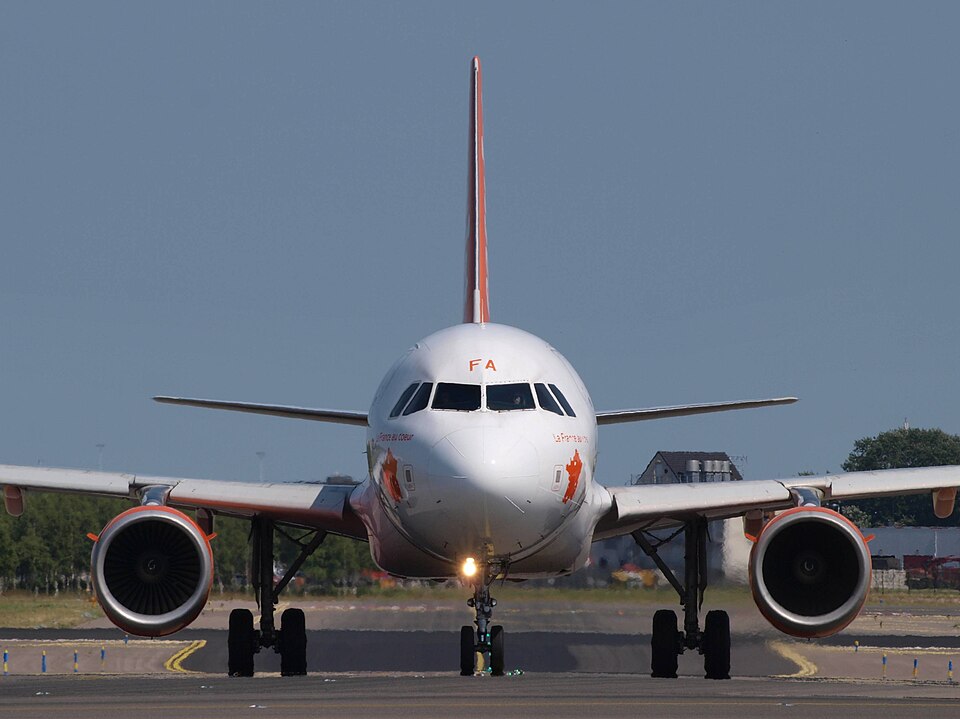
On 16 February 2016, an Airbus A319-111 (registration G-EZFA) operated a scheduled commercial passenger flight from Bristol Airport with 6 crew and 125 passengers. The commander was the pilot flying. During the takeoff roll, a rattling noise emanated from the centre console, and the co-pilot placed a hand on it aft of the thrust levers to reduce the noise. After lift-off, the commander instructed the co-pilot to raise the landing gear, but the co-pilot moved the flap lever from position 1 to 0 instead, at an altitude of 46 ft above the runway.
The commander noticed the VLS (lowest selectable IAS) indication on the PFD increase rapidly but initially did not realize the flaps were retracting. Seven seconds after the flap lever was moved, the commander lowered the nose attitude of the aircraft and, three seconds later, selected TOGA (takeoff/go-around) thrust. The GPWS Mode 3 aural alert "don't sink, don't sink" was triggered as the aircraft lost altitude after takeoff. At that moment, the aircraft was flying at 194 kt and descending through 393 ft agl with a rate of descent of 1,300 fpm. Two seconds later, the commander applied an aft control input at 205 kt, and two seconds after that, the aircraft began to climb. The flight continued to its destination without further incident.
Flight Data and Aircraft Performance
The performance calculation for the departure used flaps and slats set to Config 1 + F (18° of slats and 10° of flaps) with reduced thrust. VLS, computed by the Flight Augmentation Computer, is displayed as the top of a vertical amber strip on the airspeed scale. For takeoff, VLS corresponds to 1.13 times the stalling speed; in clean configuration, it corresponds to 1.28 times the stalling speed. When the flap lever was selected to 0, the VLS indication increased towards 197 kt, the value for fully retracted flaps and slats.
The aircraft was equipped with an Alpha/Speed Lock function that inhibits slat retraction at high angles of attack (above 8.5°) and low speeds (below 148 kt), but this protection is not active after the flap lever has been moved to position 0 and did not inhibit slat retraction.
At 308 ft agl, the commander began to reduce pitch attitude from 15°. At 418 ft agl, pitch was 9° and rate of climb reduced to 700 fpm; the commander selected TOGA thrust. At 438 ft agl, with pitch reducing through 8°, the aircraft began to descend and the landing gear was selected up. The aircraft descended and accelerated until the GPWS alert at 393 ft agl with a 1,300 fpm rate of descent. As airspeed increased above VLS at 378 ft agl, the commander raised the nose attitude and the aircraft transitioned into a climb.
The operator calculated stalling speeds: 128 kt with takeoff configuration and 155 kt with flaps and slats retracted. When the flap was selected to 0, the aircraft was at 158 kt; at full flap retraction, it was accelerating through 183 kt descending through 440 ft agl with a 1,000 fpm rate of descent.
Human Factors and Assessment
The operator classified the mis-selection as an 'action-slip,' where an out-of-sequence step (flap selection) was included in a series of routine, well-learnt behaviours (takeoff procedure). Regarding the rattling console, the operator noted that distractions can make operators vulnerable to task interference, strong habit intrusion, or mis-ordering tasks. Action slips are difficult to detect because the action is not under conscious control.
The operator assessed that the co-pilot had been distracted by the rattling noise during takeoff, causing him to make an 'action error' in mis-selecting the flap. The operator noted that in a similar event, pilots re-selected the flap lever to position 1 and maintained a positive climb rate; however, in this case, the crew did not fully appreciate what had happened until after TOGA was selected, and by the time they considered re-selecting flap, the aircraft was recovering to climbing flight.