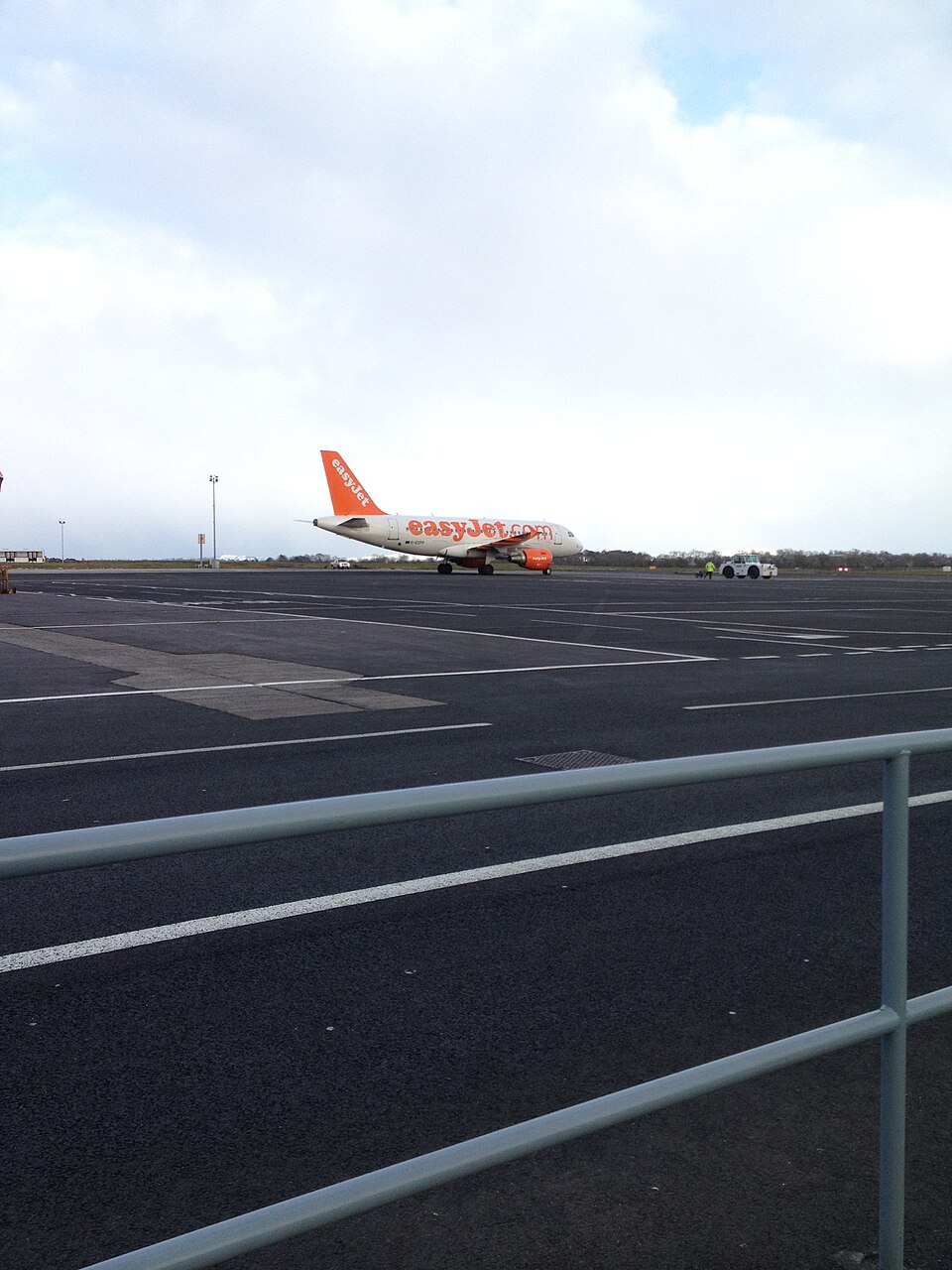
Incident Overview
On 9 May 2016 at 1530 UTC, an Airbus A319-111, registration G-EZFP, operated a scheduled commercial passenger flight from Lille Airport, France, to Toulouse Airport. The aircraft was manufactured in 2009 and powered by two CFM56-5B5/3 turbofan engines. The crew consisted of six individuals, and there were 154 passengers on board. No injuries were reported, and no damage occurred.
Flight Details
The commander, aged 33, held an Airline Transport Pilot Licence with 9,293 total flying hours, of which 6,445 were on the Airbus A319 type. The co-pilot was designated as Pilot Flying (PF), while the commander acted as Pilot Monitoring (PM). Runway 08 was in use at Lille Airport.
Pre-flight Preparation
During pre-flight preparation, the flight crew used an Electronic Flight Bag (EFB) to calculate takeoff performance. Initially, the commander selected '08 T5' (indicating a departure from Intersection Tango 5 on Runway 08) from the runway drop-down menu. He then noticed an option labeled '08 TMP' (Runway 08 Temporary), which appeared due to NOTAM changes affecting takeoff performance, such as runway length modifications or obstacle considerations. The commander compared the Take Off Run Available (TORA) and engine-out procedures for both options, focusing on obstacles and stopway because he recalled a NOTAM mentioning cranes. Observing no difference in TORA, he computed performance figures using the 08 TMP option. The co-pilot cross-checked these figures, and they were entered into the flight management guidance computer.
Takeoff and Aftermath
While taxiing, the PF briefed the departure according to standard operating procedures, including a review of takeoff speeds, which did not raise concerns. The aircraft then took off from Runway 08 using Intersection Tango 5. After becoming airborne, the crew noted that the runway end appeared closer than usual, prompting the commander to suspect an error. During the cruise, he rechecked the EFB and discovered a discrepancy in runway length between the 08 T5 and 08 TMP options.
Airport Information
At Lille Airport, the relevant distances were:
- Runway 08 TMP: TORA 2,825 m, ASDA 2,162 m
- Runway 08 from Intersection Tango 5: TORA 2,265 m, ASDA 1,688 m
Recorded Data
Flight data monitoring captured the incident. The aircraft departed from Intersection Tango 5 at a takeoff weight of 59.735 tonnes. According to manufacturer calculations, as the aircraft accelerated through V1 (139 KIAS), approximately 920 m of runway remained. At liftoff, about 800 m of runway was left, and the aircraft passed over the runway end at a height of 280 ft. In the event of an engine failure at V1, 730 m of runway would have remained at liftoff, with the aircraft crossing the runway end at about 55 ft.
Commander's Comments
The commander noted that although he and the co-pilot cross-checked the distances between Runway 08 T5 and 08 TMP, they failed to identify the length difference. He observed that three of four digits were identical, but the middle two were swapped. The V speeds appeared plausible, so no concern was raised. He described the event as an "unintentional slip-up" potentially caused by fatigue.