Incident Overview
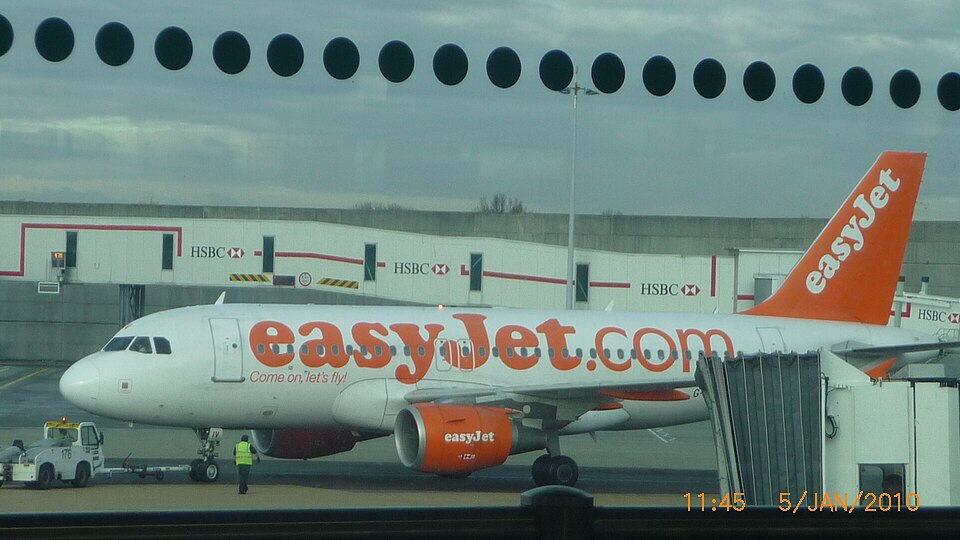
On 16 October 2015, an Airbus A319-111 (registration G-EZIV) operated a scheduled passenger flight from Lisbon Airport, Portugal, to Basel Mulhouse Airport, Switzerland. The aircraft had six crew and 147 passengers on board. The commander was the pilot flying, and the co-pilot was the pilot monitoring. During pre-flight preparation, the co-pilot entered weather information and Runway 03 into the Electronic Flight Bag (EFB), despite the ATIS indicating Runway 21 was in use. The commander then calculated takeoff performance for a departure from Runway 03 at Intersection November Two. Neither crew member noticed the runway mismatch. The takeoff data was then input into the Flight Management Guidance Computer. The commander was distracted by people entering the cockpit and did not cross-check the Engine Out Standard Instrument Departure between the EFB and FMGC. The commander briefed the EOSID from memory.
Takeoff and Discovery
The crew considered the takeoff normal until approaching V1, when they noticed limited runway remaining. The aircraft departed from Runway 21 at Intersection Uniform Five at a takeoff weight of 62.8 tonnes, with a takeoff distance available of 2,410 m. Flight data showed that at V1 of 153 KIAS, approximately 580 m of runway remained; at rotation, about 297 m remained; and after becoming airborne, about 213 m remained. The remainder of the flight was uneventful. En route, the crew checked the EFB and discovered they had used performance figures for Runway 03 from Intersection November Two instead of figures for Runway 21 from Intersection Uniform Five.
Commander's Remarks
The commander later commented that the incident resulted from multiple distractions during pre-flight preparation and complacency from operating at his home base. He stated that in future, if interrupted during a brief or crosscheck, he will restart the process to ensure completeness.
Other Relevant Events
The AAIB noted two similar recent events: G-EZUH on 16 July 2015 at London Luton (published January 2016) and G-EZAA on 25 June 2015 at Belfast International (still under investigation).