Introduction
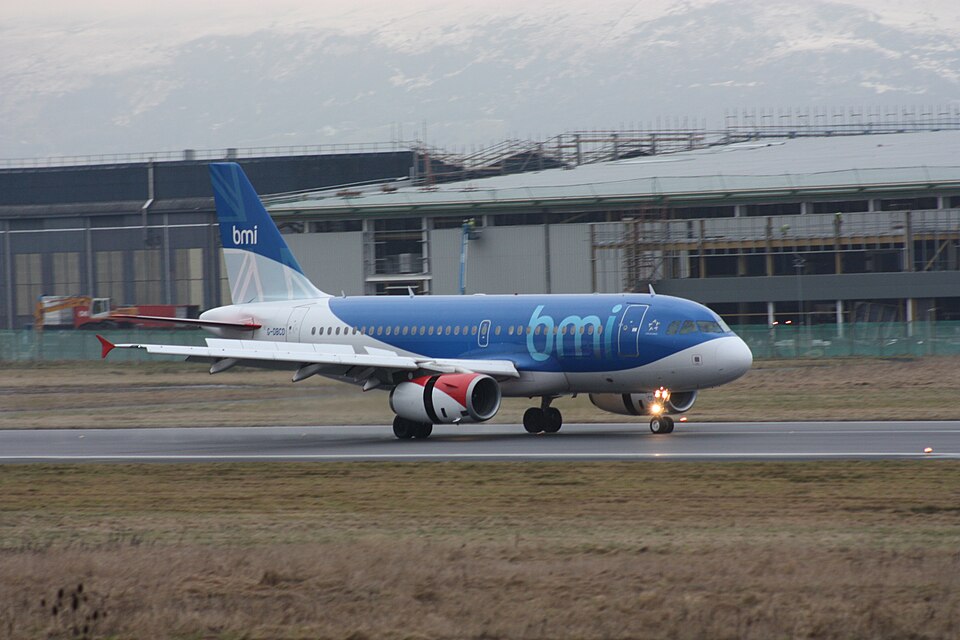
On 2 April 2019, an Airbus A319-131, registration G-DBCD, experienced a serious incident while en route from London Gatwick Airport to Palma de Mallorca Airport, Spain. The aircraft, powered by two International Aero Engine V2522-A5 turbofan engines and built in 2005, was operating a commercial passenger flight with 6 crew and 63 passengers. No injuries or damage were reported.
History of the Flight
Prior to departure, a flight control status message led to maintenance activity intended to deactivate the No 1 spoiler on the left wing, allowing the aircraft to depart under the Minimum Equipment List. The departure was normal. During the cruise, the crew noted the aircraft flying 2° left wing down with 2.4 units of right rudder trim and a light "rumble." They monitored the situation and consulted with the operator's maintenance control. The senior cabin crew member visually checked the wing and control surfaces but found nothing unusual. The crew decided to continue to the destination.
During the approach with the autopilot engaged, full flap selection caused a noticeable left roll and deviation from the flight director command bars, accompanied by buffeting and vibration described as "light turbulence." The crew observed the right wing spoilers extending and retracting repeatedly, and the autopilot applied 6.6 units of right rudder trim to regain the approach profile. After reviewing the situation, they continued the approach. At 1,000 ft above ground level, stable approach criteria were met; at 800 ft, the handling pilot disconnected the autopilot, which introduced further left roll that was contained. The aircraft was out of trim and required continual sidestick input, sometimes nearly full extent. The crew decided to land, and the landing and taxi were without incident.
Maintenance Activity
After return to stand, two licensed aircraft engineers (LAEs) investigated the flight control message. They used tablet devices with an app containing approved maintenance data. After confusion with fault codes and the Trouble Shooting Manual, they confirmed the No 1 spoiler actuator was not operating correctly. They consulted the Minimum Equipment List, which allowed dispatch with the spoiler deactivated following the Aircraft Maintenance Manual (AMM) procedure requiring a spoiler maintenance key. The LAEs retrieved the key from engineering stores and returned to the aircraft. Completing the deactivation procedure in cold and rainy conditions, they performed an operational test; indications were normal, but they did not check if the spoiler could be manually raised. One LAE could not complete the technical log due to cold hands, so the other certified the work, which was outside his approval scope.
After learning of the control anomaly, the LAEs reviewed the procedure on a desk computer and identified several contributing issues: the tablet app did not allow multiple tabs, did not remember the last location, and the AMM procedure contained references to all spoiler positions and modification states, making it difficult to identify relevant sections. Post-modification actuators have identification plates; pre-modification ones do not. The AMM instructions for installing the key were clear, but the removal instruction was less clear. Heavy rain made the tablet screen less responsive, and the rubber case collected water.
Internal Investigation Findings
The operator's Engineering Quality department conducted an internal safety investigation. It found that the LAEs did not completely follow the AMM procedure and were convinced the key should remain in the actuator, as in hangar maintenance. The maintenance information was difficult to follow due to multiple actuator modification states and spoiler positions. The information platform and tablet were difficult to use in rain, did not allow multiple open documents, and timed out, defaulting to the document start. No final independent physical check of the lockout was performed. The engineers primarily used approved data for part numbers and function checks. The investigation made 11 internal recommendations. The report noted that the event reflected learning points from a similar event in 1993 (AAIB Formal Report AAR 2/1995).