Summary
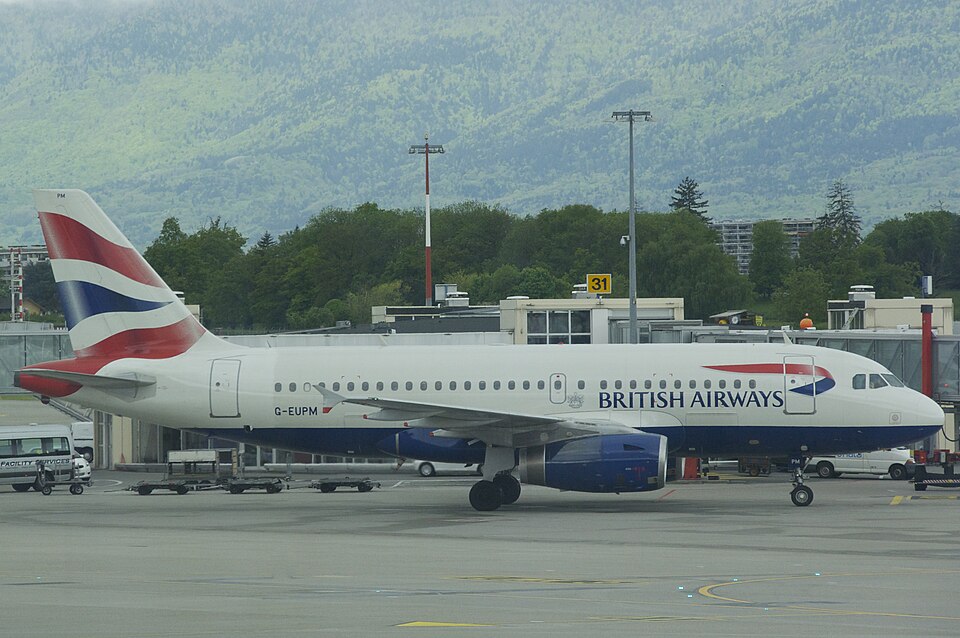
On 19 October 2016, an Airbus A319-131 (registration G-EUPM) operating a commercial passenger flight experienced a serious incident upon landing at Manchester Airport. After a normal touchdown, nosewheel shimmy occurred, and as the aircraft turned onto a rapid exit taxiway at 30 knots, the upper and lower torque links of the nose landing gear became disconnected. The aircraft lost steering response, and the co-pilot brought it to a stop on the taxiway. There were no injuries to the 7 crew and 117 passengers. The aircraft sustained damage to the nose landing gear barrel, axle, torque links, steering actuator cylinder, and wiring harnesses.
History of the Flight
The aircraft had earlier flown from Newcastle to London Heathrow, during which a slight nosewheel shimmy was noted on landing. After a turnaround at Heathrow, the co-pilot performed an external inspection and found nothing unusual. During the subsequent takeoff from Heathrow, a loud rhythmic sound, attributed to nosewheel shimmy, was heard between 60 and 100 knots indicated airspeed. The crew discussed the shimmy and the possibility of a problem with the nose gear torque link, but the commander planned to inspect during the walk-around at Manchester.
The approach to Runway 23R at Manchester was uneventful, with autobrake low selected and a surface wind of 300° at 6 knots. During the landing roll, shimmy vibration was recorded between 70 and 40 knots groundspeed, with both crew noting its severity. At 35 knots, the co-pilot turned onto Exit Bravo Delta while applying brakes. Shortly after entering the taxiway at 30 knots, a significant vibration occurred, accompanied by high lateral accelerations. After about six seconds, vibration intensity increased and a Landing Gear Control Interface Unit (LGCIU) 1 fault appeared on the ECAM. The co-pilot applied brakes and right tiller as the aircraft veered left, eventually stopping. The commander declared a PAN and requested assistance.
Site Examination
The aircraft came to rest on Exit BD, 200 meters from the runway, with the nose slightly left of centerline. The nose landing gear upper and lower torque links had separated, and the nosewheels had rotated approximately 95° to the left, immobilizing the aircraft. Debris from the nose gear was scattered over 70 meters behind the aircraft, including components from the torque link apex pin assembly. The apex pin and nut were recovered, but the lock bolt assembly parts were not found, despite a search.
Recorded Information
Cockpit voice recorder and flight data recorder data were available. The aircraft was equipped with automatic start/stop logic for the recorders, but due to a fault in LGCIU 1 caused by damage to the left weight-on-wheels proximity sensor, the recorders continued operating after engine shutdown. This led to the CVR recording of the previous landing at Heathrow being overwritten. The operator later amended procedures to ensure timely preservation of recordings.
Aircraft Information
The Airbus A319 nose landing gear is a retractable two-wheel unit with an oleo-pneumatic shock strut and a nosewheel steering system. Steering is performed by a hydraulic actuator that rotates the upper torque link, which through the apex pin articulates the lower torque link to turn the wheels. The apex pin is secured by a nut and is subject to potential damage from towbarless tractors.
Safety Action
The operator of G-EUPM revised its procedures to clarify that the aircraft commander is responsible for preserving cockpit voice recorder and flight data recorder recordings after an incident. The AAIB noted that Service Bulletin is available to replace the torque link apex pin assembly with a design that reduces the risk of contact damage from towbarless tractors.