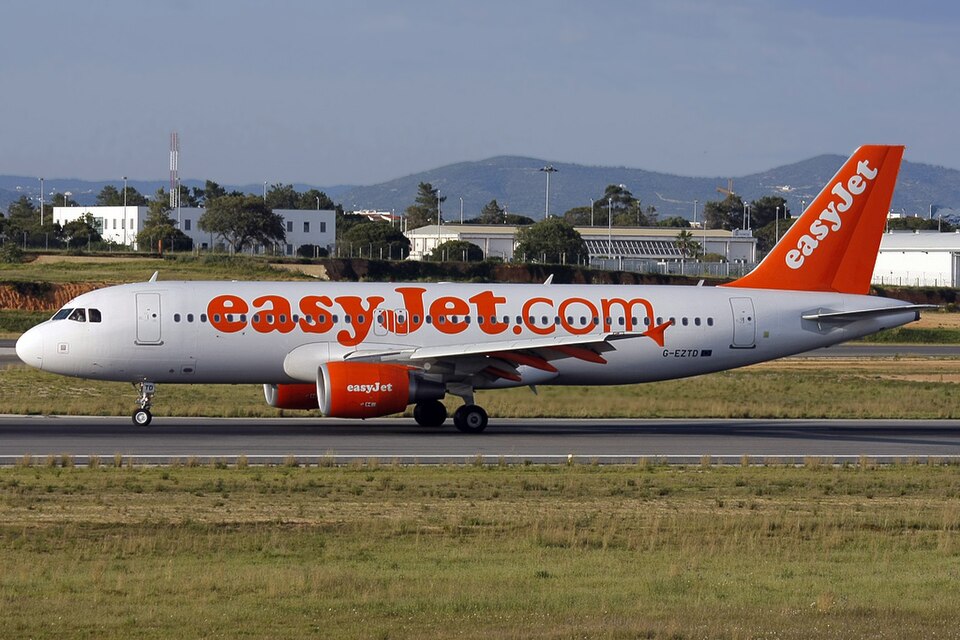
Aircraft and Crew Information
The aircraft involved was an Airbus A320-214, registration G-EZTD, equipped with two CFM56-5B4/3 turbofan engines. It was manufactured in 2009 (serial number 3909). The commander, aged 27, held an Airline Transport Pilot's Licence and had 4,300 hours total flying experience, of which 4,100 hours were on type. The flight was a commercial air transport passenger service with 6 crew and 175 passengers on board; no injuries were reported.
Flight Details
On 24 April 2019, the aircraft arrived at Lisbon Airport at 1940 hrs for a return flight to London Luton Airport. During pre-flight preparations, the crew initially planned a takeoff from the intersection of Taxiway U5 with Runway 21. Both pilots independently calculated takeoff performance for that intersection, which had a Takeoff Run Available (TORA) of 2,410 m. This intersection was labelled as 'PSNUTMP' in the Electronic Flight Bag (EFB). The crew subsequently decided to reposition to Taxiway S1 for departure and recalculated performance. However, when selecting the departure point in the EFB, they both chose 'PSNSTMP', which corresponded to the intersection of Taxiway S4 with the runway, offering the full runway length of 3,805 m. The crew did not cross-check the TORA values.
Takeoff and Climb
The aircraft departed from the Taxiway U5 intersection at 2034 hrs, using an engine thrust setting based on the full runway performance calculation. The commander later commented that the takeoff "felt wrong" but did not select takeoff/go-around (TOGA) thrust. The takeoff roll was approximately 1,860 m long, and the aircraft became airborne about 400 m before the upwind runway threshold. It overflew the threshold at a height of approximately 100 ft, climbing at about 2,700 ft/min with a lift-off speed of 170 KIAS.
Recorded Data
Flight Data Recorder (FDR) and digital access recorder data were downloaded. The cockpit voice recorder (CVR) recording was overwritten during the flight. The FDR data confirmed the takeoff roll length and the height at the threshold.
Similar Event
Fourteen days later, on 7 May 2019, another Airbus A320-214, registration OE-IJL, experienced an identical event at Lisbon Airport. That aircraft lifted off 350 m before the upwind runway threshold and crossed it at about 75 ft.
Safety Actions
Following this event, the operator raised awareness with its crews and engaged with the aircraft manufacturer to review possible technical developments to prevent recurrence. The AAIB also made one Safety Recommendation to mitigate the risk of confusion relating to takeoff positions.