Incident Overview
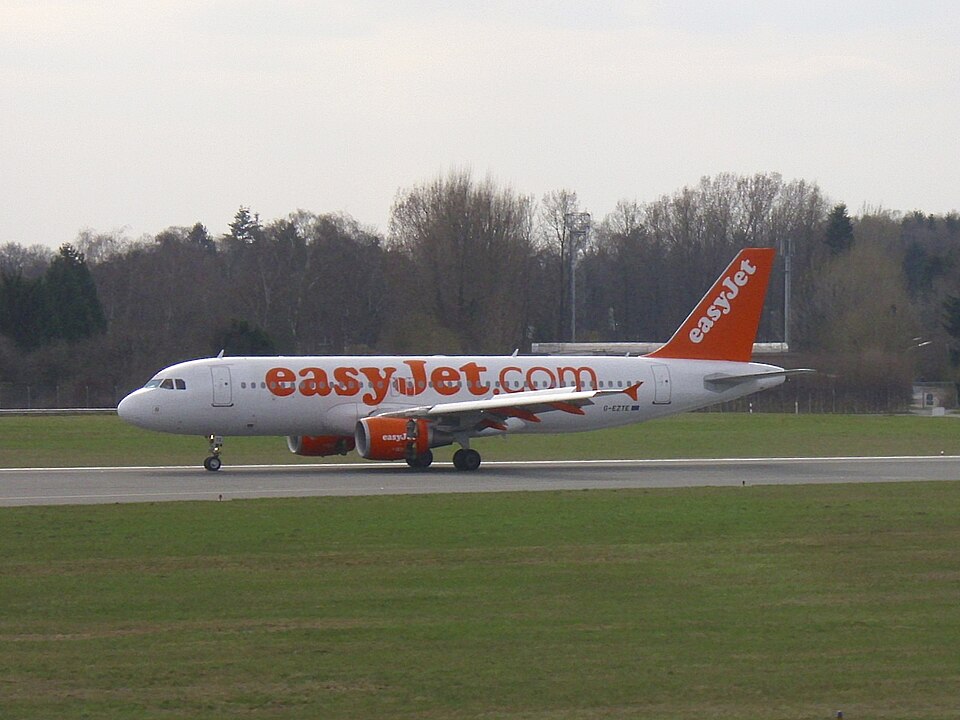
On 7 January 2015, an Airbus A320-214 (registration G-EZTE) operated a scheduled passenger flight from London Luton Airport to Paphos, Cyprus. The aircraft, powered by two CFM CFM56-5B4/3 turbofan engines, was conducting a visual approach to Runway 29 at Paphos Airport. There were six crew members and 157 passengers on board; no injuries were sustained and no damage occurred.
Pre-Approach Planning
En route, the crew reviewed weather conditions at Paphos, which indicated suitability for a visual approach. The 1430 hrs METAR reported northwesterly wind at 19 kt gusting 29 kt, visibility exceeding 10 km, few cumulonimbus at 2,500 ft, few towering cumulus at 3,500 ft, scattered cloud at 5,000 ft, temperature 10°C, and QNH 1010 hPa. The crew prepared for both instrument and visual approaches.
During the approach briefing, the crew consulted the Operations Manual for visual approach procedures. The commander sketched a plan for the approach. Threats discussed included wind effects on the downwind leg and crosswind on final. The co-pilot suggested adding a 4 nm range ring on the navigation display, centered on the runway threshold, to depict the circling protected area—a technique from his simulator check but not a standard procedure.
Approach and Speed Decay
After visual contact with the airport, the crew requested and received clearance for a visual approach, initially cleared to 4,000 ft. The co-pilot, as pilot flying, flew a left-hand circuit. The track/flight path angle pushbutton was pressed to select the flight path vector on the primary flight display, replacing flight director bars with flight path director. Airspeed was reduced and Flap 2 selected.
Cleared to descend to circuit altitude (1,500 ft), the crew used Thrust Idle and Open Descent modes with autopilot engaged. The aircraft was above the desired profile. Landing gear was extended. Abeam the threshold at 3,500 ft, about 42 seconds later, the co-pilot disconnected the autopilot and began the base turn at 3,100 ft and 165 kt. The standard “autopilot off” call and “flight directors off” instruction were omitted; the flight path director remained on. ATC issued go-around instructions to maintain runway heading and level at 2,000 ft, which the commander acknowledged.
As the aircraft turned base, the co-pilot announced “speed decaying.” The commander thought this intentional and asked about Flap 3, which was selected. At 2,860 ft, speed was VLS +5 kt with high angle of attack and 12° nose-up pitch. Speed continued to decay; at VLS -2 kt, the flight director automatically disengaged. The co-pilot focused on airspeed indication. Pitch attitude increased and descent rate decreased, further reducing speed. Alpha Floor activated, setting TOGA thrust automatically. The co-pilot announced “alpha floor” and, after a few seconds, handed control to the commander, having lost situational awareness. At that point, pitch attitude was 10.5° nose-up and the aircraft was climbing through 2,900 ft.
Go-Around and TCAS Resolution Advisory
The commander, startled, turned away from the coastline and terrain, announcing “go-around, flap.” TOGA thrust was selected on the thrust levers, Flap 2 selected, and pitch inputs varied. As the aircraft climbed, the Speed Reference System engaged, FD bars reappeared, speed increased, flaps were retracted to Flap 1, A/THR was deselected, and thrust levers moved out of the TOGA detent. Landing gear remained down.
While climbing through 3,900 ft, a TCAS RA “level off, level off” aural alert triggered. The aircraft was levelled and descended to 3,860 ft, then “clear of conflict” announced. It continued descending to 3,380 ft before ATC cleared a climb to 4,000 ft. After levelling, autopilot and A/THR were re-engaged. An uneventful ILS approach and landing on Runway 29 followed. The minimum speed during the Alpha Floor event was VLS -7 kt.
Aircraft Systems
The A320’s Flight Augmentation Computer computes energy level and issues a “low-energy” alert when appropriate. Speed protection disengages FD at VLS -2 kt and activates A/THR speed mode. Alpha Floor protection activates at high angle of attack, commanding TOGA thrust. TCAS issues resolution advisories with aural and visual commands. The operator’s manual for visual approaches recommends autopilot not used, both FDs off, FPV recommended, and A/THR with managed speed.
No probable cause was stated by the investigation.