Summary
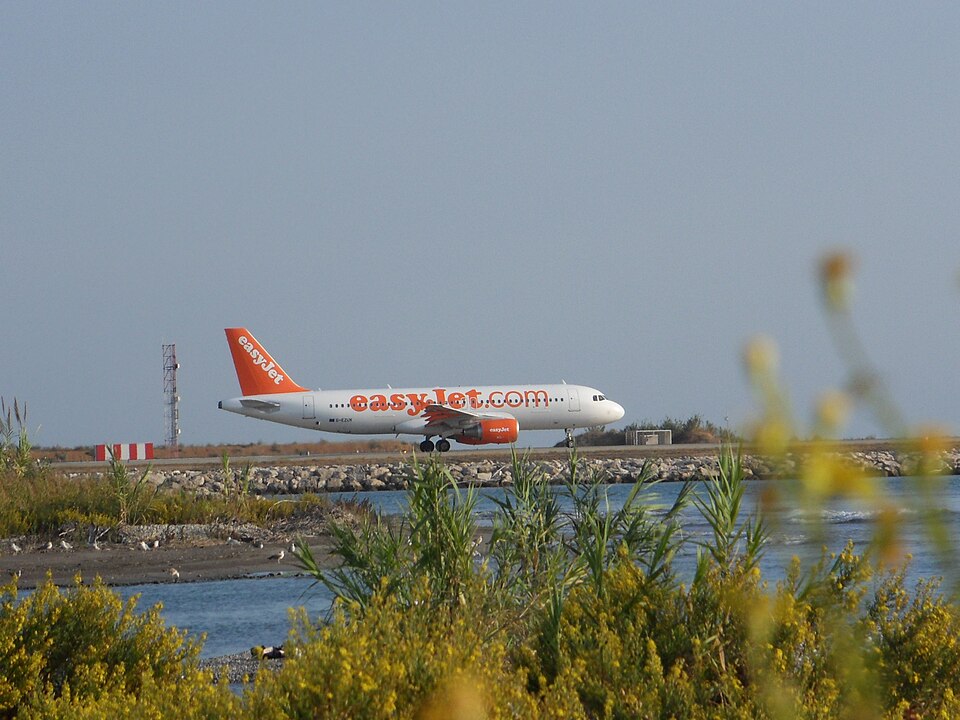
On 13 June 2025, an Airbus A320-214 (registration G-EZUK) operated a scheduled commercial passenger flight from London Luton Airport. The crew calculated takeoff performance using the full length of Runway 25 but inadvertently departed from Intersection Alpha, which has a shorter takeoff run. The discrepancy was identified later that day by the operator's Flight Data Monitoring (FDM) system. No injuries to crew or passengers, and no aircraft damage, were reported.
History of the Flight
During pre-flight planning, the co-pilot initially planned a takeoff from Intersection Alpha on Runway 25 with flaps at CONF 1+F but noted that takeoff performance was not possible for the aircraft's weight and environmental conditions. The commander confirmed this. They agreed to calculate performance using the full length of Runway 25, which permitted the takeoff. They briefed for the departure, including potential threats, but did not explicitly consider the takeoff from full length versus an intersection.
After pushback from Stand 47, the crew conducted a single-engine taxi. ATC asked, "are you [Intersection] alpha able?" The commander replied "affirm." ATC cleared the aircraft to taxi via Taxiway Delta to Holding Point Alpha One. During taxi, the second engine was started. The aircraft joined a queue behind several aircraft that departed from Intersection Alpha. The aircraft subsequently received clearance to line up on Runway 25 at Intersection Alpha and took off without incident.
Later that day, the commander was informed by the operator that the departure had triggered an FDM event due to low height at the far end of Runway 25 and questionable runway length remaining at lift-off. The commander then realized the mistake.
Crew Comments
Neither crew member believed fatigue was a factor; they described pre-flight as routine. They noted that 90% of the time, the aircraft has performance to take off from Intersection Alpha at Luton.
The commander stated no time pressures or unusual distractions. When ATC asked about intersection ability, he replied "Affirm" as it seemed appropriate, having done so many times recently. He had not flown a full-length takeoff from Luton in at least a month or two. During the PEDS review (a departure briefing confirmation), he believed he stated they had calculated performance from Intersection Alpha and would depart from there, but this was incorrect.
The co-pilot did not recall hearing ATC's request about the intersection and did not recall whether the commander mentioned departure point during the PEDS review.
Performance Information
The crew calculated takeoff performance for flaps CONF 1+F at a weight of 68,887 kg with a wind from 160° at 4 kt. The EFB indicated takeoff was not permitted from Intersection Alpha under those conditions.
The FDM recorded that the aircraft lifted off about 310 m from the threshold of Runway 07 and was at 65 ft radio altitude over that threshold.
Aircraft manufacturer analysis showed that in the event of an engine failure at V1 with takeoff continued, obstacle clearance requirements would have been met. For a rejected takeoff at V1 with one engine inoperative, the accelerate-stop distance required (ASDR) would have been 1,666 m, and with all engines operative 1,680 m. Given the ASDA from Intersection Alpha of 1,828 m, margins existed (187 m and 173 m respectively), so no runway overrun potential existed.
Operator's Manuals
The operator's manual stated that for a takeoff from an intersection, the takeoff shift should be entered into the MCDU, but it was not standard practice for this operator. The operator's PEDS review procedure did not require crosscheck of departure point against calculated performance data, relying on memory. The line-up checklist required confirmation of the intended runway/intersection and ATC clearance.
Safety Actions
As a result of this serious incident, the operator reviewed takeoff performance procedures. Changes included recording the intersection used for performance calculation in the MCDU, which would be crosschecked against takeoff position during taxi and validated during line-up. These amendments were planned for publication by March 2026.