History of the Flight
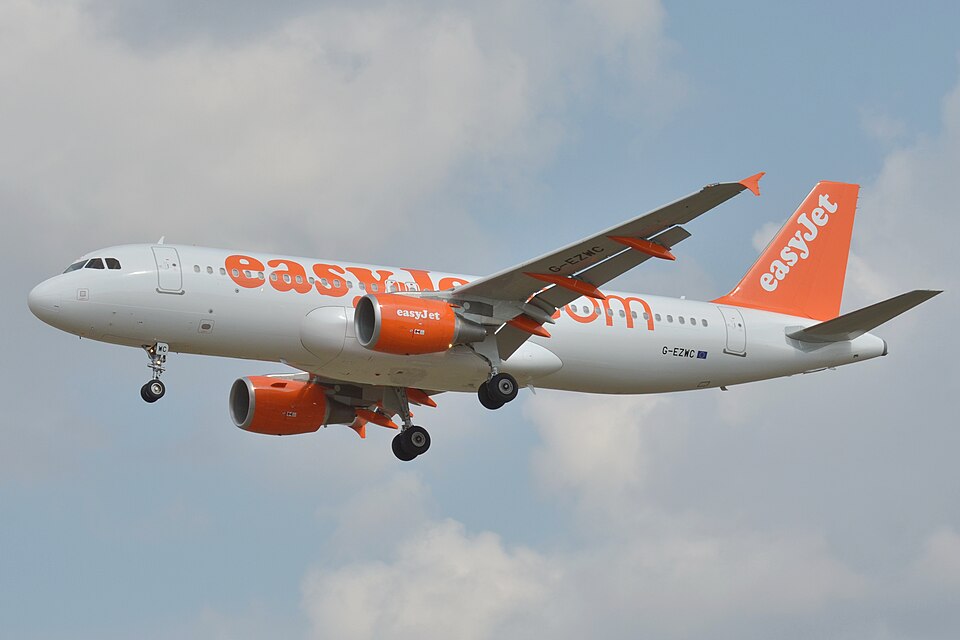
The aircraft, an Airbus A320-214 (registration G-EZWC), was scheduled for a commercial passenger flight from Belfast International Airport to Malaga Airport. It was parked on Stand 18 and had received clearance for pushback to Spot L3 facing west, with engine start. The pushback was conducted in daylight and rain, resulting in wet apron surfaces.
Both engines were started during the pushback. The commander noticed the aircraft nearing the edge of the apron during a 90° turn. He questioned the groundcrew via headset and was told the situation was acceptable. The aircraft stopped at an angle to the taxiway centreline, with the nose pointing toward grass beyond the apron edge. It then began moving forward. The commander believed the movement was to align with the taxiway, but grew concerned and ordered the groundcrew to stop. He did not apply the aircraft brakes due to the operator's standard operating procedures, which prohibit braking while under tow to prevent damage to the nose landing gear. The aircraft then stopped with an unfamiliar noise, which was the underside of the fuselage contacting the tug cab.
The commander applied the parking brake and inquired about the situation. He understood that the right engine was damaged and shut it down, started the auxiliary power unit, informed air traffic control, and requested ground operations assistance. The cabin manager updated the flight deck on passenger observations. The commander used the public address system to inform passengers and announced a return to the terminal for disembarkation. After shutting down the left engine, fire and operations vehicles arrived. The airport rescue and fire fighting service inspected the damage and confirmed the right engine damage but no fuel leak. Passengers were disembarked via the rear right door and taken to the terminal by coaches.
Ground Handling Agent Report
The ground handling agent's investigation revealed that the pushback crew included a tug driver, a headset man (in direct contact with the flight crew), and a trainee observer. There was no radio communication between the tug driver and headset man. The aircraft was near maximum all-up weight, and the latter part of the pushback was uphill, increasing workload. The tug driver struggled to see the taxi line due to the wet reflective surface and had selected a high gear, making it difficult to move the aircraft. The turn to Spot L3 was executed late, resulting in the aircraft being closer to the apron edge than normal.
The tug driver stopped the pushback and selected a lower gear. At this point, the tug was at an acute angle to the aircraft, and the tow bar angle was possibly near its maximum of 75° to the aircraft's centreline. The aircraft, at idle power and facing downslope, moved forward, and the tow bar shear pin failed, disconnecting the tow bar and tug from the aircraft. With brakes released and both engines at idle, the aircraft moved forward, striking the tug with the right engine nacelle, causing a yaw to the right, and overrunning the tug, wedging it under the aircraft. The headset man and tug driver were slow to react, and the forward movement speed was consistent with towing, so the disconnect may not have been immediately apparent.
Recorded Information
The cockpit voice recorder and flight data recorder were downloaded. Airport closed-circuit television footage showed the pushback and the tow bar separation, supporting the accounts of the flight crew and ground staff.
Conclusion
During the pushback, the left turn was made beyond the correct turning point because the tug driver had difficulty seeing the taxi line in the wet reflective surface of the apron. The aircraft was stopped with the tug and tow bar positioned at a significant angle to the right of the aircraft's nose, and at some point, the tow bar disconnected from the nose landing gear. The aircraft rolled forward slowly, and the flight crew believed it was still under tow and could not apply aircraft brakes. The aircraft came to a halt when it struck the tug.
Safety Action
Following the incident, the handling agent implemented several safety actions: a safety alert was issued to all staff; a training module on pushback tug use and gear selection was developed; refresher training for headset procedures and actions during shear pin separation was initiated; a safety app for managers and supervisory assessment staff was developed; and Bluetooth headsets would be issued to tug drivers to improve communication with the flight deck.