History of the Flight
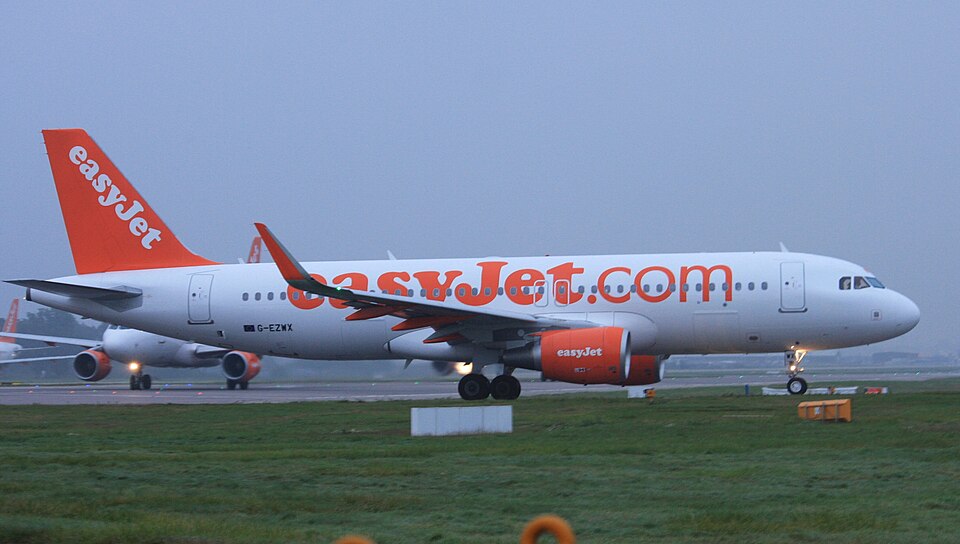
On 28 November 2016, an Airbus A320-214, registration G-EZWX, operated a scheduled passenger flight from Edinburgh to Hamburg with 172 passengers and 6 crew. Eleven minutes after departure, while climbing through FL230, the commander and co-pilot noticed smoke and fumes in the cockpit. Both crew members donned their oxygen masks, and the ECAM displayed the avionics smoke caption. The commander assumed pilot flying duties and declared a MAYDAY, advising ATC of the smoke and a diversion to Newcastle Airport, 47 nm ahead.
Following the quick reference handbook avionics smoke drill, the smoke began to dissipate. The co-pilot attempted to contact the cabin crew via the interphone emergency call function, but experienced communication difficulties. After several attempts, two-way communication was established three minutes after the first activation. The aircraft landed uneventfully at Newcastle and was met by rescue and firefighting services. Passengers disembarked via stairs and were bused to the terminal.
Recorded Information
The cockpit voice recorder and flight data recorder provided a complete record of the flight. The interphone system selections were not recorded.
Aircraft Examination
Examination traced the smoke source to the cockpit additional electrical supply static inverter, which had overheated. The unit was replaced, and the aircraft returned to service.
Static Inverter Failures
The static inverter converts 28VDC to 115VAC to power cockpit outlets for devices like Electronic Flight Bags. It is installed in the avionics bay below the cockpit floor. The operator had experienced two previous static inverter failures: one on G-EZWM (August 2014) and another on G-EZWK (January 2015), both resulting in diversions due to smoke. In both cases, damage centered on capacitor C306. The manufacturer initially considered the failures isolated. Between August 2014 and December 2016, the aircraft manufacturer received reports of 11 failures, eight occurring by March 2016, with at least seven diversions.
Notification to Operators
In March 2016, the aircraft manufacturer issued Technical Follow-up (TFU) 24.00.00.114, attributing the problem to capacitor C306, which lacked individual quality screening. A batch of 2,058 static inverters was affected. The vendor published a Service Bulletin (VSB 1830-25-37) in October 2016 recommending capacitor replacement. The TFU was updated accordingly. However, the operator was unaware of these notifications until after the G-EZWX incident.
Communication Issue
The investigation also identified an undocumented feature of the interphone emergency call function related to handset reset, awareness of which could improve communication management between cockpit and cabin crew.