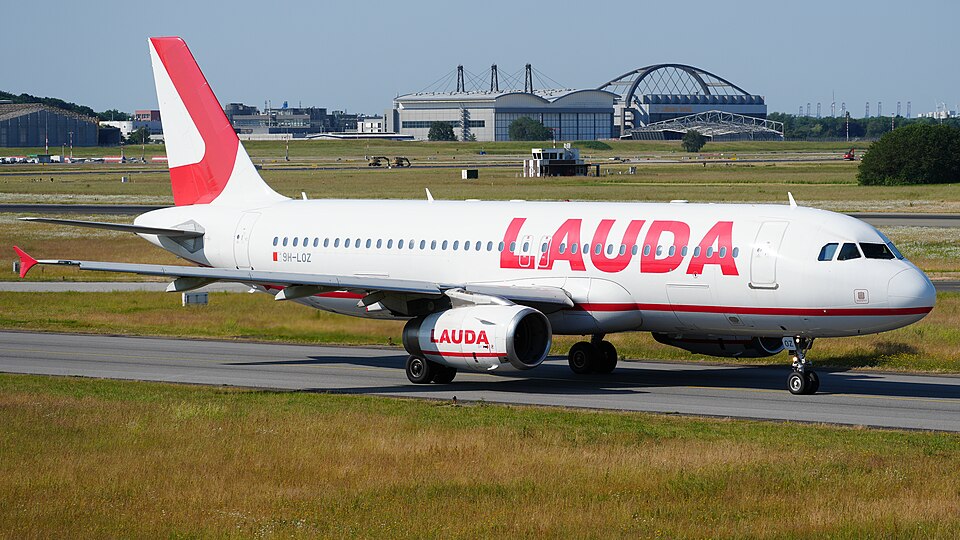
History of the Flight
The aircraft, an Airbus A320-232 registered 9H-LOZ, was conducting a preservation flight on 28 May 2021, departing from and returning to London Stansted Airport. The crew arrived from Vienna as passengers and took over the aircraft after the morning engineering shift began. After a normal engine start and pushback, the aircraft departed Stand 33L at 0803 hrs and taxied to Runway 22.
While holding on the runway, ATC requested the crew to consider a new SID route, but they declined. The aircraft took off and climbed to FL080 following the CLN1E SID without issue, then received radar vectors for an ILS approach back to Runway 22.
Incident During Approach
At approximately 0825 hrs, during the final approach at 950 ft radio altitude with autothrust engaged, an 'eng 2 fadec fault' ECAM warning appeared. The crew executed a go-around and manually flew the missed approach profile. During the hold, the No 2 engine remained at idle despite manual throttle increases and autothrust reselection. The crew observed erroneous engine parameter readings relative to throttle inputs.
Following ECAM checklist actions, the engine indications persisted as frozen figures rather than turning to amber XX. The checklist directed engine shutdown if abnormal parameters occurred. The crew consulted the FCOM, started the APU, and shut down the No 2 engine. They declared a MAYDAY, selected squawk 7700, and briefed for a single-engine approach to Runway 22.
Landing and Post-Landing Events
After completing single-engine checklists and landing performance calculations, the crew conducted a normal ILS approach. The landing was uneventful, and the aircraft vacated the runway. The Airport Fire and Rescue Service Commander confirmed the failed engine appeared normal. During the landing rollout below 70 kts, an 'eng 2 ovspd prot fault' warning triggered but did not appear on ECAM. The aircraft taxied to Maintenance Hangar 10 and was shut down.
Investigation and Findings
Post-flight data from the DFDR and aircraft systems indicated additional failure messages not associated with ECAM warnings: 'eng ded altern/hc/eec2' (failure of Engine 2 Dedicated Alternator or its harness), 'fmu/hc/eec2', and 'propulsion system 2' faults. The operator performed troubleshooting tasks from the TSM, removing the EEC, EDA, and FMU from the No 2 engine for further analysis.
Related maintenance on 23 May 2021 included a water wash of both engines, after which an 'eng 2 ovspd prot fault' had been triggered. The operator conducted TSM tasks for loss of N2 signal and overspeed protection, inspecting the EEC, FMU, and EDA harnesses and testing both channels. No faults were identified, and the aircraft was returned to service.
Probable Cause
The engineering investigation determined the most likely cause of the engine problem was an inadvertent activation of the overspeed protection valve in the fuel control system. The overspeed protection valve, when triggered, reduces fuel flow to a fixed level below flight idle and does not respond to throttle inputs. The valve is hydraulically latched and can only be reset by shutting down the engine. Similar occurrences on other V2500 engines are being addressed through safety actions by the engine and aircraft manufacturers.