Incident Overview
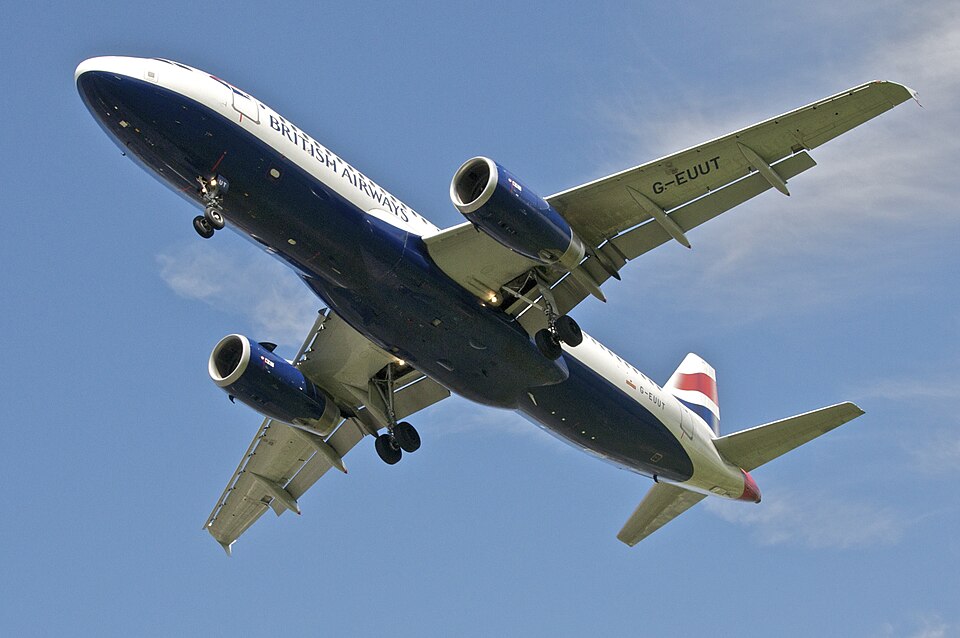
On 14 June 2022, an Airbus A320-232 (registration G-EUUT) operating a commercial passenger flight from Malaga-Costa del Sol Airport, Spain, to London Heathrow Airport experienced a fume event during the approach. The crew, consisting of two pilots and four cabin crew, had 159 passengers on board. The commander, aged 49, had 13,786 total flying hours, with 8,373 on type.
Flight History
During the arrival procedure, Heathrow ATC provided radar vectors that shortened the ground track. The aircraft was to capture the ILS glideslope from above, and the crew described their workload as “quite high.” At approximately 3,000 ft agl, about five minutes from landing, the co-pilot noticed a strong unpleasant odor in the flight deck, which he likened to “a wet dog or sweaty socks.” The commander also detected the odor. Neither felt impaired, and due to high workload, they continued the approach without executing the smoke/fumes removal procedure. Neither pilot used oxygen.
The aircraft landed normally. After clearing the runway, the crew taxied toward Stand 548L, where the parking guidance system was inactive. A 10-minute delay occurred before an airport marshaller guided the aircraft to the stand. During this wait, the crew noticed the odor had dissipated and asked the senior cabin crew member if any odor was present; none was detected. The co-pilot began feeling nauseous and lightheaded but did not inform the rest of the crew.
Post-Landing Events
Once parked, the co-pilot felt very unwell, coughing and retching, and described himself as “quite scared.” The commander shut down the aircraft, made a PAN call via RTF requesting emergency services assistance, and opened his cockpit window. The commander also began to feel unwell, and cabin crew provided both pilots with portable oxygen sets. Due to a lack of appropriately trained personnel at Heathrow, there was a 17-minute delay from parking until an airbridge was attached. Emergency services did not enter until the airbridge was connected. Paramedics assessed the pilots, and the RFFS (Rescue and Firefighting Service) entered with gas monitors, which gave a negative result for combustible gases, oxygen, carbon monoxide, hydrogen sulphide, nitrogen dioxide, and sulphur dioxide. The RFFS had mobile evacuation stairs available but did not use them.
The co-pilot felt anxious but was reassured by paramedics and did not require further medical checks. Due to elevated blood pressure and pulse, the commander was taken to hospital. A blood test for toxic gases was negative, and he was released the same evening. Neither pilot suffered further ill effects. None of the cabin crew or passengers reported any unusual smells or symptoms.
Aircraft Examination
The aircraft was removed from service and examined using a protocol for smoke and fumes events developed from a previous AAIB investigation. No technical cause was identified, and the aircraft was returned to service without any rectification. According to the operator, a definitive technical cause is identified in only about 5% of such occurrences. The operator used Aerotracer and GrayWolf detection systems, both returning negative results.
Procedures and Guidance
The aircraft’s Quick Reference Handbook (QRH) includes a Smoke/Fumes/Avionics Smoke procedure. The first action is to land as soon as possible. The pilots did not execute the procedure due to high workload and short time to landing. The operator’s training department strongly advocates completion of items including crew oxygen masks and crew communication. The QRH procedure is not designed to be memorized; one pilot would have to read actions, increasing workload.
Weather and Other Factors
Weather at Heathrow: wind 220° at 8 kt, visibility >10 km, no cloud. Some previous fume events on A320 aircraft have been associated with cloud passage, but this was not a factor. The CAA provides an NHS Care Pathway for fume-related events, acknowledging a possible “Nocebo effect” where physical symptoms arise from psychological response to perceived exposure. The CAA recommends no specific medical test for exposed crew; each case is individually assessed.
Subsequent Support
The operator has duty managers to support crew involved in operational events. Flight crew management tailors support case-by-case, including potential post-traumatic stress issues. The operator’s medical service does not advocate post-event testing unless symptoms or signs exist.