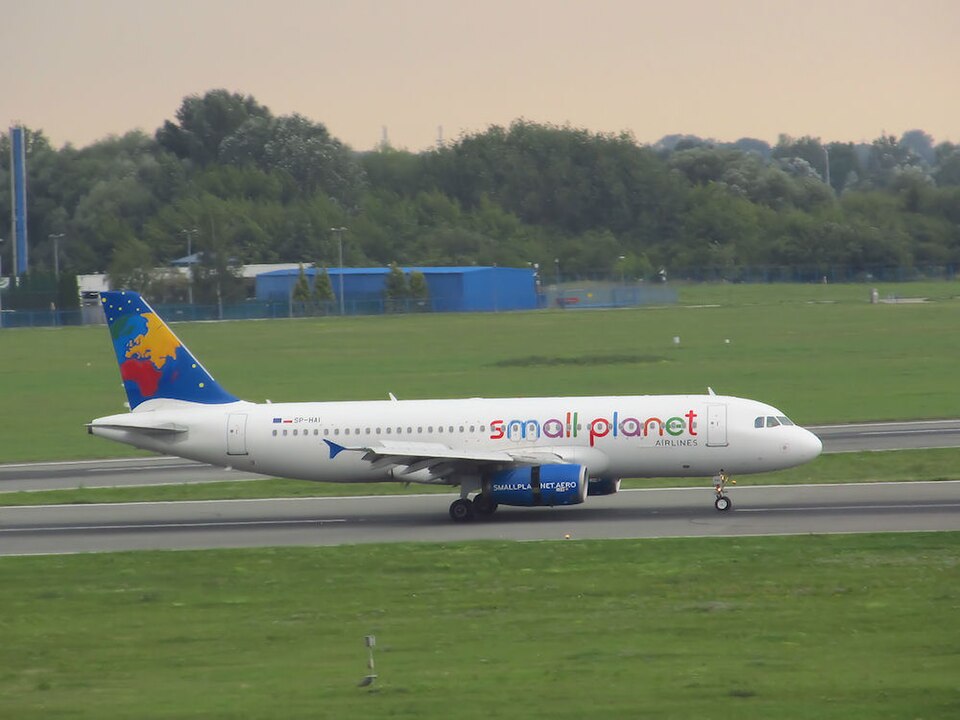
Incident Description
On 21 February 2016 at 1311 UTC, an Airbus A320-233 (registration SP-HAI) experienced a taxiway excursion during taxi after landing at Birmingham International Airport. The aircraft failed to negotiate a 90° right turn from Taxiway Bravo onto Taxiway Alpha and ran onto the adjoining grass. The taxiway surface was damp. The flight crew reported no technical failures, and the aircraft was found to be serviceable after inspection. No injuries to the 6 crew or 99 passengers were reported, and no damage to the aircraft occurred.
Flight History
The flight originated in Katowice, Poland, at 0915 hrs, flew without passengers to Paderborn, Germany, where 99 passengers boarded, and then departed for Birmingham at 1140 hrs. The commander was the handling pilot. The approach to Runway 33 was flown under gusty and turbulent conditions with reduced flap setting. After landing, the aircraft vacated the runway onto Taxiway Bravo, a routine exit, requiring a 90° right turn. The first officer acknowledged taxi instructions to turn right onto Bravo and then right onto Alpha. Shortly after starting the turn onto Alpha, the aircraft slid off the paved surface.
Flight Crew Reports
Both pilots were adequately rested and familiar with Birmingham Airport. They reported no abnormal indications before or after the event. They perceived the aircraft skidding sideways, attributing it to gusting wind, light aircraft weight, and a slippery surface. The commander described the taxiway as damp but did not recall excessive speed. The first officer was performing after-landing actions and looked up only when the commander exclaimed.
Aircraft Examination
A detailed inspection by the operator's maintenance company confirmed the aircraft was serviceable. Main undercarriage items were cleaned or replaced, and engine inspections found no foreign object damage. The aircraft was later returned to service.
Recorded Data
Flight data recorder (FDR) replay showed the aircraft vacated the runway onto Bravo at about 17 kt, then accelerated to 19 kt. Approaching the turn to Alpha, light braking reduced speed to 18 kt at turn start. Braking ceased two seconds into the turn at 14 kt, and the nosewheel left the paved surface at 13 kt. Lateral acceleration reached 0.13g. Turn rate was constant at about 8°/second. Thrust levers were advanced to 16.9° after the nosewheel left the surface and retarded to idle four seconds later. The cockpit voice recorder captured a noise consistent with nosewheel scrubbing for about three seconds before the excursion.
Taxiway Conditions
The Tower controller reported morning showers but no steady precipitation. The runway was declared dry at the time. Taxiways had been anti-iced earlier. ATC reported 36 movements that day, all but two using the same exit; no other crew reported difficulty. A surface friction test commissioned by the AAIB found a small area of reduced friction values at the intersection, but coefficients remained at or above 0.40, equating to a braking action of 'GOOD' per ICAO standards for snow/ice-covered runways. The test was conducted with residual de-icing fluid, which likely depressed measured values.
Analysis
The source states that the aircraft entered the turn above the maximum speed given in the operating manuals, which specifies taxi speed for turns of 90° or more should be less than 10 kt. FDR data showed the turn was entered at 18 kt. The nosewheels lost traction and skidded, causing loss of directional control. The friction test values, though reduced in a small area, were not excessively low, and numerous aircraft including an A320 four minutes prior had successfully negotiated the turn. The gusty wind was within normal operating limits.