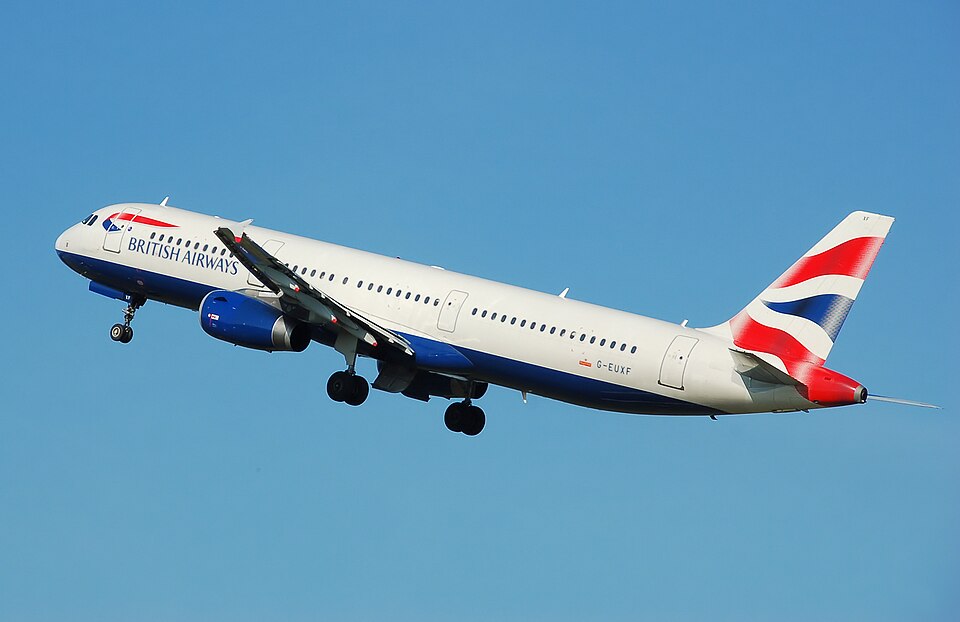
Aircraft and Flight Details
The aircraft involved was an Airbus A321-231, registration G-EUXF, manufactured in 2004. It was powered by two International Aero Engine V2533-A5 turbofan engines. The flight was a commercial air transport (passenger) operation. On board were 7 crew and 200 passengers. No injuries were reported.
Sequence of Events
The flight crew reported for duty at 1325 hrs for a three-sector duty. The third sector, from London Heathrow to Glasgow, was operated by the co-pilot as pilot flying (PF). The approach to Runway 23 at Glasgow was uneventful, with visual conditions and a CAT I ILS approach. At 1,000 ft above aerodrome level, the aircraft was fully configured for landing with flap full and autopilot engaged. The co-pilot took control, disconnected the autopilot, and flew manually with autothrust engaged.
During the flare, initiated at 50 ft, the co-pilot made a progressive aft sidestick input. At 25 ft, the thrust levers were closed. Sensing the flare was "flat," the co-pilot continued pulling back on the sidestick. The aircraft touched down initially at 138 kt with a pitch attitude of 7.4° and normal acceleration of 1.5 g. The ground spoilers deployed. However, the aft sidestick input was maintained, and the aircraft became airborne again briefly before a second touchdown at 134 kt with a pitch attitude of 9.5° and 1.7 g. The nose-up pitch reached a maximum recorded value of 9.5° at the second touchdown. The aft fuselage and aft galley drain mast contacted the runway surface.
The flight crew did not perceive the bounce or tailstrike. The commander, as pilot monitoring, had looked down to locate the thrust levers for reverse thrust selection, which may have diverted his attention. The commander later said "ok push the nose down," but it was too late. Reverse thrust was selected 4 seconds after the second touchdown. After parking, a post-flight report showed a pitch exceedance. Cabin crew reported an unusual noise, and a ground engineer discovered damage to the aircraft.
Recorded Data
Flight data recorder (FDR) analysis showed the aft sidestick input reached a peak of 12° prior to the first touchdown, then reduced to 6.5° but remained nose-up. The aircraft's pitch attitude leveled at 7.4° for 1 second at first touchdown. After becoming airborne again, the second touchdown occurred at 9.5° pitch, remaining at that attitude for about 0.5 seconds before de-rotation. Comparison with ten previous landings showed average touchdown pitch attitudes around 5°, with peak aft inputs transient and lower.
Meteorological Information
Weather conditions were fine and clear with no turbulence. Surface wind was from 250° at 5 kt. Sunset was at 2048 hrs, 34 minutes before landing.
Pilot Information
The co-pilot had a total of 302 flying hours, with 143 hours on type. Line-training records noted inconsistent landings, and additional simulator training was incorporated. The co-pilot completed line-training on 13 July 2015, having flown 60 sectors during training, including 13 on the A321. Ten further line sectors were flown before the accident flight, none on the A321. The co-pilot was aware of tailstrike potential but recalled being advised that 11° nose-up was the pitch attitude for ground contact on landing.
Damage to Aircraft
The aircraft suffered abrasion damage to the external fuselage skin panels between frames 63 to 65 and associated internal frame damage. The aft galley drain mast also showed abrasion damage.